
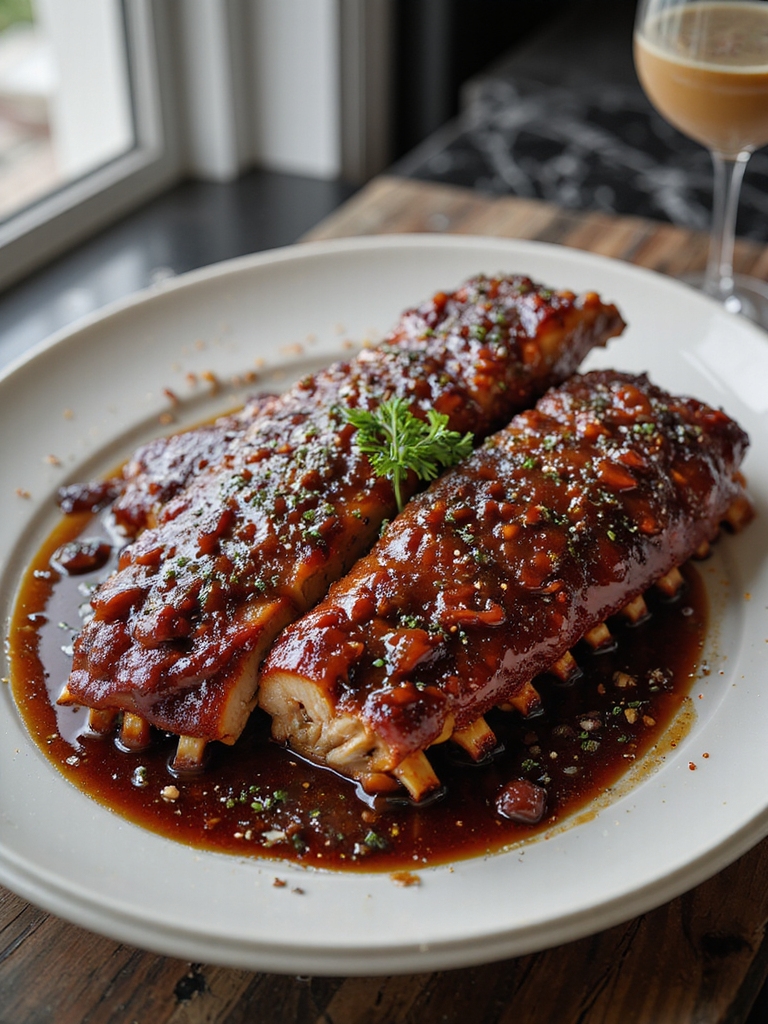
I love how crockpot ribs turn a busy evening into a slow-lit, saucy success with almost no fuss. I’ll walk you through choosing the right cut, trimming and rubbing, and the simple slow-cook tricks that make meat fall-off-the-bone tender.
Then we’ll glaze and finish for that caramelized edge everyone wants — and I’ll share sauces and sides that actually matter. Keep going and I’ll show the little details that make these ribs unforgettable.
Why Slow-Cooking Makes Ribs Irresistible
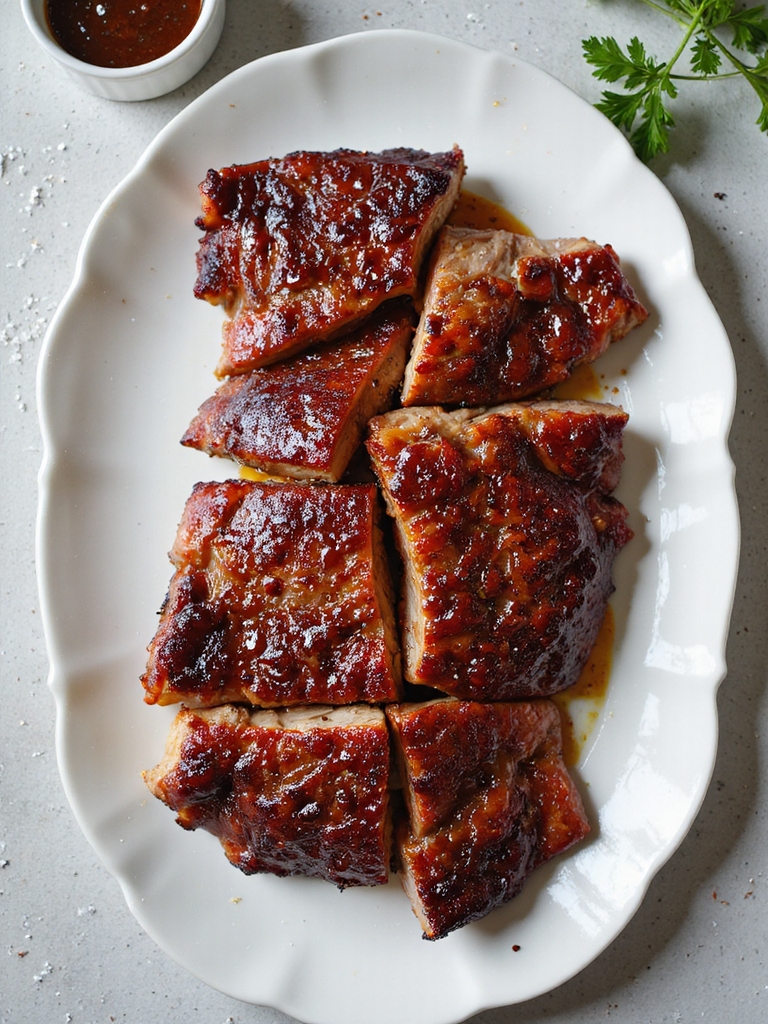
Slow-cooking ribs in a crockpot transforms tough connective tissue into tender, fall-off-the-bone meat while allowing flavors to meld slowly, making the ribs irresistibly juicy and deeply flavored with minimal hands-on time.
- 2–3 lbs pork baby back or spare ribs
- 1 cup barbecue sauce (your favorite)
- 1/2 cup beef or chicken broth
- 2 tbsp brown sugar
- 1 tbsp Worcestershire sauce
- 1 tsp smoked paprika
- 1 tsp garlic powder
- 1 tsp onion powder
- 1/2 tsp black pepper
- 1/2 tsp salt
- 1 tbsp apple cider vinegar
- Optional: pinch of cayenne or hot sauce for heat
Trim excess fat and membrane from the back of the ribs, then season both sides with salt, pepper, smoked paprika, garlic powder, and onion powder before cutting into 2–3 rib sections to fit the crockpot; place a thin layer of broth in the bottom, stand ribs upright or layer them snugly.
Whisk together barbecue sauce, brown sugar, Worcestershire, and apple cider vinegar and pour over ribs, cover and cook on LOW for 6–8 hours or HIGH for 3–4 hours until tender, optionally transfer to a baking sheet, brush with additional sauce and broil for 3–5 minutes to caramelize the glaze.
For best results, let the ribs rest 10 minutes before serving, save any juices for a finishing glaze or to moisten the meat, and if you prefer a deeper bark sear or broil after slow-cooking while keeping an eye to prevent burning.
The crockpot method is ideal for achieving consistent tenderness because it maintains low, even heat over long periods and helps retain moisture, especially when using pork baby back ribs.
Choosing the Best Cut: Baby Back Vs St. Louis Style
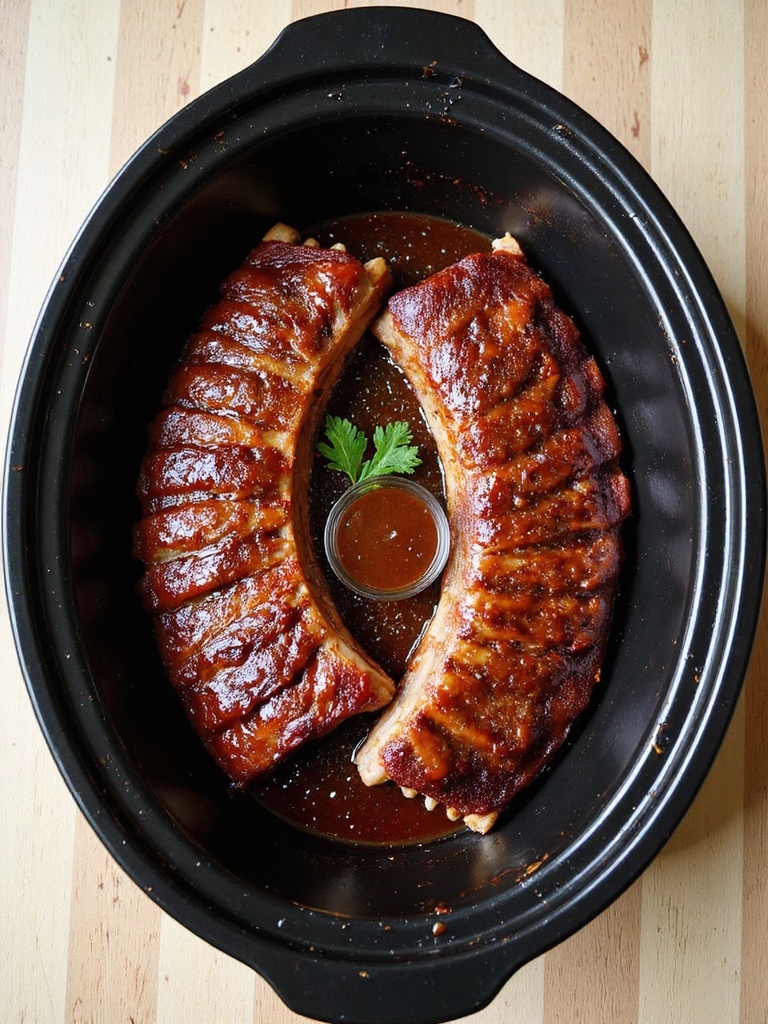
Choosing the right cut—baby back or St. Louis–style ribs—affects cooking time, fat content, and final texture; baby back ribs are leaner, shorter, and cook a bit faster with a tender, delicate bite, while St. Louis–style spare ribs are meatier with more fat and connective tissue that benefit from longer slow-cooking or braising to become succulent and deeply flavored.
- 2–3 lbs baby back ribs or 2–3 lbs St. Louis–style ribs (choose one)
- 1 cup barbecue sauce
- 1/2 cup beef or chicken broth
- 2 tbsp brown sugar
- 1 tbsp Worcestershire sauce
- 1 tsp smoked paprika
- 1 tsp garlic powder
- 1 tsp onion powder
- 1/2 tsp black pepper
- 1/2 tsp salt
- 1 tbsp apple cider vinegar
- Optional: pinch cayenne or hot sauce
Trim excess fat and membrane from the back of the ribs and season both sides with salt, pepper, smoked paprika, garlic powder, and onion powder, then cut into sections to fit your crockpot; place a thin layer of broth in the bottom, stand ribs upright or layer snugly, whisk together barbecue sauce, brown sugar, Worcestershire, and apple cider vinegar and pour over ribs, cover and cook on LOW for 6–8 hours for St. Louis–style (to render fat and connective tissue) or 5–6 hours for baby back ribs for a tender finish, or on HIGH for 3–4 hours for baby backs and 4–5 hours for St. Louis, then optionally transfer to a baking sheet, brush with additional sauce and broil for 3–5 minutes to caramelize.
Tip: Choose baby backs for quicker, leaner results and St. Louis–style when you want richer, meatier ribs that reward the extra low-and-slow time; always remove the membrane and rest ribs 10 minutes before serving.
Crockpot recipes like Mississippi Pot Roast show how slow cooking concentrates flavors and tenderizes tough cuts, making low-and-slow methods ideal for ribs too.
Essential Rubs and Marinades for Maximum Flavor
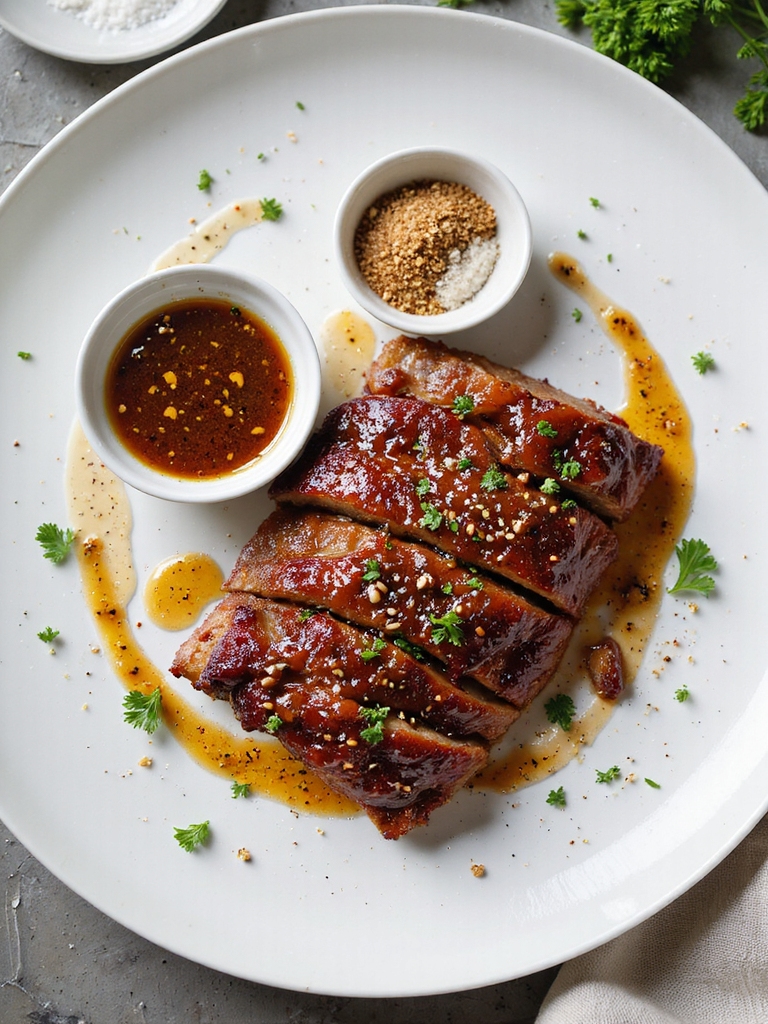
A well-crafted rub and a complementary marinade are the foundation for deeply flavored crockpot ribs—use the rub to build a savory crust that melds with slow-cooked juices and a marinade to tenderize and infuse aromatics; this recipe gives a balanced dry rub and an acidic, herbaceous marinade that work for baby back or St. Louis-style ribs and can be used together for best results.
- 2–3 lbs ribs (baby back or St. Louis-style)
- 2 tbsp brown sugar
- 1 tbsp smoked paprika
- 1 tbsp kosher salt
- 1 tsp black pepper
- 1 tsp garlic powder
- 1 tsp onion powder
- 1/2 tsp ground cumin
- 1/4 tsp cayenne (optional)
- 1/4 cup olive oil
- 2 tbsp apple cider vinegar
- 2 tbsp soy sauce or Worcestershire sauce
- 2 cloves garlic, minced
- 1 tbsp Dijon mustard
- 1 tbsp honey or maple syrup
- 1/4 cup chopped fresh parsley or 1 tbsp dried oregano
- 1/2 cup chicken or beef broth
Trim membrane and excess fat from ribs and rub both sides thoroughly with the dry rub, then place ribs in a shallow dish or zip-top bag and pour the marinade over them, massaging to coat; marinate refrigerated for at least 1 hour or up to overnight for deeper flavor.
Place a thin layer of broth in the crockpot, stand ribs upright or lay them snugly, pour any remaining marinade over, cook on LOW 5–8 hours (5–6 for baby backs, 6–8 for St. Louis) or on HIGH 3–4 hours (baby backs) / 4–5 hours (St. Louis), then optionally finish under the broiler with sauce for 3–5 minutes to caramelize.
Tip: If short on time do a 1–2 hour marinade at room temperature and always remove the membrane before applying the rub for better penetration and tenderness.
For even more budget-friendly slow-cooker options, try these cheap crockpot meals that use pantry staples and minimal prep time.
Four Must-Try Crockpot Rib Sauce Recipes
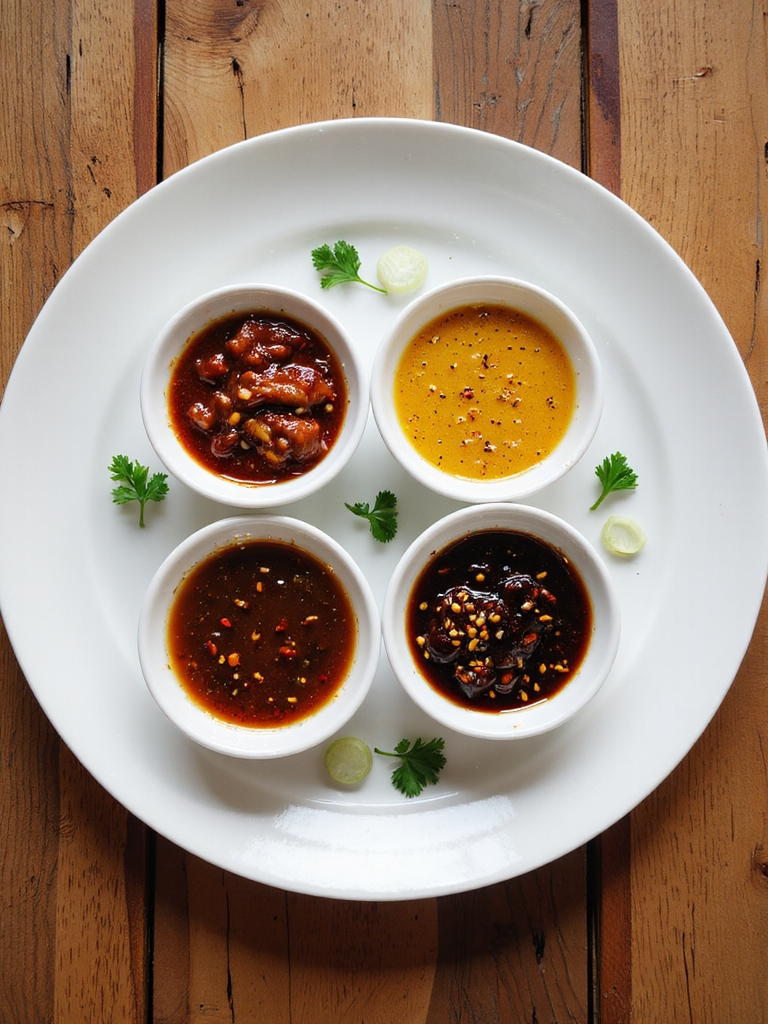
Four must-try crockpot rib sauces to elevate your slow-cooked ribs: a classic smoky-sweet BBQ glaze, a tangy Carolina mustard-vinegar sauce, an Asian-inspired hoisin-soy glaze with ginger and sesame, and a spicy honey-chipotle sauce — each can be spooned over the ribs during the last 30–45 minutes of cooking or used to finish under the broiler for caramelized edges; choose one or make small batches of two to offer variety at the table.
- Classic Smoky-Sweet BBQ Sauce: 1 cup ketchup, 1/4 cup brown sugar, 2 tbsp apple cider vinegar, 1 tbsp molasses, 1 tsp smoked paprika, 1 tsp Worcestershire sauce, 1/2 tsp garlic powder, pinch cayenne
- Carolina Mustard-Vinegar Sauce: 1/2 cup yellow mustard, 1/4 cup apple cider vinegar, 2 tbsp brown sugar, 1 tsp hot sauce, 1/2 tsp black pepper, pinch salt
- Asian Hoisin-Soy Glaze: 1/2 cup hoisin sauce, 2 tbsp soy sauce, 1 tbsp rice vinegar, 1 tbsp honey, 1 tsp grated ginger, 1 clove garlic minced, 1 tsp sesame oil, sliced green onions to finish
- Honey-Chipotle Sauce: 1/2 cup honey, 2 tbsp adobo sauce from chipotles (or minced chipotle), 1 tbsp lime juice, 1 tsp smoked paprika, 1/2 tsp salt
- Basic finishing brush: 1/4 cup butter melted (optional) to enrich any sauce
Prepare ribs per your usual crockpot method (trim membrane, apply rub, add 1/2 cup broth to crockpot, stand ribs or lay snugly), cook on LOW 5–8 hours or HIGH 3–5 hours depending on cut; 30–45 minutes before ribs are done, whisk your chosen sauce and brush generously over both sides of ribs, replace lid and continue to cook until sauce sets, then optionally transfer ribs to a foil-lined baking sheet and broil 3–5 minutes to caramelize, brushing once more and watching closely to avoid burning.
Some cooks like to reserve a little sauce before brushing for serving to avoid contamination if the crockpot sauce has been in contact with raw meat.
Tip: Taste and adjust sweetness, acid, or heat of each sauce before using, and if broiling finish, use a thin even brush coat and watch constantly to achieve perfect caramelization without charring.
You can also adapt these sauces to other slow-cooked cuts like pot roast for similar slow-cooked tenderness.
Step-by-Step Prep: Trimming, Seasoning, and Layering
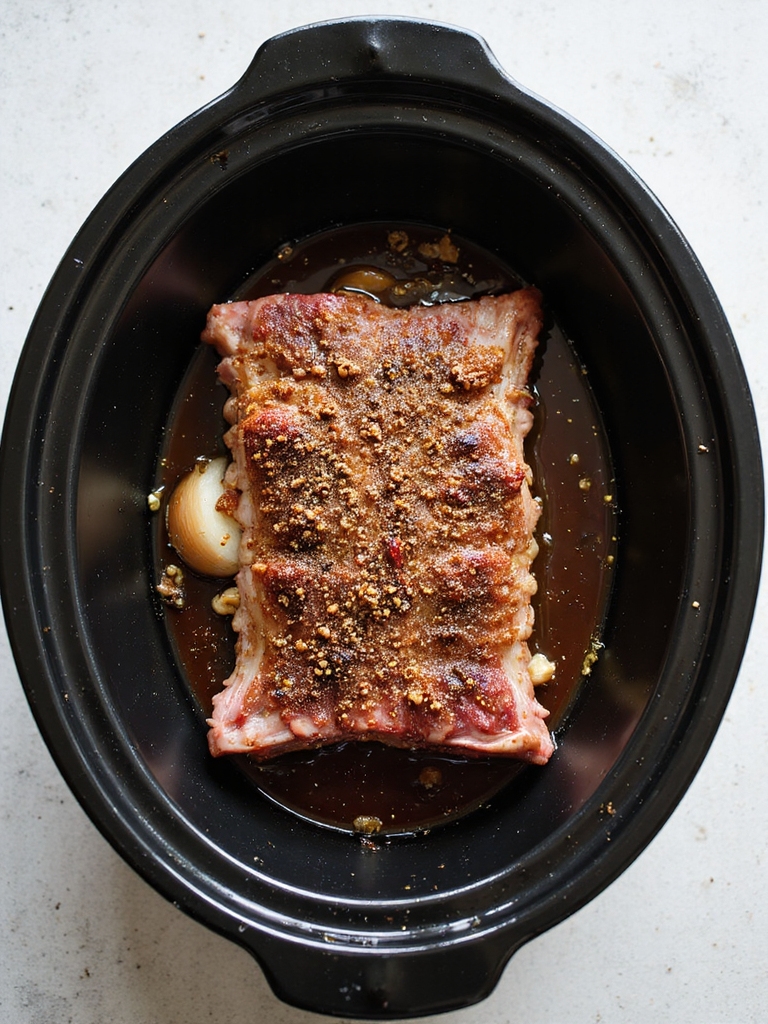
Proper prep makes the difference between good and fall-apart crockpot ribs and tough, fatty ones: this recipe walks you through trimming the membrane, applying a balanced dry rub, layering aromatics and liquid in the slow cooker, and arranging the ribs so they cook evenly and absorb maximum flavor before finishing with your choice of sauce from the previous section.
- 2–3 lb pork spare ribs or baby back ribs (trimmed into 2–3 rib sections)
- 1 tbsp olive oil or neutral oil
- 2 tsp kosher salt
- 1 tsp black pepper
- 2 tbsp brown sugar
- 1 tsp smoked paprika
- 1/2 tsp garlic powder
- 1/2 tsp onion powder
- 1/4 tsp cayenne (optional)
- 1/2 cup low-sodium chicken or beef broth
- 1 small onion, sliced
- 2 cloves garlic, smashed
- 2 tbsp apple cider vinegar or 1 tbsp Worcestershire (optional)
- 1/4 cup finished sauce for brushing plus extra for serving
To prepare the ribs, slide a butter knife under the silver skin membrane on the bone side and peel it off (use a paper towel for grip), pat ribs dry, rub evenly with oil then the dry rub and let rest 15–30 minutes while you slice the onion and prep aromatics.
Arrange a thin layer of onion and garlic in the bottom of the crockpot, pour in 1/2 cup broth and a splash of vinegar or Worcestershire, stand ribs on edge or stack snugly bone-side down so meat is exposed to heat, cook on LOW for 5–8 hours or HIGH for 3–5 hours until meat pulls back from bones and is fork-tender.
Brush with 1/4 cup sauce during the last 30–45 minutes and, if desired, transfer to a foil-lined sheet and broil 3–5 minutes to caramelize.
Tip: Remove the membrane completely, reserve some sauce for serving (don’t reuse brushings that touched raw meat), and avoid overfilling the crockpot so steam can circulate for even, tender results. For an alternate slow-cooker protein option, try adapting this method for savory meatballs to get similarly tender, saucy results.
Cooking Times and Temperatures for Perfect Tenderness
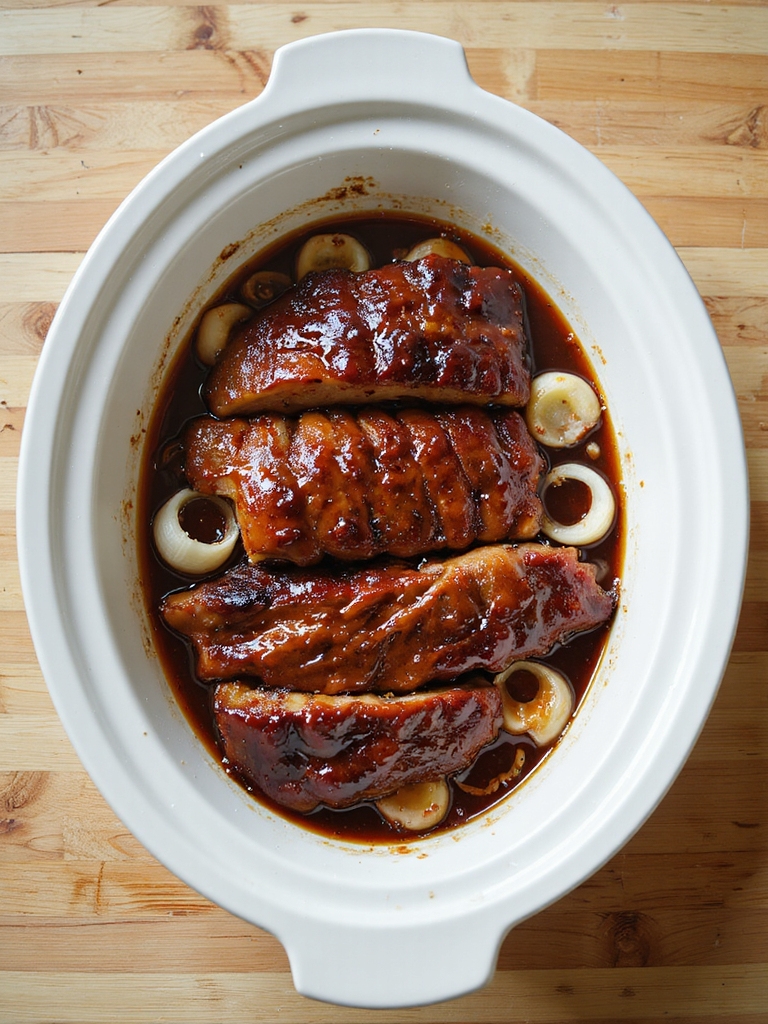
Timing and temperature are the two keys to crockpot ribs: low-and-slow yields the most tender, fall-off-the-bone meat while higher temps shorten cook time at the expense of a bit more chew; these guidelines help you choose the right window based on rib cut, crockpot size, and how you plan to finish (broil or grill) so you end up with consistent results every time.
- 2–3 lb pork spare ribs or baby back ribs (trimmed into 2–3 rib sections)
- 1 tbsp olive oil or neutral oil
- 2 tsp kosher salt
- 1 tsp black pepper
- 2 tbsp brown sugar
- 1 tsp smoked paprika
- 1/2 tsp garlic powder
- 1/2 tsp onion powder
- 1/4 tsp cayenne (optional)
- 1/2 cup low-sodium chicken or beef broth
- 1 small onion, sliced
- 2 cloves garlic, smashed
- 2 tbsp apple cider vinegar or 1 tbsp Worcestershire (optional)
- 1/4 cup finished sauce for brushing plus extra for serving
Cook ribs as directed in the prep section but use these timing rules: for baby back ribs cook on LOW 4–6 hours or HIGH 2.5–4 hours; for larger spare ribs cook on LOW 6–8 hours or HIGH 3–5 hours.
Check for doneness when meat has visibly pulled back 1/4–1/2 inch from the bone and a fork meets little resistance, then brush with sauce and broil or grill 3–5 minutes to caramelize if desired, keeping an eye so the sugars don’t burn.
Tip: Start checking 30–60 minutes before the lower end of the window for your cut and crockpot, use LOW for best tenderness, and remember carryover heat means ribs will relax and firm slightly after resting so remove when they’re fork-tender but not completely falling apart. A slow-cooked roast can be a useful reference for texture and timing when adapting recipes across cuts, since low-and-slow methods produce similar results in pot roasts and ribs.
How to Finish Ribs Under the Broiler or on the Grill
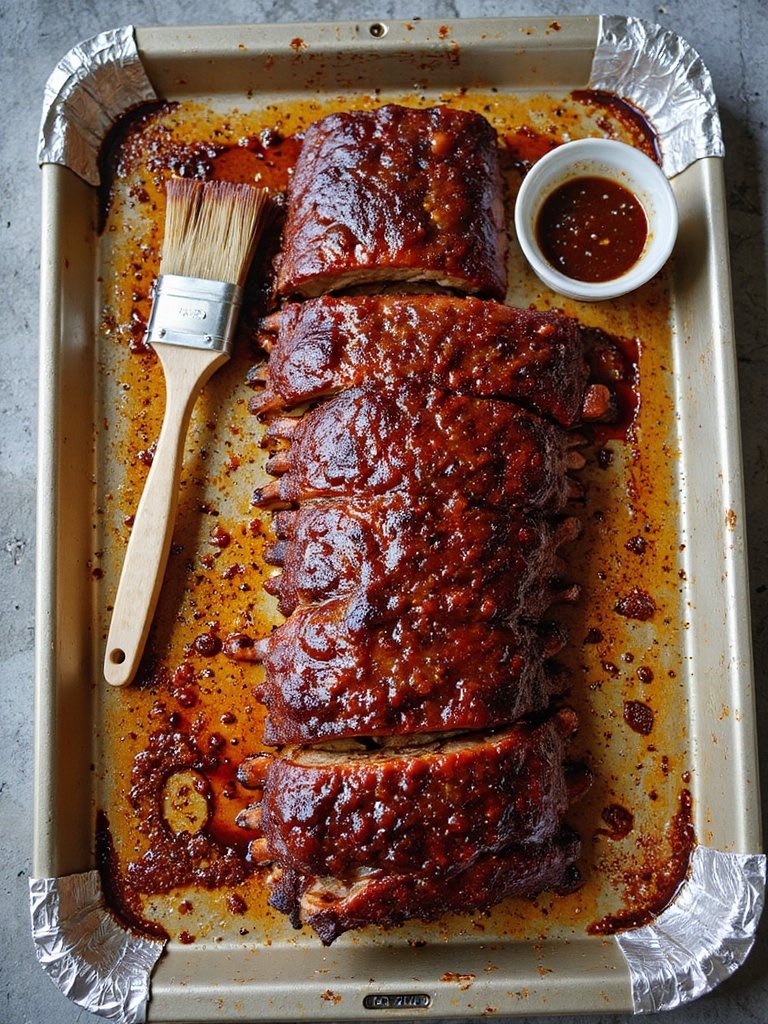
Finishing crockpot ribs under the broiler or on the grill gives them the caramelized, sticky exterior that contrasts with the tender interior; after slow cooking, you’ll brush on sauce and either broil for a quick blistering caramelization or grill over medium-high heat for a smoky char, watching closely so the sugars don’t burn and allowing a short rest before slicing.
- Cooked crockpot ribs (baby back or spare), 2–3 lb or as prepared
- 1/4–1/2 cup barbecue sauce or glaze of choice
- 1 tsp oil (for grill grates or broiler pan)
- Lemon or apple cider vinegar (optional, for thin sauce)
- Extra sauce for serving
Preheat broiler to high or heat grill to medium-high and oil the grates, transfer ribs from the crockpot to a rimmed baking sheet lined with foil or directly to the grill, brush a generous layer of sauce on both sides, broil 3–5 minutes 6–8 inches from heat or grill 3–5 minutes per side with the lid open, watching constantly and turning once until caramelized and slightly charred, then remove and rest 5–10 minutes before slicing between bones.
Tip: Use a thin, brushable sauce for the first coat and a thicker final glaze for shine, always watch closely during broiling/grilling to prevent burning and let ribs rest briefly to set the glaze. For a complete meal, serve alongside a crockpot steak and potatoes recipe that pairs well with the ribs’ flavors, especially when cooking Steak And Potatoes In Crockpot.
Serving Ideas: Sides, Slaws, and Sandwich Options
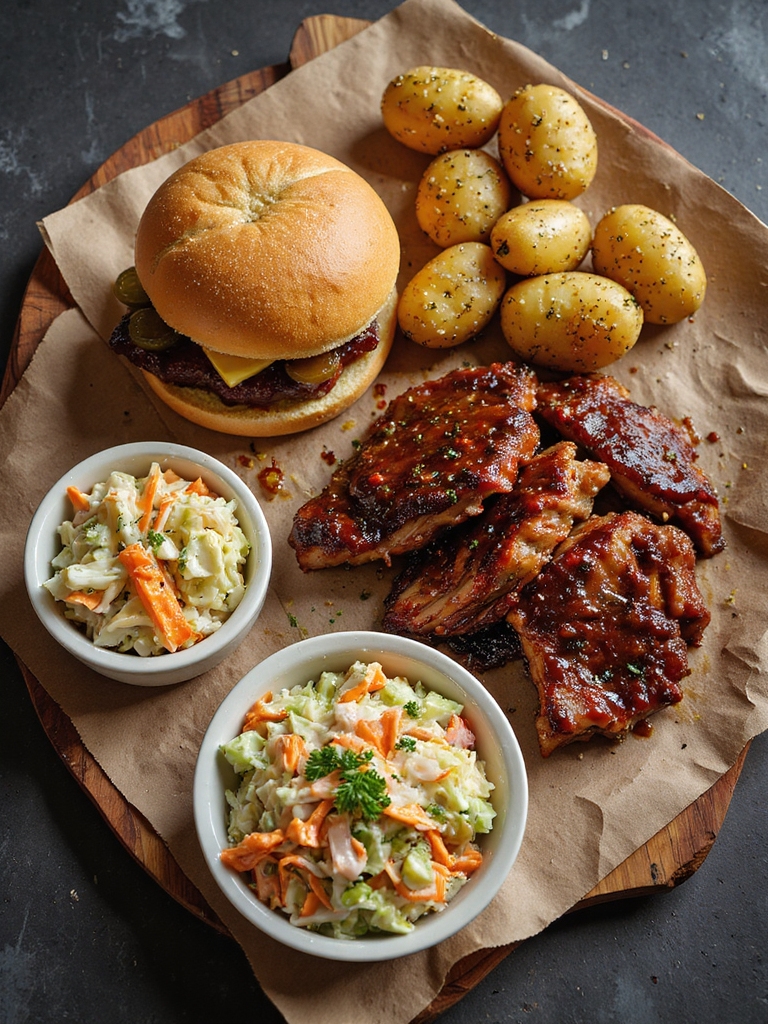
Serve tender crockpot ribs with vibrant, complementary sides and sliders that turn a simple meal into a crowd-pleasing spread—this recipe offers a quick coleslaw, garlic-parmesan roasted potatoes, and an easy rib sandwich assembly so you can plate family-style or build individual sandwiches at the table.
- For the ribs: 2–3 lb cooked crockpot ribs, sauced and finished under broiler or grill
- For slaw: 4 cups shredded green cabbage, 1 cup shredded red cabbage, 1 cup grated carrot
- Slaw dressing: 1/2 cup mayonnaise, 2 Tbsp apple cider vinegar, 1 Tbsp honey, 1 tsp Dijon mustard, salt and pepper
- For potatoes: 1.5 lb baby potatoes, halved; 2 Tbsp olive oil; 2 cloves garlic minced; 1/4 cup grated Parmesan; salt, pepper, chopped parsley
- For sandwiches: 6 soft rolls or brioche buns, butter for toasting, extra barbecue sauce, pickles or pickled jalapeños (optional)
- Garnishes: chopped scallions, extra parsley, lemon wedges
Prepare the slaw by whisking the dressing, tossing with cabbage and carrot, and refrigerating to chill.
Toss potatoes with oil, garlic, salt and pepper, roast at 425°F (220°C) for 25–30 minutes until golden, finish with Parmesan and parsley.
Warm or slice ribs, toast buttered buns, assemble sandwiches with rib meat, extra sauce, slaw and pickles, or serve family-style with potatoes and slaw on the side.
Tip: Make the slaw a few hours ahead to let flavors meld, roast potatoes while finishing ribs under the broiler, and keep extra sauce warm for serving so sandwiches stay moist and flavorful.
This hearty crockpot meal pairs perfectly with a simple hearty stew to create a cozy, comforting dinner.
Make-Ahead, Storage, and Reheating Tips
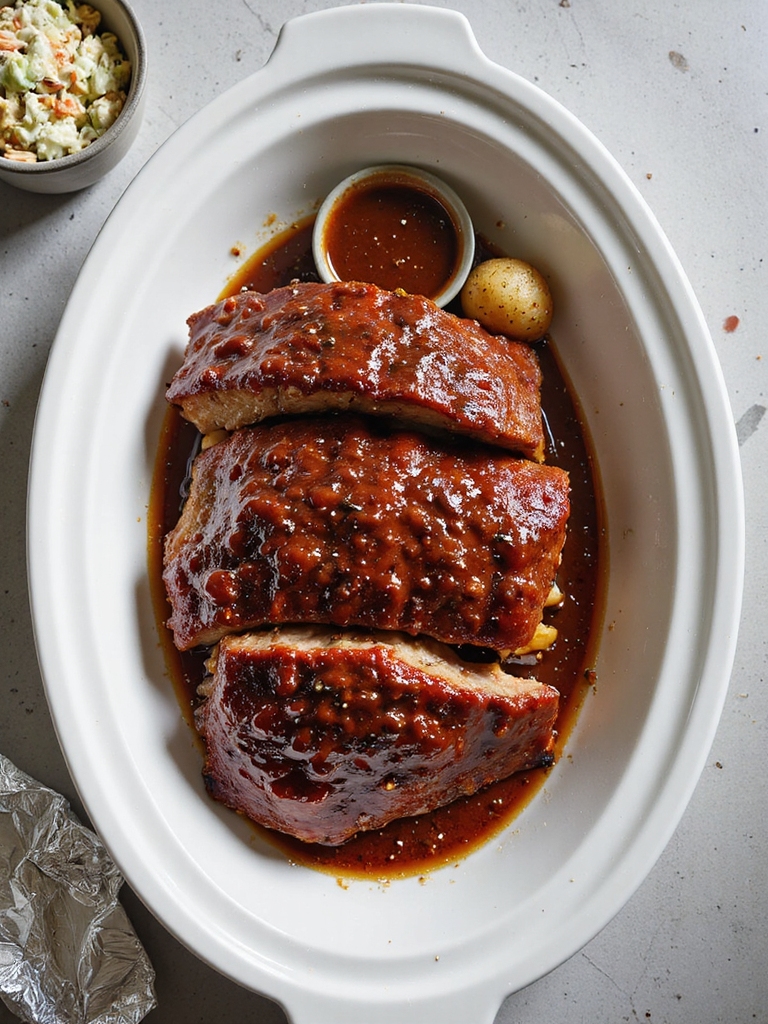
Make-Ahead, Storage, and Reheating Tips for crockpot ribs focus on preparing components ahead, cooling and storing properly, and gentle reheating to preserve texture and flavor so your ribs stay moist and safe for later meals — this recipe-style guide gives quantities for make-ahead portions, how to chill or freeze, reheating method, and timing for serving from cold storage.
- 2–3 lb cooked crockpot ribs, cooled to room temperature before storing
- 1 cup barbecue sauce (extra, warmed before serving)
- 1/2 cup slaw (optional, stored separately)
- 1.5 lb roasted potatoes (optional, stored separately)
- Plastic wrap or airtight containers for fridge storage
- Heavy-duty freezer bag or airtight freezer container for long-term storage
- Baking sheet and foil for reheating in oven
- Small saucepan for reheating sauce
For short-term storage refrigerate cooled ribs wrapped tightly or in an airtight container for up to 4 days; for longer storage remove bones if desired, place ribs in a single layer in a freezer bag with excess air removed and freeze up to 3 months then thaw overnight in the fridge before reheating.
To reheat gently preheat oven to 275°F (135°C), place ribs in a covered baking dish or wrapped in foil with a few tablespoons of water or sauce to create steam, bake until warmed through about 25–40 minutes depending on thickness, finish under broiler or on grill for a minute or two to caramelize sauce, or alternatively reheat slices in a skillet over medium-low with sauce until hot, stirring occasionally to prevent drying.
Tip: Cool ribs quickly before storing, always keep sauce separate for freezing if possible, label containers with date, and reheat slowly with added moisture to avoid drying out while finishing briefly under high heat to restore a caramelized exterior. A little planning and batch cooking using a slow cooker makes weeknight dinners easier and ensures consistently tender results with effortless crockpot meal prep.
Troubleshooting Common Crockpot Rib Problems
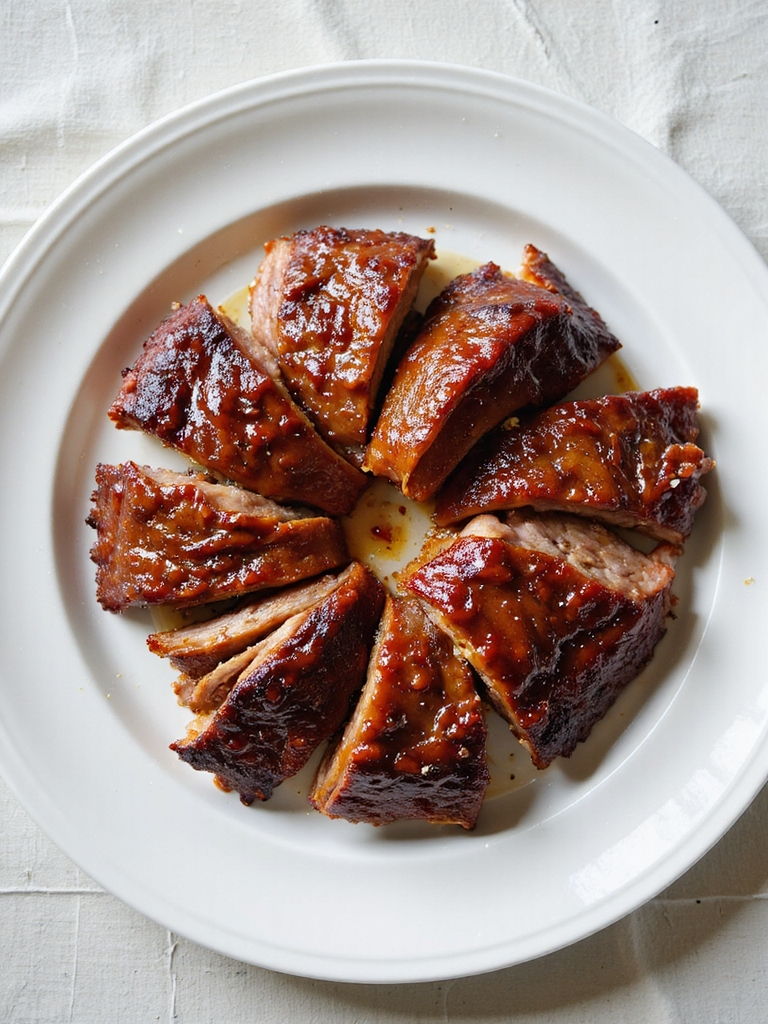
Troubleshooting crockpot ribs focuses on diagnosing and fixing texture, flavor, and appearance issues so you end up with tender, flavorful ribs even if things go wrong during the low-and-slow cooking process; this recipe-style guide walks you through simple adjustments — like fixing dry or tough ribs, correcting underseasoning or burnt sauce, and salvaging overcooked meat — while giving a straightforward crockpot method that’s forgiving and easy to rescue mid-cook.
- 2–3 lb pork baby back or spare ribs
- 1 tbsp kosher salt
- 1 tsp black pepper
- 1 tbsp brown sugar
- 1 tbsp smoked paprika
- 1 tsp garlic powder
- 1/2 tsp onion powder
- 1 cup barbecue sauce (plus extra)
- 1/2 cup apple juice or chicken broth
- 1–2 tbsp butter or oil (optional)
- 1 tbsp vinegar or lemon juice (for brightness)
- Heavy-duty foil or ovenproof dish (for finishing)
Trim excess fat and membrane, rub ribs with salt, pepper, brown sugar, paprika, garlic and onion powder, pour apple juice or broth into slow cooker, nestle ribs in standing or stacked layers, cook on LOW 6–8 hours or HIGH 3–4 until fork-tender but not falling entirely off the bone.
If ribs are too tough finish in oven at 300°F covered with added liquid for 30–60 minutes.
If too soft or falling apart remove carefully and hold loosely covered while you reduce sauce in a saucepan and brush on then broil briefly to caramelize.
If underseasoned lift ribs, stir extra seasoning into sauce and return to crockpot for 30–60 minutes.
For burnt sauce discard and replace with fresh sauce and simmer gently.
Tip: Always test early for doneness so you can rescue ribs—add moisture and lower heat for toughness, briny or acidic touches for flat flavor, and finish under high heat briefly to restore texture without drying.
Carnitas are an example of another slow-cooked pork dish that benefits from low-and-slow techniques and can offer useful techniques to adapt for ribs.