
I love how Indian dinners turn simple grains and vegetables into something fragrant and soulful, each spice jar a small promise of memory. I’ll walk you through dishes where slow simmering, tempering, and roasted masalas add depth—think saffron-kissed biryani, coconut-laced coastal curries, and mustardy saag.
These recipes are practical, rooted in home kitchens, and they’ll change how you think about weeknight flavor—starting with the first dish on the list.
Classic Butter Chicken With Kasuri Methi and Fenugreek Aroma
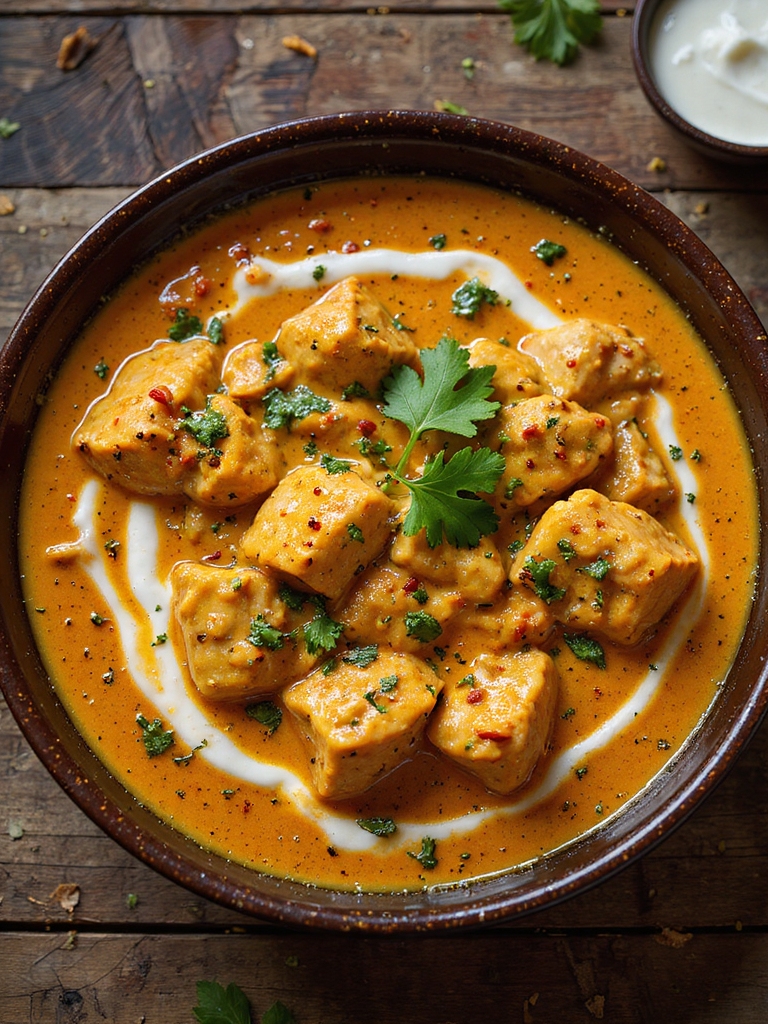
Classic Butter Chicken is a rich, creamy North Indian curry featuring tender marinated chicken simmered in a spiced tomato-butter sauce finished with kasuri methi (dried fenugreek leaves) for a distinct aromatic note; this recipe balances tangy tomatoes, warm spices, and velvety cream to create a comforting, restaurant-style dish you can make at home.
- 1 kg boneless chicken thighs, cut into bite-sized pieces
- 1 cup plain yogurt
- 2 tbsp lemon juice
- 2 tsp Kashmiri red chili powder (or paprika)
- 1 tsp turmeric powder
- 2 tsp garam masala
- 1 tbsp ginger-garlic paste
- 4 tbsp unsalted butter
- 2 tbsp vegetable oil
- 1 large onion, finely chopped
- 400 g canned crushed tomatoes
- 1/2 cup heavy cream (or cashew cream)
- 2 tsp kasuri methi (dried fenugreek leaves), crushed between palms
- 1 tsp cumin powder
- 1 tsp coriander powder
- 2 bay leaves
- Salt to taste
- Fresh cilantro for garnish
Marinate the chicken with yogurt, lemon juice, 1 tsp chili powder, turmeric, 1 tsp garam masala, ginger-garlic paste and salt for at least 1 hour or overnight for best flavor, then pan-fry in 1 tbsp oil until lightly browned and set aside.
In the same pan heat 2 tbsp butter and 1 tbsp oil, sauté onions with bay leaves until golden, add cumin, coriander, remaining chili powder and garam masala, stir in crushed tomatoes and simmer 10–12 minutes until thickened.
Return chicken to the sauce, add cream and remaining butter, simmer 8–10 minutes until cooked through, crush kasuri methi between your palms and stir in at the end, adjust salt and finish with cilantro.
Tip: Use kasuri methi sparingly and crush it before adding to release the aroma, and brown the chicken well for deeper flavor while avoiding overcooking to keep it tender.
For more dinner inspiration, explore other comforting chicken recipes that suit every occasion.
Hyderabadi Dum Biryani With Saffron and Fried Onions
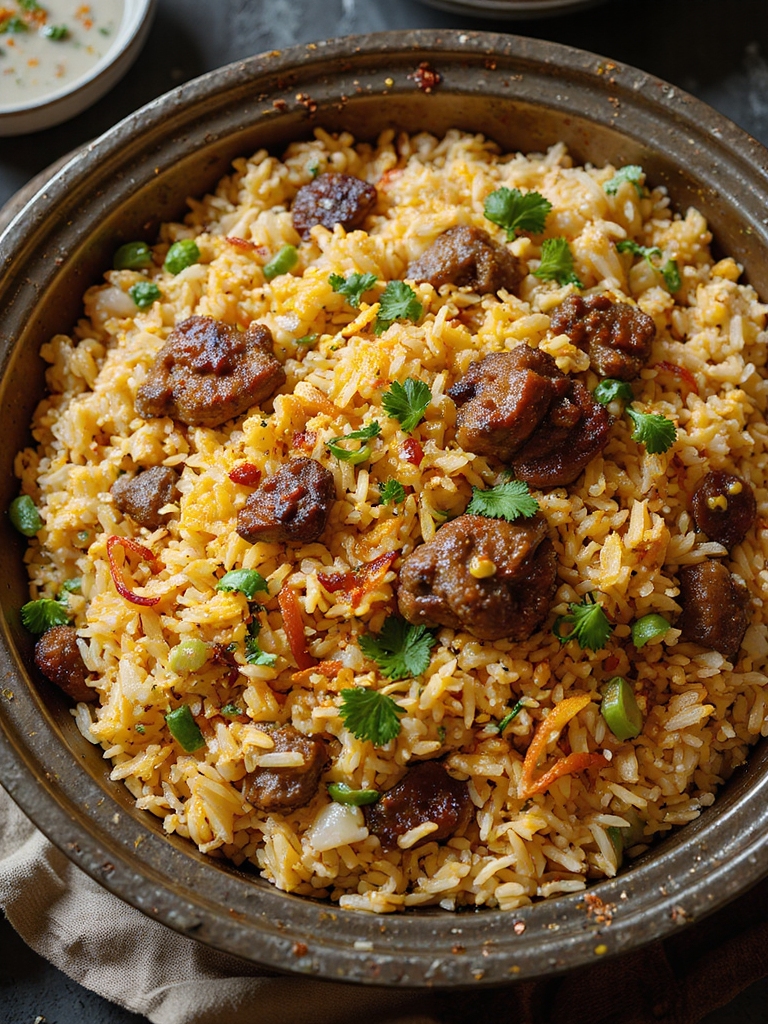
Hyderabadi Dum Biryani is a fragrant, slow-cooked layered rice and meat dish from Hyderabad that combines marinated meat (traditionally goat or lamb, but chicken also works) with spiced basmati rice, saffron-infused milk, fried onions (birista), fresh herbs and ghee, sealed and cooked on “dum” (steam) to let the flavors meld into a rich, aromatic one-pot meal.
- 1 kg goat or lamb pieces (or chicken pieces)
- 500 g basmati rice
- 1 cup yogurt
- 2 tbsp ginger-garlic paste
- 3–4 green chilies, slit
- 2 tsp red chili powder
- 1 tsp turmeric powder
- 2 tbsp biryani masala or garam masala
- 1/2 cup fried onions (birista)
- 1/2 cup chopped fresh cilantro
- 1/2 cup chopped fresh mint
- 4 tbsp ghee or clarified butter
- 4 tbsp oil
- 4–6 cloves
- 4–6 green cardamom pods
- 2 bay leaves
- 2-inch cinnamon stick
- 1 tsp cumin seeds
- 1/2 tsp saffron threads soaked in 1/4 cup warm milk
- Juice of 1 lemon
- Salt to taste
- 2 cups water (for rice) plus water for parboiling
Marinate the meat with yogurt, ginger-garlic paste, green chilies, red chili, turmeric, biryani masala, half the fried onions, half the cilantro and mint, lemon juice and salt for at least 2 hours or overnight.
Then par-cook basmati rice until 70% done with whole spices and drain.
In a heavy-bottomed pot layer half the marinated meat, sprinkle some fried onions, cilantro, mint and a little saffron milk, add a layer of parboiled rice and repeat finishing with remaining rice, saffron milk and ghee.
Seal the pot with dough or a tight lid and cook on very low heat (dum) for 45–60 minutes until meat is tender and flavors meld.
Rest 10 minutes, then gently fluff and serve with raita.
Tip: Use aged basmati and par-cook rice to the right doneness, brown plenty of onions for birista, and seal the pot well for true dum flavor while keeping heat low to avoid burning at the bottom.
This recipe is one of many delicious dinner ideas for every occasion and showcases classic dinner recipes that can suit both everyday meals and special gatherings.
Kerala Beef Curry With Coconut and Black Pepper
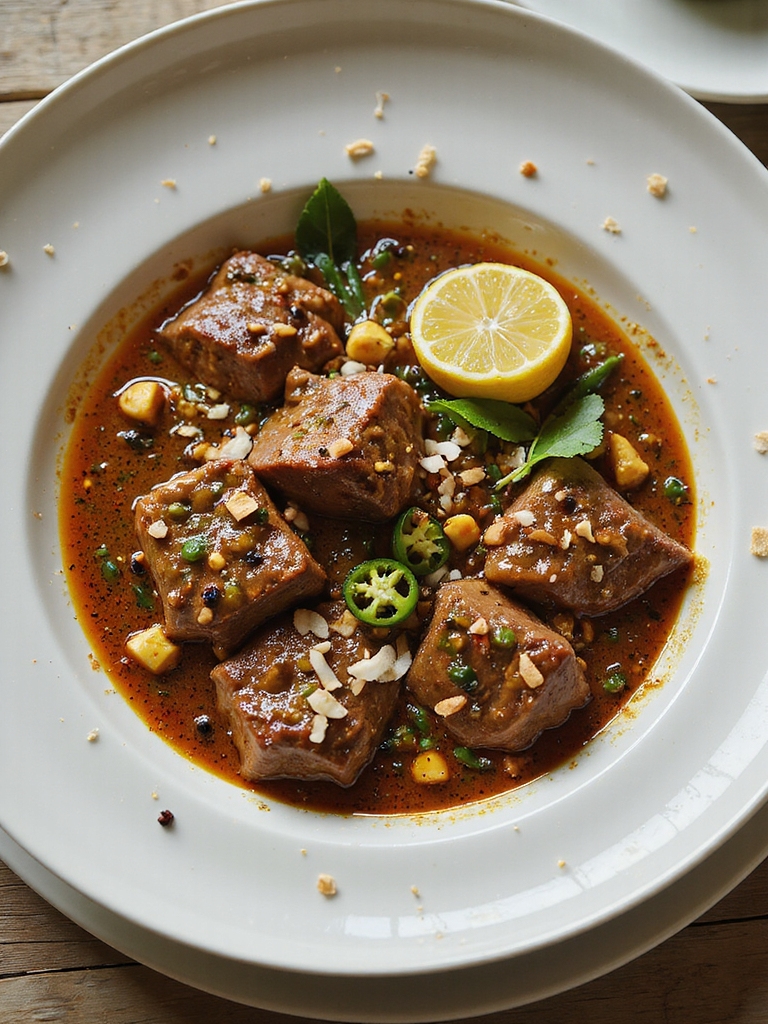
Kerala Beef Curry with Coconut and Black Pepper is a deeply flavored, slow-cooked curry from Kerala that features tender chunks of beef simmered in a spiced coconut-based gravy with freshly cracked black pepper, curry leaves and toasted coconut for warmth and aroma; it’s traditionally cooked until the meat is melt-in-your-mouth and the gravy is rich, making it perfect with rice, appam or Kerala-style parotta.
- 1 kg beef (chuck or brisket), cut into bite-sized pieces
- 2 tbsp oil (coconut oil preferred)
- 2 large onions, thinly sliced
- 2 tsp ginger-garlic paste
- 4–6 green chilies, slit
- 1 tbsp black peppercorns, coarsely crushed
- 1 tsp turmeric powder
- 2 tsp red chili powder
- 2 tbsp coriander powder
- 1 tsp garam masala
- 1 cup thick coconut milk
- 1/2 cup freshly grated coconut (toasted and ground) or 3 tbsp roasted coconut paste
- 1 sprig curry leaves
- 2 tbsp vinegar or juice of 1 lemon
- Salt to taste
- 2 cups water (adjust as needed)
- Whole spices: 4 cloves, 2 bay leaves, 1-inch cinnamon stick, 3 cardamom pods
Heat oil in a heavy-bottomed pot, add whole spices and sliced onions and sauté until golden brown, then add ginger-garlic paste, green chilies and turmeric and fry briefly before adding beef, salt, red chili and coriander powders and crushed black pepper; stir to coat the meat, add enough water to cover, cover pot and simmer on low heat until beef is tender (1.5–2 hours) or pressure cook 5–6 whistles, then add toasted-ground coconut, simmer 10–15 minutes, stir in coconut milk and garam masala, adjust seasoning and finish with curry leaves and vinegar, simmer gently 5 minutes and serve hot.
Tip: Use tougher cuts for better flavor and slow cooking, toast and grind fresh coconut for authentic taste, and add black pepper toward the end if you prefer a brighter peppery finish.
This recipe is a great example of the bold flavors found in Delicious Asian Dinner Recipes with an emphasis on regional authenticity and spice balance bold flavors.
Punjabi Sarson Da Saag With Makki Di Roti
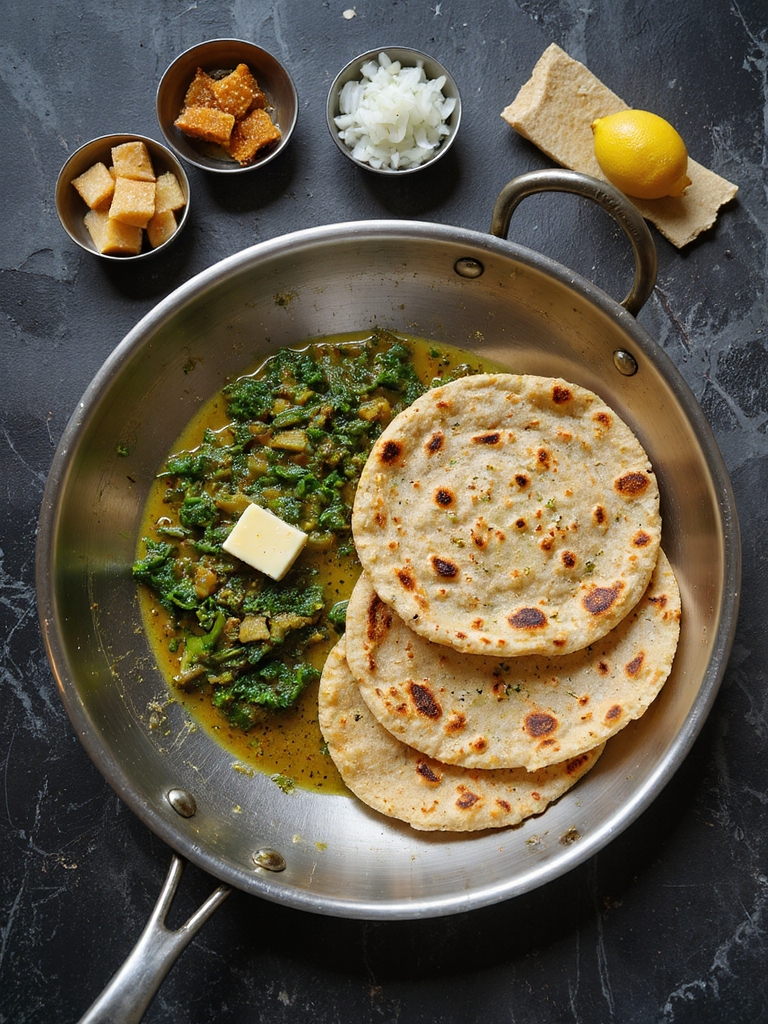
Punjabi Sarson Da Saag with Makki Di Roti is a rustic, hearty winter dish from North India featuring slow-cooked mustard greens and spinach tempered with aromatic spices and served alongside dense corn flatbreads; the saag is traditionally simmered until silky, finished with a dollop of butter or ghee and raw onion and jaggery on the side, while makki di roti is made from coarsely ground maize flour and cooked on a griddle until golden and slightly charred.
- 500 g mustard greens (sarson), cleaned and roughly chopped
- 200 g spinach, cleaned
- 1 medium bathua or fenugreek leaves (optional), chopped
- 2 medium onions, finely chopped
- 4 cloves garlic, minced
- 1-inch piece ginger, minced
- 2–3 green chilies, chopped
- 2 tbsp maize flour (makki ka atta) plus extra for dusting rotis
- 2–3 tbsp ghee or clarified butter
- 1 tsp cumin seeds
- 1/2 tsp turmeric powder
- 1 tsp red chili powder (optional)
- Salt to taste
- 1–2 tsp jaggery or sugar (optional)
- 2–3 tbsp butter for serving
- 1 lemon, cut into wedges
- Water as needed
Blanch the greens in boiling water for 5–7 minutes, drain and immediately plunge into cold water, then roughly puree or coarsely chop them;
in a heavy pan heat ghee, add cumin, sauté onions until golden, add garlic, ginger and green chilies, then add turmeric, red chili and the greens along with a little water and simmer covered for 20–30 minutes, stir in maize flour mixed with a little water to thicken, adjust salt and jaggery, mash to desired texture, finish with a ladle of hot ghee and serve with warm makki di rotis dusted with maize flour.
Tip: Use a mix of greens (sarson + spinach + bathua) for balanced bitterness and texture, keep makki rotis warm under a cloth and press them gently on a hot tava to get characteristic cracks and char. A simple accompaniment that complements the dish is cabbage prepared as a quick stir-fry or salad.
Goan Prawn Curry With Kokum and Coconut Milk
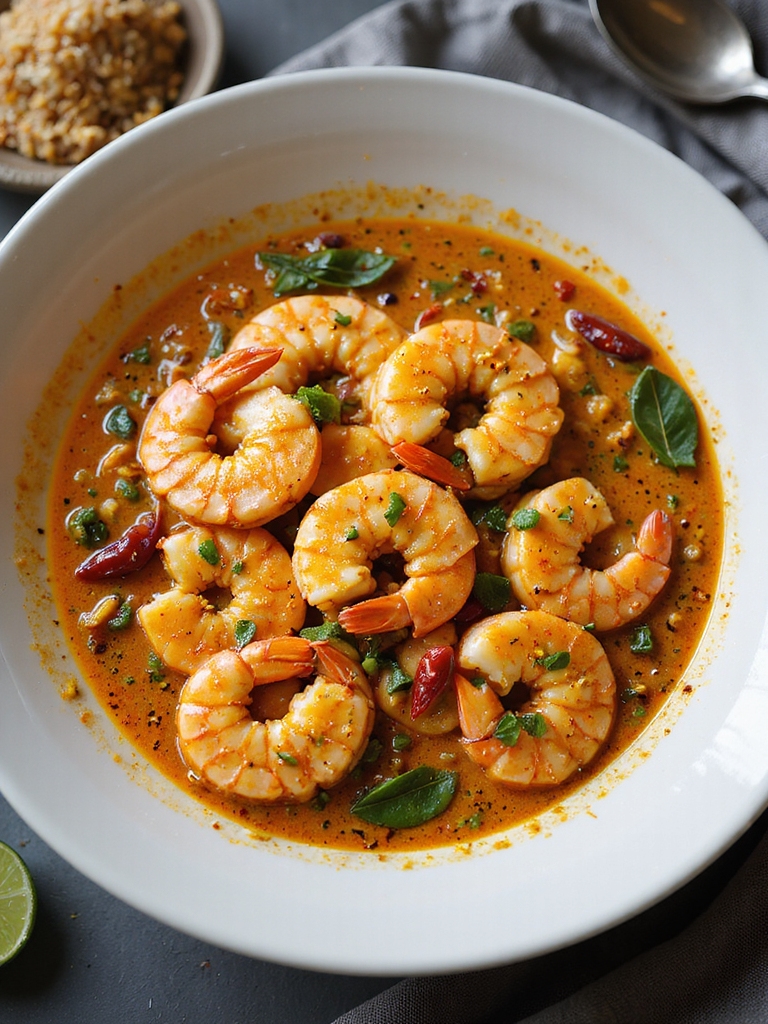
Goan Prawn Curry with Kokum and Coconut Milk is a tangy, aromatic coastal dish where plump prawns are simmered in a fragrant blend of roasted spices, kokum’s sourness, tamarind or vinegar, and creamy coconut milk, finished with curry leaves and a tempering of mustard seeds and dried red chilies for an authentic balance of heat, acidity, and richness; it cooks quickly and pairs beautifully with steamed rice or crusty bread.
- 500 g prawns, cleaned with tails on or off
- 2 tbsp oil (coconut oil preferred)
- 1 tsp mustard seeds
- 6–8 curry leaves
- 1 large onion, finely sliced
- 1 tbsp ginger-garlic paste
- 2 medium tomatoes, chopped
- 1/2 tsp turmeric powder
- 1 tsp coriander powder
- 1/2–1 tsp red chili powder (adjust)
- 1/2 tsp garam masala (optional)
- 6–8 kokum petals (or 1 tbsp kokum concentrate)
- 200–250 ml coconut milk (thick)
- 150–200 ml water or prawn stock
- Salt to taste
- 1 tsp jaggery or sugar (optional)
- Fresh cilantro for garnish
- Juice of 1/2 lemon (optional)
Heat oil in a deep skillet, add mustard seeds and curry leaves until they sputter, sauté sliced onion until golden then add ginger-garlic paste and cook briefly; stir in tomatoes, turmeric, coriander and chili powders and cook until oil separates, add kokum and water, bring to a simmer then add prawns, cook 3–5 minutes until just done, pour in coconut milk and jaggery, warm through gently without boiling, adjust salt and acidity, finish with lemon juice and garnish with cilantro before serving.
Tip: Use kokum for its distinctive Goan sourness and add coconut milk at the end over low heat to prevent splitting; avoid overcooking prawns so they remain tender and slightly firm.
This recipe makes a great weeknight meal for two and fits well among other Quick and Easy dinner ideas.
Bengali Macher Jhol With Mustard and Fresh Dill
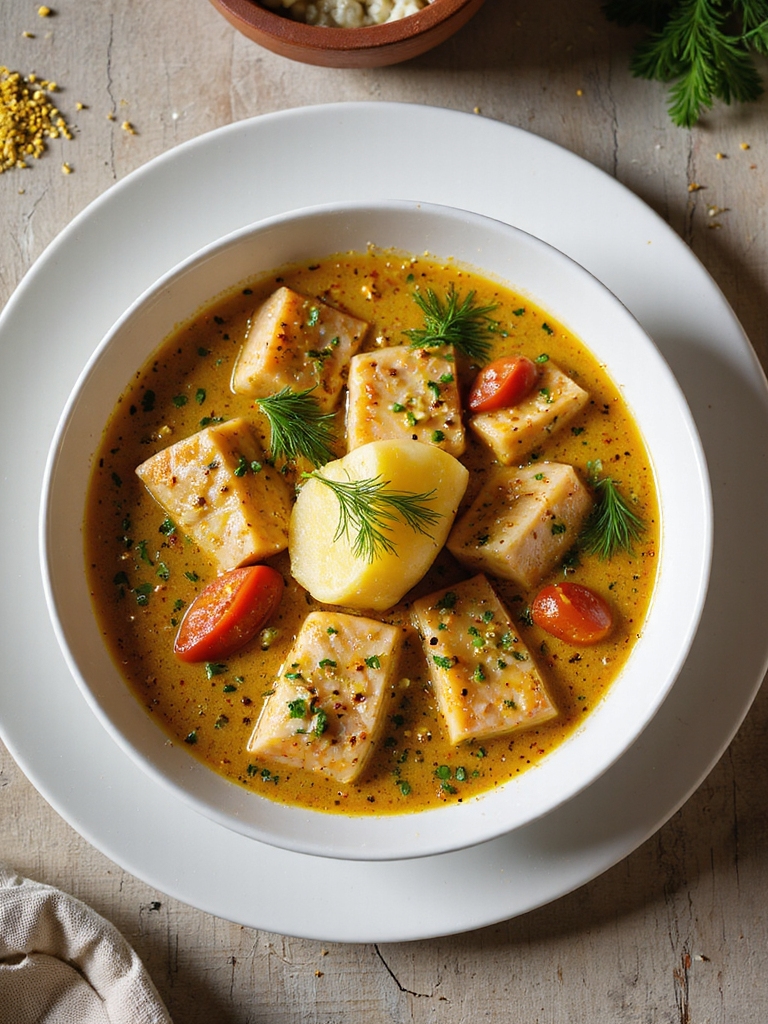
Bengali Macher Jhol with Mustard and Fresh Dill is a light, fragrant fish curry from eastern India where firm river fish simmer gently in a thin, mustard-spiked broth brightened with fresh dill (sada pata) and tomatoes; the result is a delicately spiced, tangy and herbal stew that pairs perfectly with steamed rice and highlights mustard’s pungency without overpowering the fish.
- 500 g firm fish fillets or steaks (rui/rohu, bhetki, or cod), cut into 6–8 pieces
- 2 tbsp mustard oil (or vegetable oil)
- 1/2 tsp nigella seeds (kalonji) or 1/2 tsp panch phoron (optional)
- 1 medium onion, finely sliced
- 1 tbsp ginger paste
- 1 green chili, slit
- 2 medium tomatoes, chopped
- 1/2 tsp turmeric powder
- 1/2–1 tsp red chili powder (adjust)
- 1–2 tbsp mustard paste (made from yellow and/or black mustard seeds, mixed with a little water)
- 300–350 ml water or light vegetable/fish stock
- Salt to taste
- 1 small potato, cut into wedges (optional)
- 2–3 tbsp fresh dill (sada pata), chopped
- Juice of 1/2 lemon (optional)
Heat mustard oil in a wide pan until hot and slightly smoking, reduce heat and add nigella or panch phoron, then sauté sliced onion and ginger paste until soft; add turmeric, chili powder and tomatoes and cook until pulpy, stir in mustard paste and water, add potato wedges if using and simmer until tender, gently add fish pieces, cover and poach on low heat for 6–8 minutes until just cooked through, finish with chopped dill and lemon juice, adjust salt and serve hot over rice.
Tip: Use fresh mustard paste made just before cooking for best flavor, add oil sparingly after frying spices to mellow pungency, and avoid overcooking the fish so it stays firm and flaky.
Mustard oil imparts an authentic pungent aroma commonly used in Bengali cooking and is a signature ingredient in many regional recipes like salmons dinners.
Rajasthani Laal Maas With Red Chilies and Yogurt
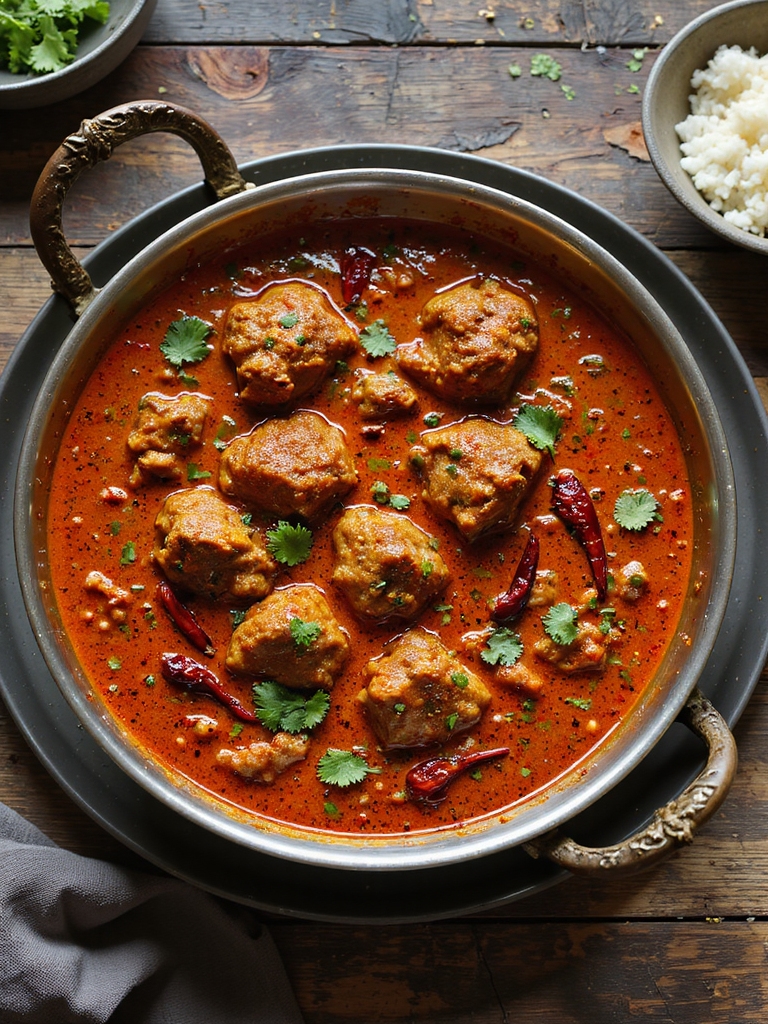
Laal Maas is a fiery Rajasthani mutton curry known for its deep red color and robust heat, traditionally made with a heady paste of dried red chilies, garlic, and warming spices simmered with tender lamb in a yogurt-based gravy; the dish is rustic yet layered, best cooked slowly so the meat absorbs the intense flavors and the oil separates, yielding a glossy, spicy stew that pairs well with bajra rotis, plain rice, or naan.
- 1 kg lamb/mutton, bone-in pieces
- 6–8 dried red chilies (byadgi or kashmiri for color; use hotter chilies for more heat)
- 1/2 cup plain yogurt, whisked
- 2–3 tbsp ghee or vegetable oil
- 1 large onion, finely sliced
- 8–10 garlic cloves
- 1–2 inch piece ginger
- 1 tsp cumin seeds
- 1/2 tsp fennel seeds
- 4–5 green cardamom pods
- 1 cinnamon stick (2–3 inch)
- 4–5 cloves
- 1 tsp coriander powder
- 1/2 tsp turmeric powder
- Salt to taste
- 1–2 tbsp lemon juice or 1 tbsp raw papaya paste (optional, for tenderizing)
- 2 cups water or as needed
- Fresh cilantro for garnish (optional)
Heat a heavy-bottomed pot and dry-roast the dried red chilies briefly until aromatic, then grind them with garlic, ginger, cumin, fennel, cardamom, cloves, cinnamon and a little water to a smooth paste.
Brown the lamb in ghee or oil with sliced onion until seared, add the red chili-garlic paste, coriander and turmeric, cook on medium until oil begins to separate, stir in whisked yogurt slowly to prevent curdling, add water, cover and simmer gently until the mutton is tender and the gravy is rich and reduced (about 1–1.5 hours), adjusting salt and heat toward the end and finishing with lemon juice or papaya paste if used.
Tip: Use milder Byadgi/Kashmiri chilies for color and balance extreme heat by toasting and soaking chilies before grinding, and cook slowly on low heat so the yogurt doesn’t split and the flavors meld.
For a richer, more authentic finish, finish the dish with a drizzle of ghee and serve with bajra rotis to complement the robust flavors.
Malvani Chicken Curry With Roasted Coconut Masala
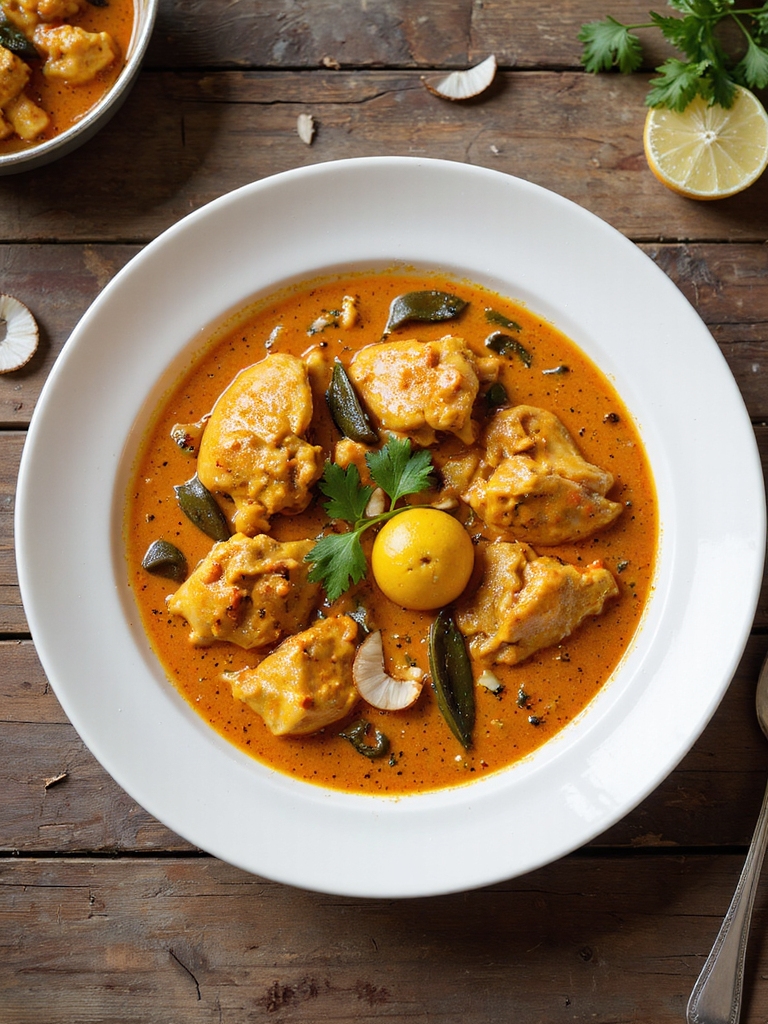
Malvani Chicken is a coastal Maharashtrian curry from the Konkan region, characterized by a bold roasted coconut and spice masala, tangy kokum, and a fragrant blend of ground chilies and spices that yield a rich, slightly sweet and spicy gravy; this version uses roasted freshly grated coconut, Malvani masala, and kokum or tamarind for acidity, simmering bone-in chicken until it soaks up the coastal flavors and produces a glossy, aromatic curry best served with steamed rice, neer dosa or bhakri.
- 1 kg chicken, bone-in pieces, washed
- 1 cup freshly grated coconut (or desiccated if needed)
- 6–8 dry red chilies (adjust to heat; use byadgi/kashmiri for color)
- 1 tbsp coriander seeds
- 1 tsp cumin seeds
- 1/2 tsp black peppercorns
- 4–5 cloves garlic
- 1–2 inch piece ginger
- 1 medium onion, roughly chopped
- 2 tbsp oil or coconut oil
- 1/2 tsp turmeric powder
- 1 tsp garam masala or Malvani masala (if available)
- 6–8 curry leaves
- 4–6 kokum petals or 1–2 tsp tamarind paste
- Salt to taste
- 1–2 cups water as needed
- Fresh cilantro for garnish (optional)
- 1 tsp sugar or jaggery (optional)
Dry-roast coconut until golden and aromatic along with dry red chilies, coriander seeds, cumin and peppercorns, then grind with garlic, ginger and a little water to a smooth paste;
heat oil in a heavy pan, sauté onions and curry leaves until translucent, add turmeric and the roasted coconut-spice paste and fry until oil separates, add chicken pieces, salt and kokum (or tamarind), stir to coat, pour in water to cover partly, simmer covered on low heat for 25–35 minutes until chicken is cooked and gravy thickens, finish with garam/Malvani masala and a pinch of sugar or jaggery to balance, garnish and serve hot.
Tip: Use freshly roasted coconut and pound the masala while warm for best aroma, adjust kokum/tamarind for desired tang and avoid overcooking so the coconut gravy doesn’t become grainy.
For a lighter accompaniment, consider pairing this curry with Mediterranean-inspired sides like a simple lemony rice or flatbreads to balance the richness with steamed rice.
Kashmiri Rogan Josh With Whole Spices and Mace
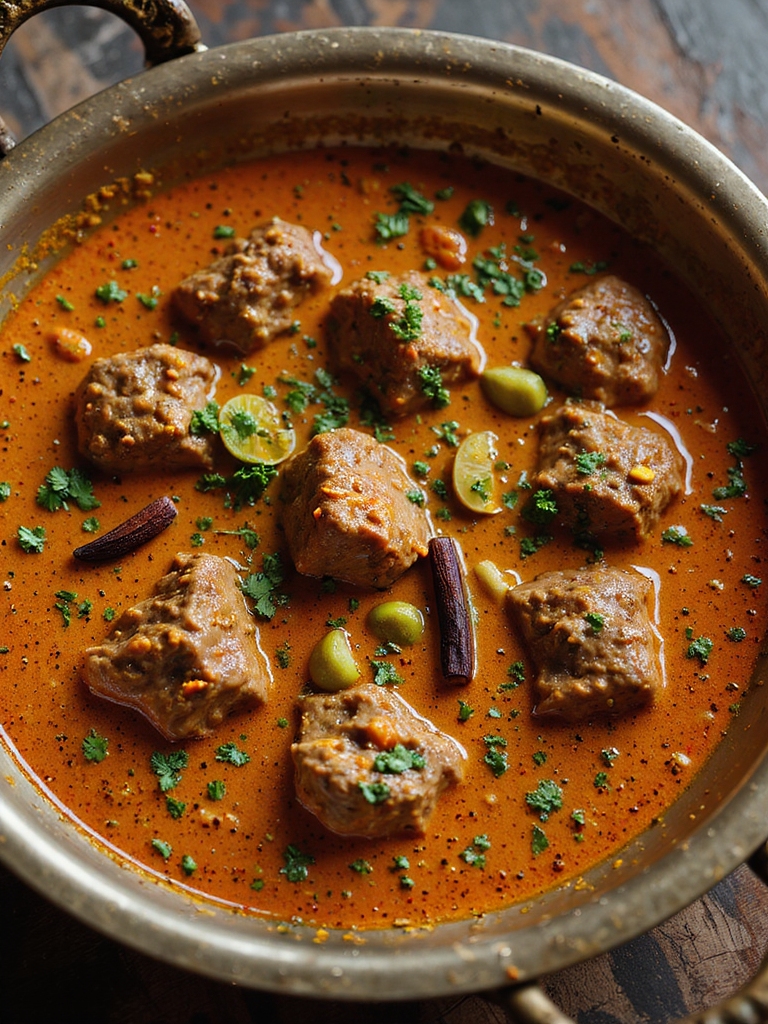
Kashmiri Rogan Josh is a fragrant, slow-simmered lamb curry from the Kashmir Valley known for its deep red color from mild Kashmiri chilies, the lush aroma of whole spices and mace (javitri), and a silky yogurt-based gravy; this version uses whole spices, browned onions, ginger-garlic, Kashmiri chili powder, and a tempering of ghee to produce tender lamb pieces infused with warm spice and a subtle sweet-tang while keeping the heat moderate.
- 1 kg lamb (bone-in pieces)
- 3–4 tbsp ghee or vegetable oil
- 2 large onions, finely sliced
- 1 tbsp ginger paste
- 1 tbsp garlic paste
- 6–8 Kashmiri dried red chilies (or 2 tbsp Kashmiri chili powder)
- 1/2 cup plain yogurt, well beaten
- 1 tsp fennel seeds, crushed
- 1 tsp coriander powder
- 1/2 tsp turmeric powder
- 6–8 green cardamoms
- 4 whole cloves
- 2–3 black peppercorns
- 1–2 bay leaves
- 1–2 sticks cinnamon
- 2–3 strands of mace (javitri) or 1/4 tsp ground mace
- Salt to taste
- 1–2 cups hot water (as needed)
- Fresh cilantro (optional, for garnish)
- 1 tsp sugar or a small piece of rock sugar (optional)
Heat ghee in a heavy-bottomed pot and add whole spices (cardamom, cloves, peppercorns, bay, cinnamon, mace) until fragrant.
Add sliced onions and sauté on medium-low until deep golden, then stir in ginger-garlic paste and crushed fennel until raw aroma cooks off.
Add lamb and brown on all sides, sprinkle turmeric, coriander and Kashmiri chili (or soaked ground chilies) and cook briefly.
Reduce heat and whisk in beaten yogurt gradually to avoid curdling, add salt and enough hot water to cover, simmer covered on low heat for 1–1.5 hours until lamb is tender and gravy is thickened.
Finish with a teaspoon of sugar if desired and adjust seasoning before serving with steamed rice or naan.
Tip: Use low heat when adding yogurt and simmer gently to prevent splitting, toast whole spices briefly for maximum aroma, and adjust Kashmiri chili for color rather than heat.
This dish is perfect for a cozy meal for two and pairs well with Healthy Dinner Recipes to balance richness and nutrition.
Chana Masala With Roasted Cumin and Amchur
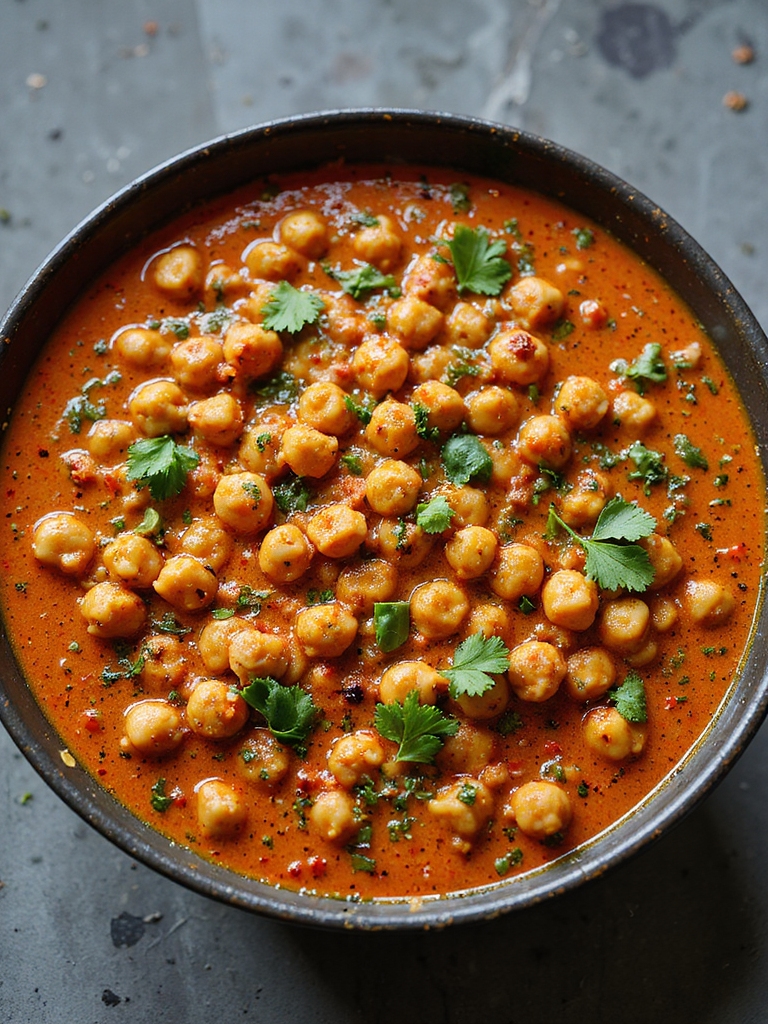
Chana Masala with roasted cumin and amchur is a tangy, earthy North Indian chickpea curry where toasted cumin seeds deepen the aroma and dry mango powder (amchur) adds bright, fruity acidity; this version uses soaked or canned chickpeas, a sautéed onion-tomato base spiced with coriander, garam masala, and Kashmiri chili for color, and finishes with roasted cumin powder and amchur to lift the flavors, served best with steamed basmati rice, bhature, or warm rotis.
- 2 cups dried chickpeas (soaked overnight) or 2 x 15 oz cans cooked chickpeas, drained
- 3 tbsp vegetable oil or ghee
- 1 tsp cumin seeds
- 1 large onion, finely chopped
- 1 tbsp ginger-garlic paste
- 2 large tomatoes, pureed or finely chopped
- 1–2 green chilies, slit (optional)
- 1 tsp turmeric powder
- 1 tbsp ground coriander
- 1–2 tsp Kashmiri chili powder (for color) or regular chili to taste
- 1 tsp roasted cumin powder (see note)
- 1 tsp amchur (dry mango powder) or 1 tbsp lemon juice
- 1 tsp garam masala
- Salt to taste
- 2–3 cups water or reserved chickpea cooking liquid
- Fresh cilantro for garnish
- 1 tbsp kasuri methi (dried fenugreek leaves), crushed (optional)
Heat oil in a heavy pot, add cumin seeds until they sizzle, then sauté chopped onion on medium heat until golden brown, add ginger-garlic and green chilies and cook until raw smell disappears, stir in turmeric, coriander and Kashmiri chili, add tomato puree and cook until oil separates, add chickpeas and enough water or cooking liquid to reach desired consistency, simmer 15–20 minutes to blend flavors, fold in roasted cumin powder, garam masala and amchur (or lemon juice), check seasoning and finish with crushed kasuri methi and chopped cilantro before serving.
Tip: For best roasted cumin, dry-toast whole cumin seeds until aromatic then grind just before using, and adjust amchur gradually to avoid overpowering the dish.
This hearty chickpea curry pairs especially well with savory chicken breast dinners for a complete, protein-rich meal that balances flavors and textures, making it a versatile choice for weeknight or special-occasion menus with savory chicken as a complement.