
I love recipes that fill the house with slow, savory smells and ask for little more than patience and a stout pot. I’ll show you hearty stews, braises and rustic pies that feel like home on a cold night — simple techniques, honest ingredients, and flavors that get better the next day.
Stick around and I’ll take you through a few classic dishes and the small tricks that make them sing.
Classic Irish Lamb Stew With Root Vegetables
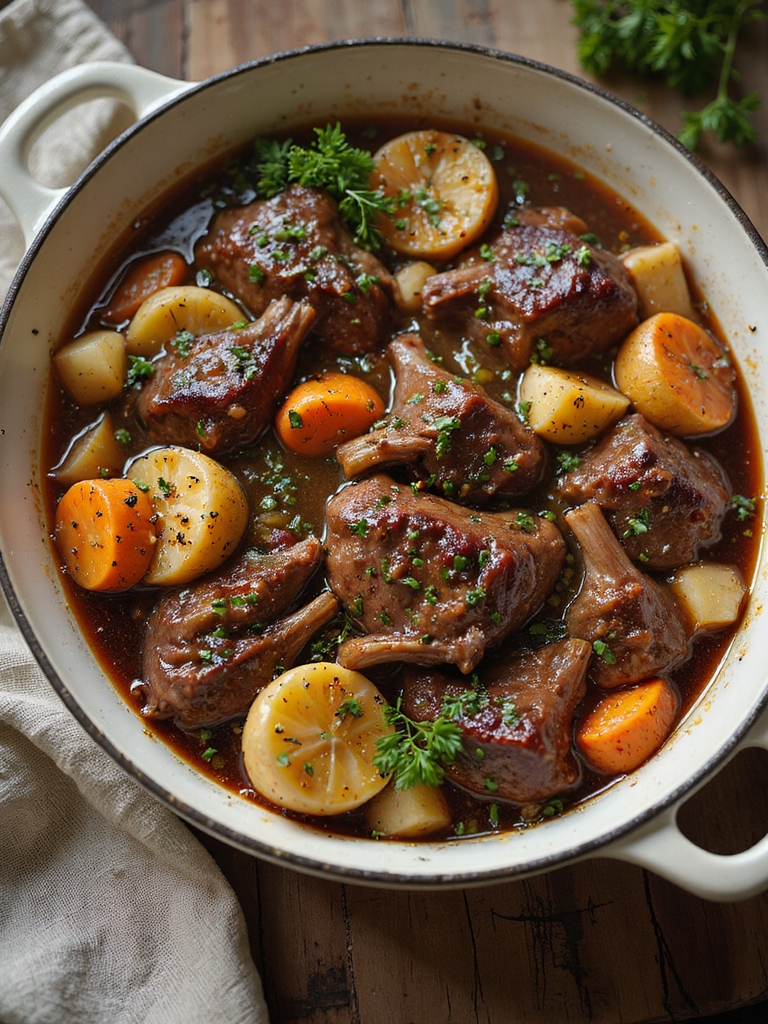
Classic Irish Lamb Stew with Root Vegetables is a hearty, rustic one-pot meal built from tender chunks of lamb slowly simmered with carrots, parsnips, potatoes and onions in a rich, savory broth flavored with thyme and bay leaf; it’s perfect for chilly evenings and makes excellent leftovers.
- 2 lb (900 g) lamb shoulder or neck, cut into 1½-inch pieces
- 2 tbsp vegetable oil or lamb fat
- 1 large onion, chopped
- 3 cloves garlic, minced
- 3 carrots, peeled and cut into chunks
- 2 parsnips, peeled and cut into chunks
- 4 medium potatoes, peeled and cut into chunks
- 2 tbsp tomato paste
- 4 cups (1 L) beef or lamb stock
- 1 cup (240 ml) dry stout or red wine (optional)
- 2 bay leaves
- 1 tsp dried thyme or 1 tbsp fresh thyme leaves
- Salt and freshly ground black pepper to taste
- 2 tbsp chopped fresh parsley for garnish
Heat the oil in a large heavy-bottomed pot over medium-high heat, season the lamb with salt and pepper and brown in batches until well caramelized, remove and set aside.
Then add the onion and garlic and cook until softened before stirring in the tomato paste and cooking 1 minute.
Return the lamb to the pot, pour in the stock and stout or wine if using, add bay leaves and thyme, bring to a simmer, cover partially and cook gently for about 1¼–1½ hours until the lamb is nearly tender.
Then add the carrots, parsnips and potatoes and continue simmering uncovered for 30–40 minutes until vegetables and meat are tender and the sauce has slightly thickened, adjust seasoning and remove bay leaves before serving.
Tip: For a thicker gravy, mash a few cooked potatoes into the stew or mix 1 tbsp flour with a little cold water and stir in near the end, and always brown the meat well and simmer gently for best flavor and tender results.
This comforting stew pairs wonderfully with Mediterranean-inspired sides such as crusty bread or a simple green salad.
Guinness Beef Stew With Pearl Onions
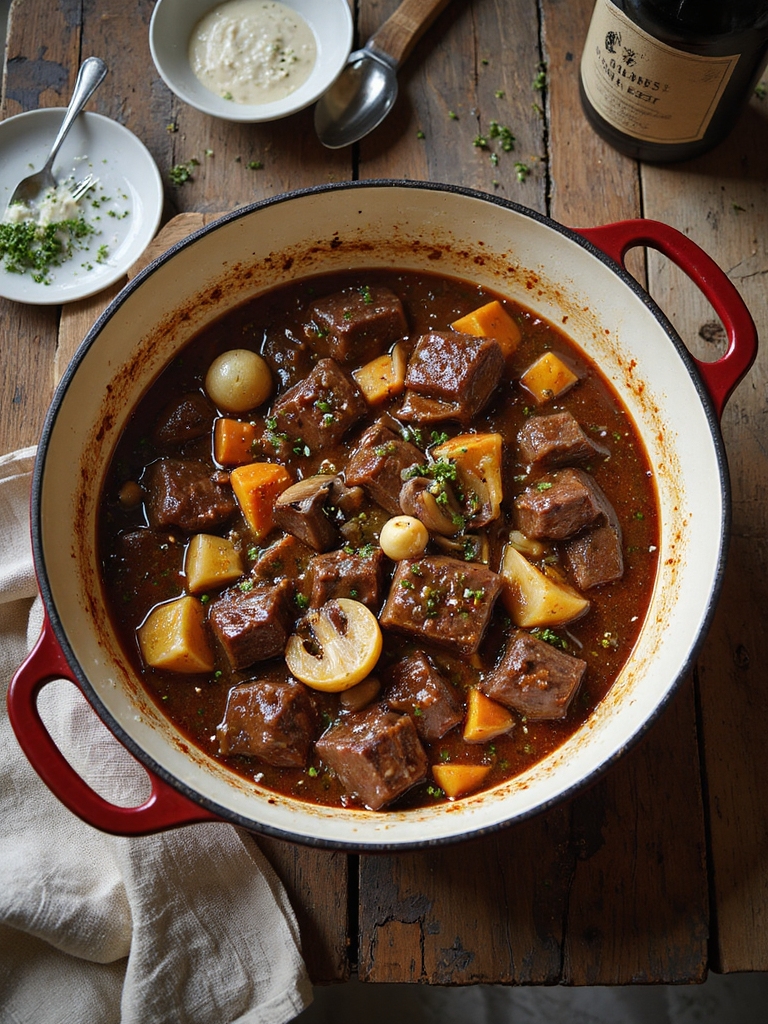
This Guinness Beef Stew with Pearl Onions is a rich, comforting Irish one-pot meal where tender braised beef simmers long and low in a dark, malty Guinness-infused sauce with mushrooms, sweet pearl onions and hearty root vegetables until meltingly soft; it’s perfect with crusty bread or mashed potatoes and gets better the next day.
- 2 lb (900 g) beef chuck, cut into 1½-inch cubes
- 2 tbsp vegetable oil
- 4 oz (115 g) bacon or pancetta, diced (optional)
- 1 large onion, chopped
- 3 cloves garlic, minced
- 12–16 pearl onions, peeled
- 8 oz (225 g) mushrooms, halved or quartered
- 3 carrots, cut into chunks
- 2 parsnips or 2 additional carrots, cut into chunks
- 2 tbsp tomato paste
- 2 tbsp all-purpose flour
- 2 cups (480 ml) beef stock
- 12 fl oz (350 ml) Guinness stout
- 2 bay leaves
- 1 tsp dried thyme or 1 tbsp fresh thyme leaves
- 1 tbsp Worcestershire sauce
- Salt and freshly ground black pepper to taste
- Chopped fresh parsley for garnish
Heat oven to 325°F (160°C).
Season beef with salt and pepper and brown in batches in a heavy Dutch oven with oil until deeply caramelized, remove and sauté bacon if using then add chopped onion and garlic until softened; stir in tomato paste and flour and cook 1 minute, return beef, add stock, Guinness, Worcestershire, bay leaves and thyme, bring to a simmer, cover and transfer to oven to braise for 1½–2 hours until beef begins to tenderize, then add carrots, parsnips, pearl onions and mushrooms, return to oven uncovered for another 30–45 minutes until vegetables are soft and sauce has reduced to a glossy stew, adjust seasoning and skim off excess fat before serving.
Tip: To peel pearl onions quickly, blanch them in boiling water for 30–60 seconds then plunge into ice water to slip skins easily, and brown meat well and cook low and slow for the best depth of flavor.
This recipe is a great example of an easy beef dinner that fits well into weeknight meal planning with minimal hands-on time once it’s in the oven and a one-pot cleanup.
Colcannon Shepherd’s Pie With Cheddar Crust
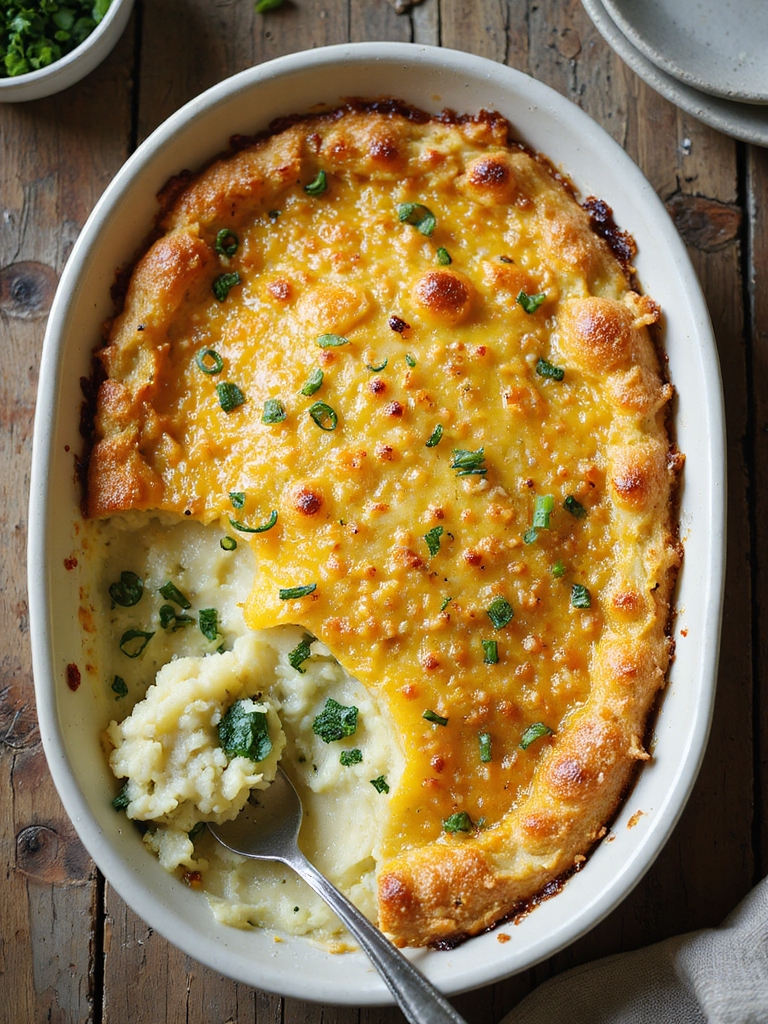
Colcannon Shepherd’s Pie With Cheddar Crust is a comforting Irish twist on the classic shepherd’s pie that layers savory minced lamb (or beef) with onions, cabbage and scallions, then crowns it with creamy mashed potatoes mixed with buttery kale and sharp cheddar that bakes to a golden, cheesy crust — perfect for family dinners or a cozy night in.
- 1 lb (450 g) minced lamb or beef
- 2 tbsp vegetable oil or butter
- 4 oz (115 g) bacon or pancetta, diced (optional)
- 1 large onion, finely chopped
- 2–3 cloves garlic, minced
- 2 cups shredded cabbage or savoy cabbage
- 4 scallions (spring onions), sliced
- 1 tsp dried thyme or 1 tbsp fresh thyme
- 1 tbsp tomato paste
- 1 cup (240 ml) beef or lamb stock
- 1 tbsp Worcestershire sauce
- Salt and freshly ground black pepper
- 2 lb (900 g) potatoes, peeled and quartered
- 4 tbsp butter
- 1/4 cup (60 ml) milk or cream, or more as needed
- 2 cups chopped kale or spinach (optional)
- 1 1/2 cups (150 g) grated sharp cheddar, divided
- 1 egg, beaten (for egg wash, optional)
- Chopped parsley for garnish
Boil the potatoes until tender, drain and mash with butter, milk, cooked kale (if using) and half the cheddar, seasoning to taste; meanwhile heat oil in a large skillet, cook bacon until crisp if using then add onion and garlic and sauté until soft, add minced lamb and brown, stirring in tomato paste, thyme, Worcestershire and stock and simmer until slightly reduced, fold in shredded cabbage and scallions and cook just until wilted; transfer the meat and veg mixture to a baking dish, spread the mashed potatoes evenly on top, sprinkle with remaining cheddar and brush with beaten egg if using, bake in a preheated 400°F (200°C) oven for 20–25 minutes until the top is golden and bubbling, let rest 5 minutes before serving.
Tip: Use starchy potatoes for fluffy mash, squeeze excess moisture from cabbage/kale before mixing, and brown the meat well for deeper flavor; the pie can be assembled ahead and baked from chilled (add a few extra minutes). A simple homemade dinner can turn any weeknight into a special meal with comfort food at its center.
Rustic Coddle With Sausage and Bacon

Rustic Coddle is a hearty Dublin-style one-pot stew of sausages, bacon and soft potatoes slowly simmered with onions and herbs until meltingly tender; this version keeps it simple and comforting, using good-quality pork sausages, smoky bacon, pearl onions or sliced onions, and a light broth finished with parsley for a warming, rustic meal best served with soda bread and butter.
- 1 lb (450 g) good-quality pork sausages (Cumberland or bangers)
- 6–8 oz (170–225 g) back bacon or streaky bacon, thick-cut, sliced into pieces
- 1 tbsp vegetable oil or butter
- 2 large onions, thickly sliced or 16–20 pearl onions, peeled
- 1.5 lb (700 g) waxy potatoes (e.g., Yukon Gold), peeled and halved or quartered
- 2 carrots, sliced into rounds (optional)
- 3 cups (720 ml) chicken or vegetable stock
- 1 cup (240 ml) dry white beer or additional stock (optional)
- 2 bay leaves
- 4 sprigs fresh thyme or 1 tsp dried thyme
- Salt and freshly ground black pepper
- Chopped fresh parsley to finish
Heat the oil in a large heavy casserole over medium heat, brown the sausages all over then remove and briefly crisp the bacon pieces, add the onions and carrots and cook until starting to soften; return the sausages and bacon to the pot, add the potatoes, bay leaves, thyme and pour in stock and beer (if using) to just cover, bring to a gentle simmer, cover and cook on low for 35–45 minutes until potatoes are tender and flavours meld, adjust seasoning and scatter parsley before serving.
Tip: Use waxy potatoes so they hold shape, brown sausages first for flavor, avoid boiling hard to keep the sausage skins intact, and rest the coddle 10 minutes off the heat to let flavors settle. Coddle pairs especially well with quick and easy sides like soda bread or a simple green salad.
Smoked Haddock and Potato Pie (Cullen Skink-Inspired)

Smoked haddock and potato pie takes the smoky, creamy soul of Cullen skink and turns it into a comforting baked pie topped with buttery mashed potato; delicate flakes of smoked haddock mingle with onions, leeks and parsley in a white sauce thickened with potato and finished under a crisp golden mash for a dish that’s perfect for chilly nights or casual gatherings.
- 1 lb (450 g) smoked haddock fillets, skinned
- 1.5 lb (700 g) waxy potatoes, peeled and cut into chunks
- 2 tbsp butter
- 1 tbsp olive oil
- 1 large onion, finely sliced
- 1 leek, white and pale green parts thinly sliced, rinsed
- 1 cup (240 ml) whole milk
- 1/2 cup (120 ml) double cream or crème fraîche
- 1 bay leaf
- 1/4 tsp ground white pepper or black pepper
- Salt to taste (be cautious: smoked fish is salty)
- 2 tbsp chopped fresh parsley
- 1 egg yolk (optional, for richer mash)
- 2 tbsp grated cheddar or Parmesan (optional, for sprinkling)
Cook the potatoes in salted boiling water until very tender, drain and mash with butter, cream (or egg yolk if using) and seasoning, while gently poaching the smoked haddock in the milk with the bay leaf for about 5–8 minutes until just cooked through then lift the fish, flake off skin and bones if any and reserve the poaching milk; sweat the onion and leek in oil and a little butter until soft and sweet, stir in a tablespoon of flour if you like to thicken, add the reserved poaching milk and cream, simmer to a glossy sauce, fold in the flaked haddock and parsley, adjust seasoning (remember fish saltiness), transfer to a pie dish, top evenly with the mashed potato, scatter cheese if using and brown under a hot grill or in a 425°F/220°C oven for 10–15 minutes until piping and golden.
Tip: Keep an eye on salt because smoked haddock can be quite salty, use the poaching milk for maximum flavour, and let the pie rest 5–10 minutes after baking so the filling sets before serving.
For a quicker midweek alternative, swap in ground pork for a rustic ground pork topping and finish the pie the same way.
Slow-Braised Beef and Guinness Pot Roast
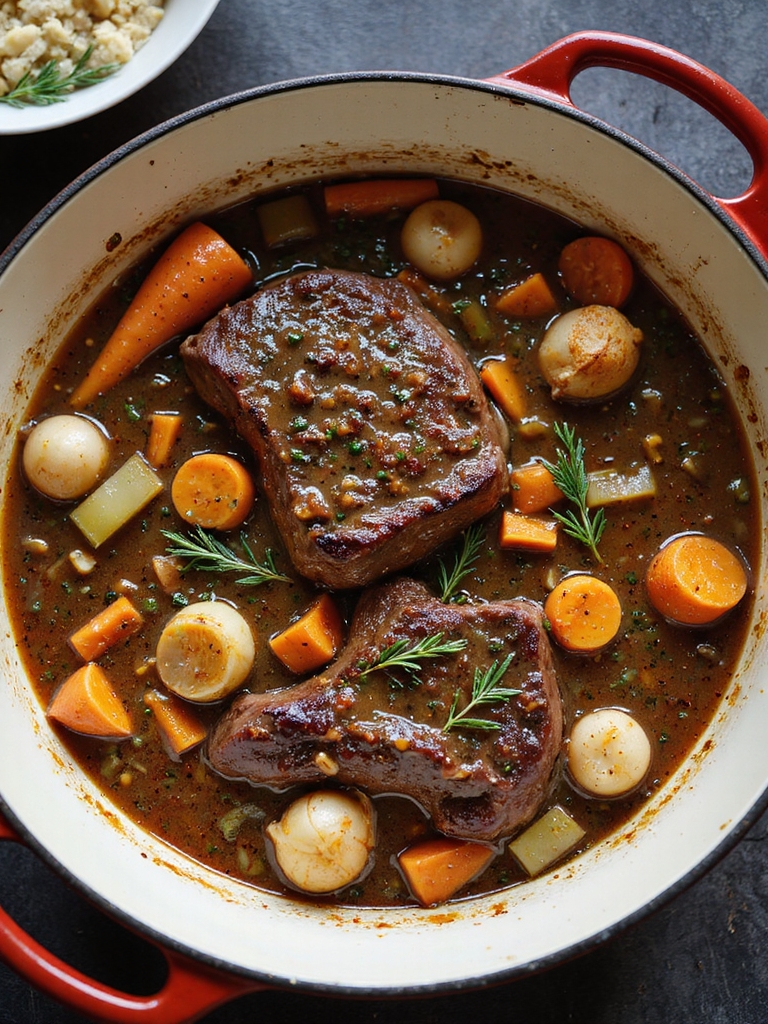
This Slow-Braised Beef and Guinness Pot Roast is a hearty Irish classic—tender beef slow-cooked in rich Guinness stout with aromatics, root vegetables and a glossy gravy—perfect for a cozy dinner that feeds a crowd and improves if made a day ahead.
- 3 lb (1.4 kg) beef chuck, trimmed and tied
- 2 tbsp vegetable oil
- Salt and freshly ground black pepper
- 2 tbsp plain flour
- 1 large onion, sliced
- 2 carrots, cut into large chunks
- 2 parsnips, cut into large chunks
- 2 celery stalks, chopped
- 4 cloves garlic, smashed
- 2 cups (480 ml) Guinness stout
- 1.5–2 cups (360–480 ml) beef stock
- 2 tbsp tomato paste
- 2 bay leaves
- 4–6 sprigs fresh thyme (or 1 tsp dried)
- 1 tbsp Worcestershire sauce
- 1 tbsp brown sugar or honey (optional)
- 2 tbsp chopped fresh parsley, for serving
Season the beef generously with salt and pepper, dust with flour, then brown on all sides in oil in a heavy ovenproof pot; remove the meat.
Sweat the onion, carrots, parsnips and celery until starting to color, add the garlic, tomato paste and sugar and cook briefly.
Deglaze with Guinness, scrape up browned bits, return the beef to the pot, add stock to come halfway up the meat, toss in bay leaves, thyme and Worcestershire, bring to a simmer, cover and transfer to a 300°F/150°C oven for 3–4 hours until fork-tender (or simmer gently on the stove or in a slow cooker).
Lift the meat, strain and reduce the braising liquid on the stove to a glossy gravy and slice or shred the beef to serve with the sauce.
Tip: Taste for seasoning after reducing the sauce since evaporation concentrates salt and bitterness; use tougher well-marbled cuts for best results and cook low and slow—this also benefits from resting overnight for even richer flavour.
This recipe pairs especially well with classic sides like creamy mashed potatoes or buttered cabbage for an authentic savory steak dinner experience.
Potato and Cabbage Hotpot With Thyme

This Potato and Cabbage Hotpot with Thyme is a simple, comforting one-dish Irish-style bake that layers thinly sliced potatoes and shredded green cabbage with caramelized onions, garlic, fresh thyme and a creamy, cheesy custard, then bakes until bubbling and golden—an excellent side or vegetarian main that reheats well and pairs beautifully with roasted meats or a crisp salad.
- 1½ lb (700 g) potatoes (Yukon Gold or Maris Piper), peeled and very thinly sliced
- 8 oz (225 g) green cabbage, cored and thinly shredded
- 1 large onion, thinly sliced
- 2 cloves garlic, minced
- 2 tbsp unsalted butter
- 2 tbsp olive oil
- 1 cup (240 ml) milk
- ½ cup (120 ml) heavy cream or single cream
- 2 large eggs
- 1 tsp fresh thyme leaves (or ½ tsp dried)
- 1 cup (100 g) grated cheddar or mature Irish cheese
- ½ tsp ground black pepper
- 1 tsp salt, plus extra to taste
- 2 tbsp chopped fresh parsley (optional, for serving)
Preheat the oven to 375°F (190°C).
Sauté the onion in butter and oil over medium heat until soft and lightly browned, add garlic and thyme for 1 minute, toss in shredded cabbage and cook until just wilted and slightly sweetened, season with salt and pepper and remove from heat.
Whisk together milk, cream and eggs with half the cheese and a little salt and pepper.
Layer a single layer of potato slices in a buttered 9×9-inch (or similar) baking dish, top with half the cabbage mixture, repeat with potatoes and cabbage.
Pour the milk-egg mixture evenly over the layers, sprinkle remaining cheese on top, cover with foil and bake 30 minutes then uncover and bake another 25–35 minutes until potatoes are tender and top is golden and bubbling; let rest 10 minutes before slicing and serve sprinkled with parsley if using.
Tip: Use very thinly sliced potatoes (a mandoline helps) so the hotpot cooks evenly without long precooking, and adjust seasoning after baking since custard can taste muted when hot.
This rustic casserole also works wonderfully when you tailor it around delicious cabbage by adding seasonal herbs or smoked meats for extra depth.
Braised Lamb Shanks With Parsley-Celery Root Mash
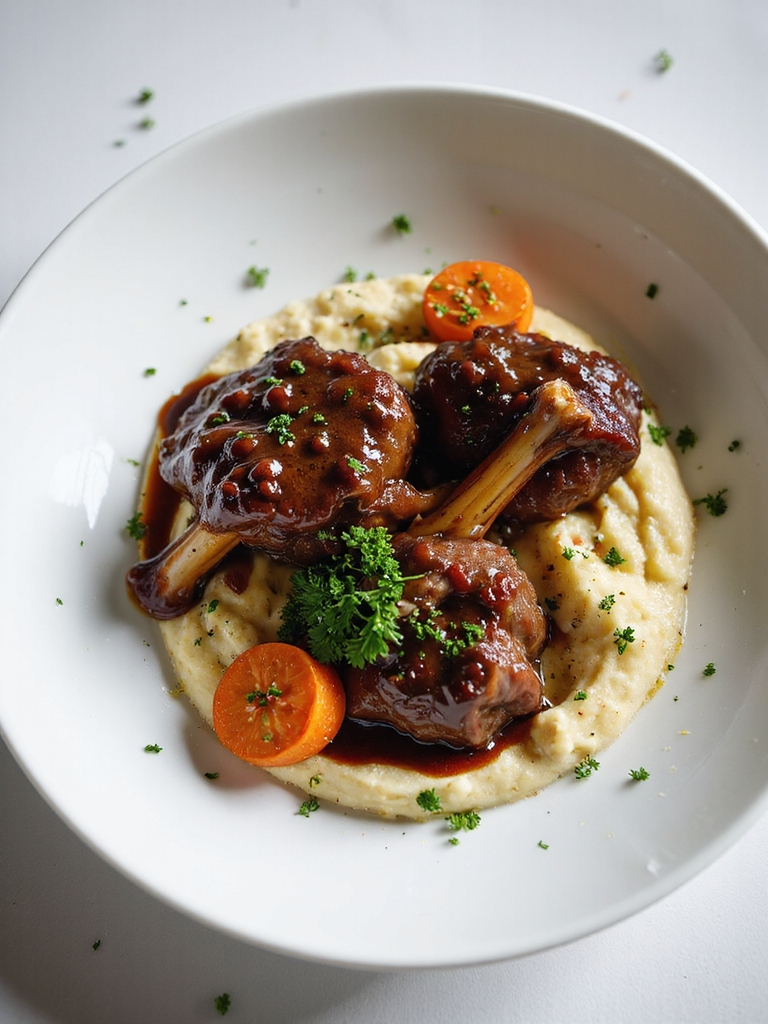
Braised Lamb Shanks with Parsley-Celery Root Mash is a hearty Irish-inspired dinner where slowly braised shanks become meltingly tender in a rich red-wine and stock sauce with aromatics, served atop a creamy mash made from celery root and potatoes brightened with plenty of parsley; it’s ideal for slow-cooking, makes excellent leftovers, and pairs well with roasted root vegetables or a simple green salad.
- 4 lamb shanks (about 3–4 lb / 1.5–1.8 kg total)
- Salt and black pepper
- 2–3 tbsp olive oil
- 1 large onion, finely chopped
- 2 carrots, peeled and chopped
- 2 celery stalks, chopped
- 4 garlic cloves, smashed
- 2 tbsp tomato paste
- 1 cup (240 ml) dry red wine
- 3 cups (720 ml) beef or lamb stock
- 2 bay leaves
- 4 sprigs fresh thyme
- 1 tbsp Worcestershire sauce (optional)
- 2 lb (900 g) potatoes, peeled and cut into chunks
- 1 lb (450 g) celery root (celeriac), peeled and cut into chunks
- 4 tbsp unsalted butter
- 1/3–1/2 cup (80–120 ml) milk or cream, to taste
- 1 cup packed fresh parsley leaves, finely chopped
- Freshly grated nutmeg (optional)
Pat lamb shanks dry, season generously with salt and pepper, and brown in a heavy ovenproof pot with oil in batches; remove shanks, sauté onion, carrot and celery until softened, add garlic and tomato paste, deglaze with red wine, return shanks to the pot, add stock, bay leaves, thyme and Worcestershire, bring to a simmer, cover and braise in a 325°F (160°C) oven for 2½–3 hours until very tender.
Meanwhile boil potatoes and celery root until soft, drain, mash with butter and milk/cream until smooth, fold in chopped parsley and a little nutmeg, adjust seasoning.
Serve shanks over the parsley-celeriac mash and spoon some braising sauce over each portion.
Tip: Brown the shanks well for deeper flavor and skim excess fat from the braise before serving; cook low and slow until the meat falls from the bone and mash the celery root while hot so it absorbs butter and cream evenly.
This dish is a great example of rustic ground-meat dinner traditions and pairs especially well with savory ground meat sides like spiced minced vegetables or braised lentils.
Vegetable Stew With Barley and Guinness Broth
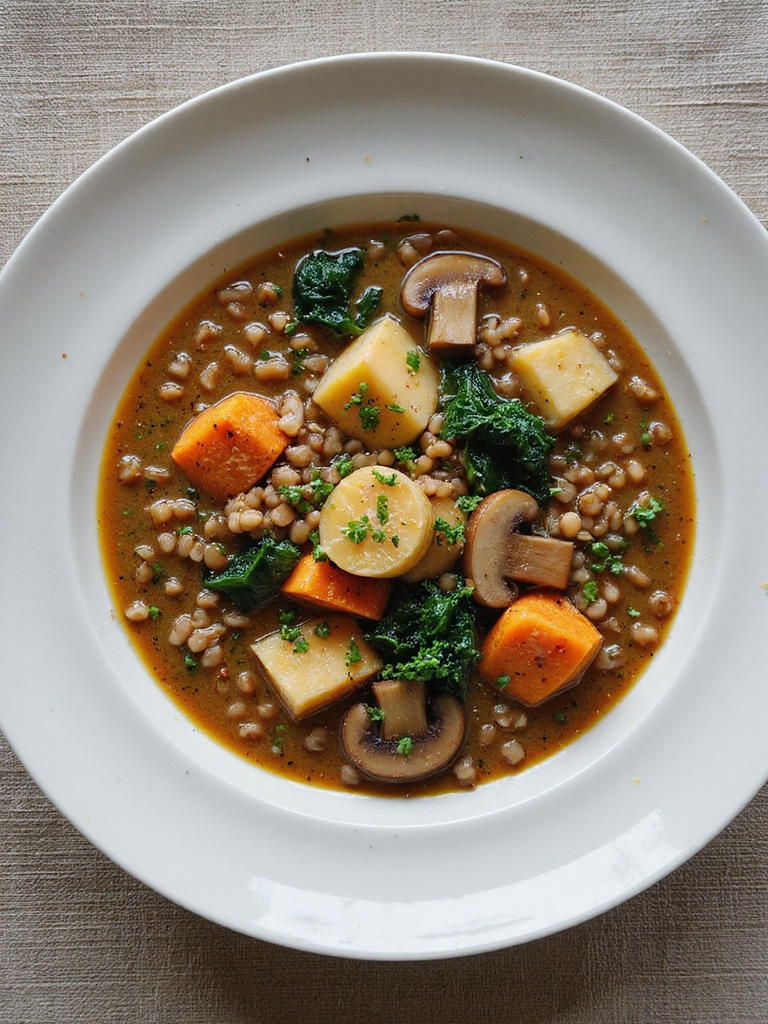
This Vegetable Stew with Barley and Guinness Broth is a warming, hearty Irish-inspired one-pot meal where root vegetables, mushrooms and greens simmer with pearl barley in a richly flavored broth made with Guinness, vegetable stock and aromatics; it’s nourishing, makes great leftovers and can easily be made vegetarian or vegan by choosing plant-based butter and skipping any optional honey or Worcestershire that contains anchovies.
- 2 tbsp olive oil
- 1 large onion, diced
- 2 carrots, peeled and chopped
- 2 parsnips, peeled and chopped
- 2 celery stalks, chopped
- 8 oz (225 g) mushrooms, halved or thickly sliced
- 3 garlic cloves, minced
- 1 cup (170 g) pearl barley, rinsed
- 12 oz (330 ml) Guinness (or other stout)
- 4 cups (960 ml) vegetable stock
- 2 tbsp tomato paste
- 2 tsp soy sauce or tamari
- 2 bay leaves
- 1 tsp dried thyme (or 2 sprigs fresh)
- 1 small rutabaga or turnip, peeled and cubed
- 2 potatoes, peeled and cubed
- 2 cups chopped kale or Swiss chard, stems removed
- Salt and black pepper to taste
- 2 tbsp chopped fresh parsley (for finishing)
- Optional: 1 tbsp malt vinegar or lemon juice to brighten
Heat the oil in a large heavy pot over medium heat, add onion, carrots, parsnip and celery and cook, stirring, until softened and beginning to brown, add mushrooms and garlic and cook until mushrooms release liquid, stir in tomato paste and barley and toast a minute, pour in Guinness and scrape up browned bits, add stock, soy sauce, bay leaves and thyme, bring to a simmer, add rutabaga and potatoes, cover and cook gently for about 35–45 minutes until barley and vegetables are tender, stir in kale and simmer a few minutes until wilted, season with salt, pepper and malt vinegar or lemon to taste, remove bay leaves, finish with chopped parsley and serve hot.
Tip: Use pearl barley for a firmer, chewy texture and pre-soak it for 30 minutes to shorten cooking time; if you prefer a thicker stew, mash a cup of the cooked vegetables and barley against the pot and stir back in to naturally thicken the broth.
This recipe fits nicely into a season of cozy autumn dinners and celebrates rustic comfort with simple, hearty ingredients.
Beef and Stout Stew With Horseradish Dumplings
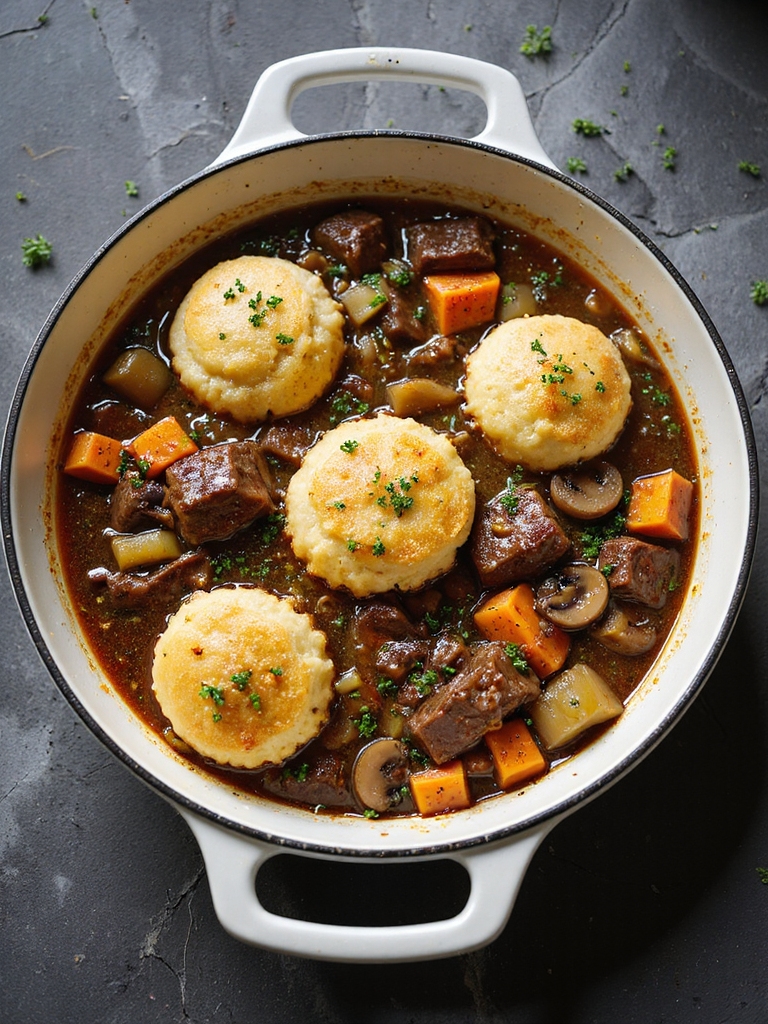
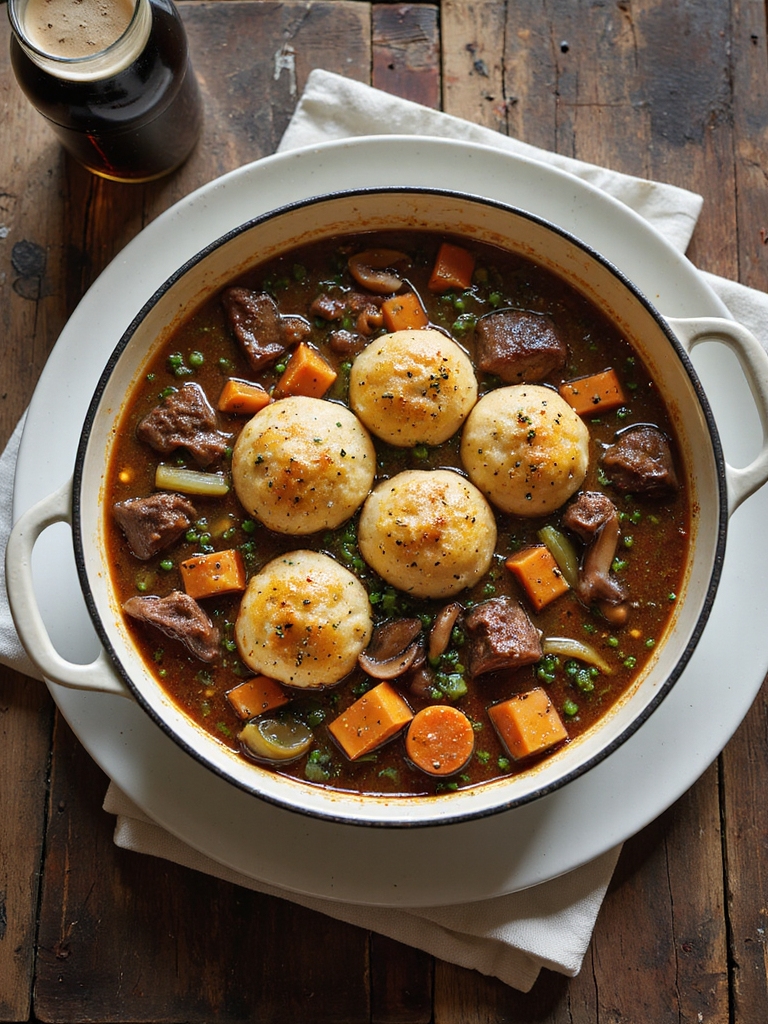
This Beef and Stout Stew with Horseradish Dumplings is a robust, comforting Irish-style one-pot meal where browned beef braises slowly in a rich stout and beef-stock gravy until meltingly tender, finished with herb-scented horseradish dumplings that steam on top and absorb the deep flavors; it’s perfect for chilly nights and makes excellent leftovers.
- 2 lb (900 g) beef chuck, cut into 1½-inch cubes
- 3 tbsp vegetable oil or beef dripping
- 1 large onion, diced
- 2 carrots, peeled and sliced
- 2 celery stalks, sliced
- 8 oz (225 g) mushrooms, halved or quartered
- 3 garlic cloves, minced
- 3 tbsp all-purpose flour
- 12 oz (330 ml) stout (Guinness or other)
- 3 cups (720 ml) beef stock
- 2 tbsp tomato paste
- 2 tsp Worcestershire sauce
- 2 bay leaves
- 1 tsp dried thyme (or 1 sprig fresh)
- 2 tbsp chopped fresh parsley
- Salt and freshly ground black pepper
- For dumplings: 1¼ cups (160 g) self-raising flour, 3 tbsp cold butter cut into bits, 2–3 tbsp prepared horseradish (adjust to taste), 3 tbsp chopped parsley, about ¾ cup (180 ml) milk (more if needed), sea salt
Heat oil in a heavy casserole over medium-high heat, season beef with salt and pepper and brown in batches then set aside.
Reduce heat and cook onion, carrot, celery and mushrooms until softened and starting to color, add garlic and tomato paste and cook a minute.
Sprinkle flour and stir to coat then gradually pour in stout scraping up any browned bits.
Add stock, Worcestershire, bay leaves and thyme, return beef to pot, bring to a simmer, cover and braise gently for 1½–2 hours until beef is tender.
Meanwhile make dumpling dough by rubbing butter into self-raising flour, stirring in parsley and horseradish, adding just enough milk to form a soft sticky dough.
Drop spoonfuls onto the stew about 20–25 minutes before the end of cooking, cover and simmer until dumplings are puffed and cooked through.
Adjust seasoning and scatter parsley before serving.
Tip: Use a well-marbled chuck and don’t rush browning for maximum flavor; adjust horseradish in dumplings to your heat preference, and if the stew is too thin, mash a few chunks or simmer uncovered to reduce.
This recipe is inspired by classic comfort-food dishes and pairs wonderfully with Favorite Dinner Recipes for more cozy meal ideas.