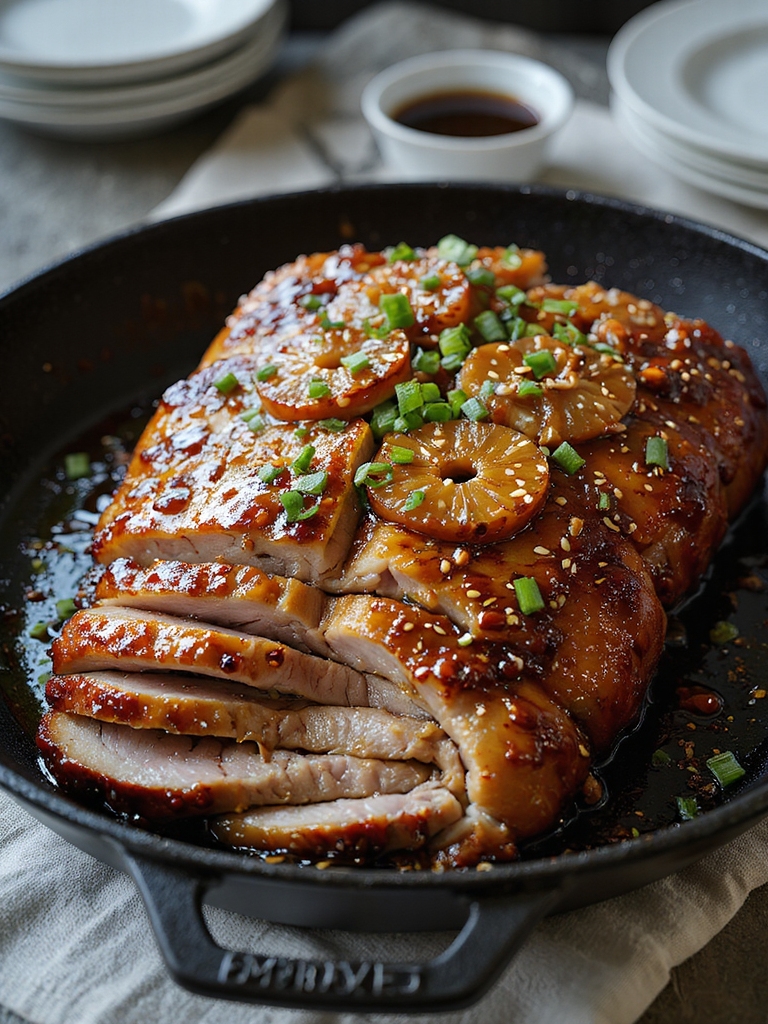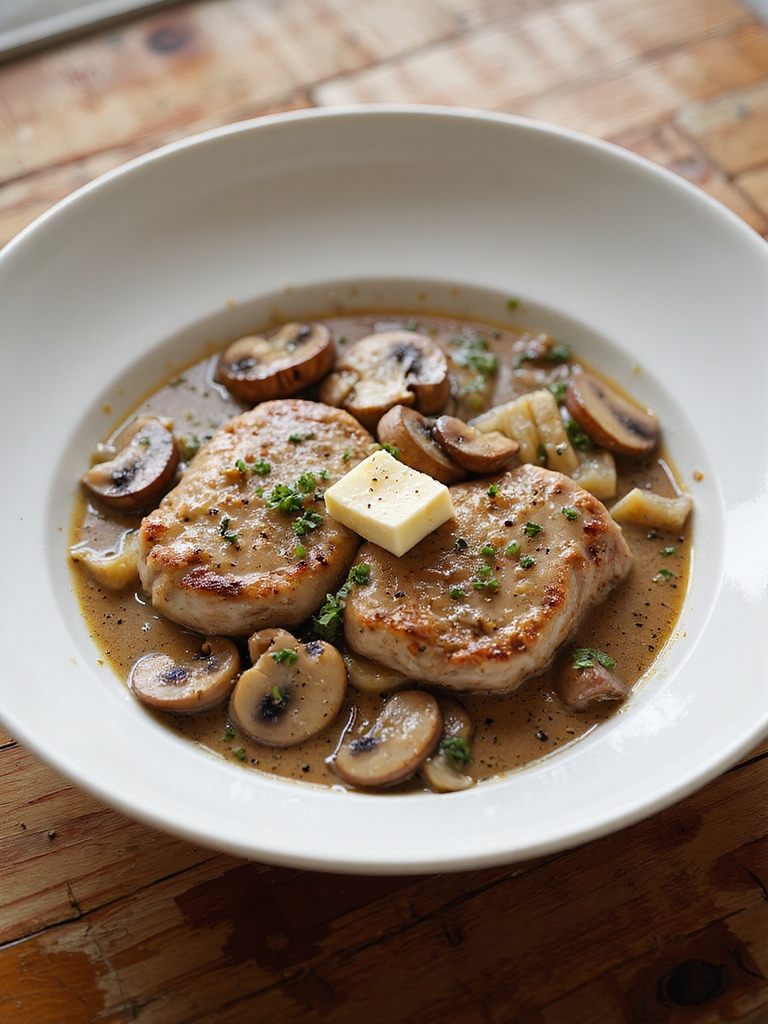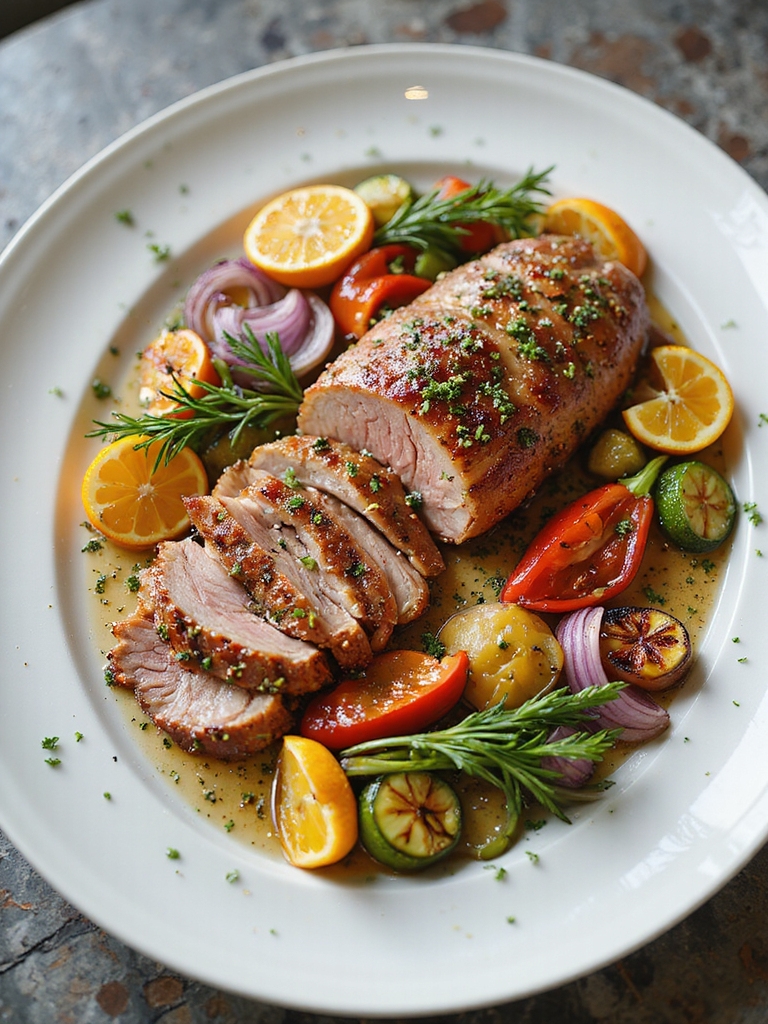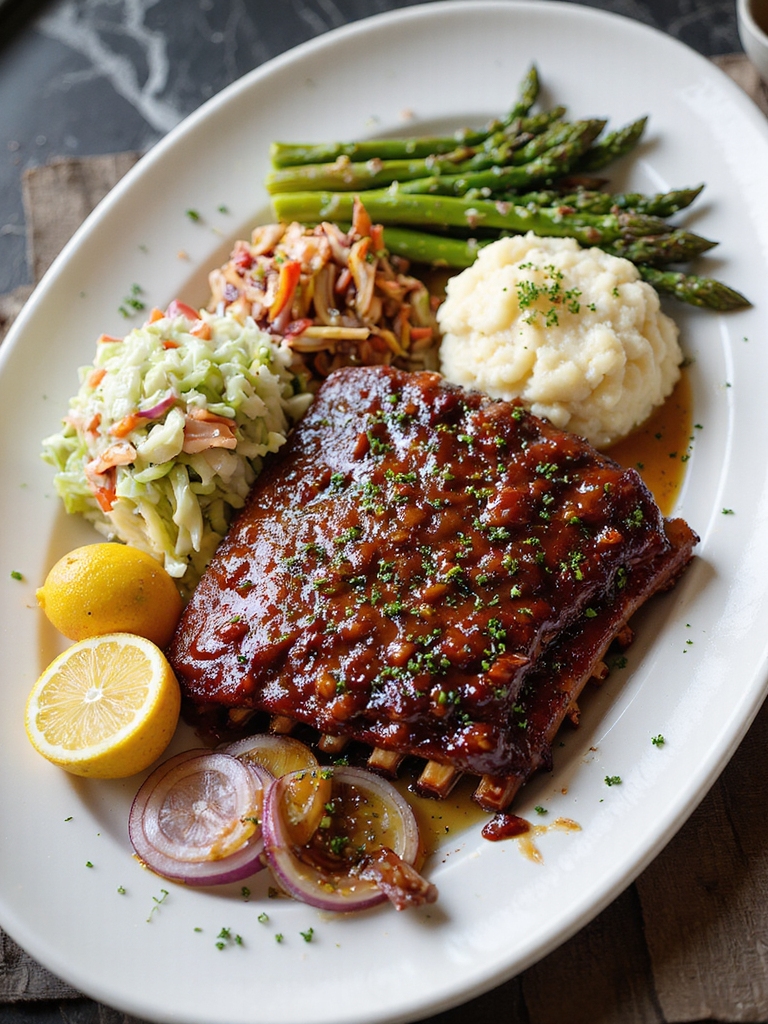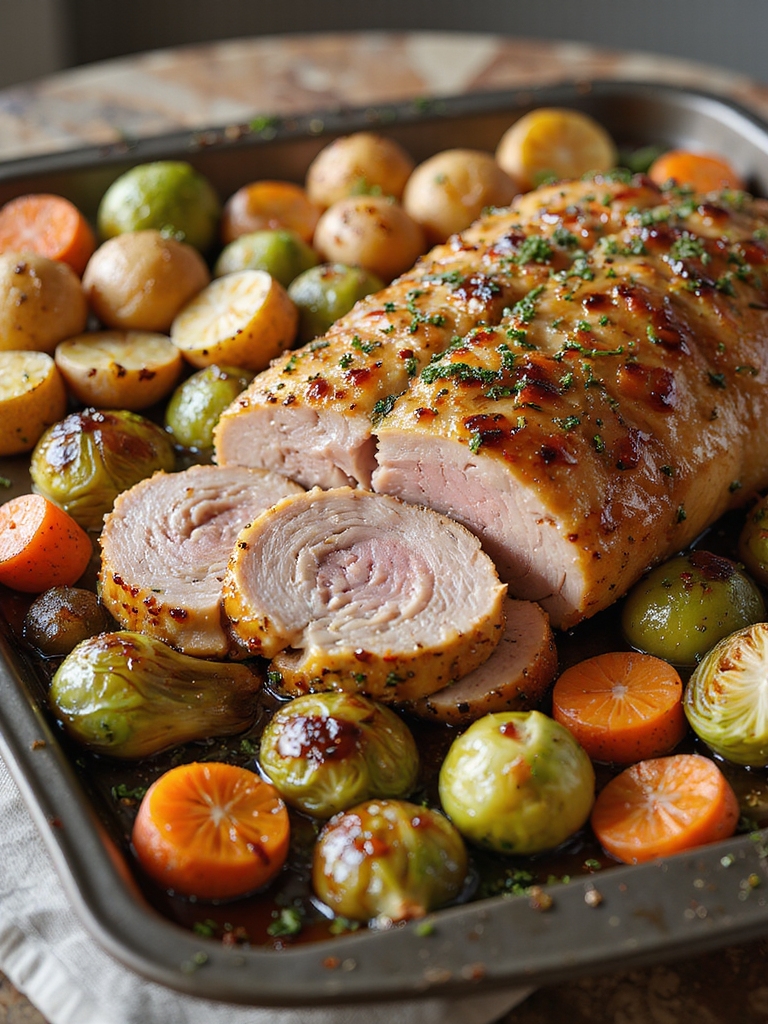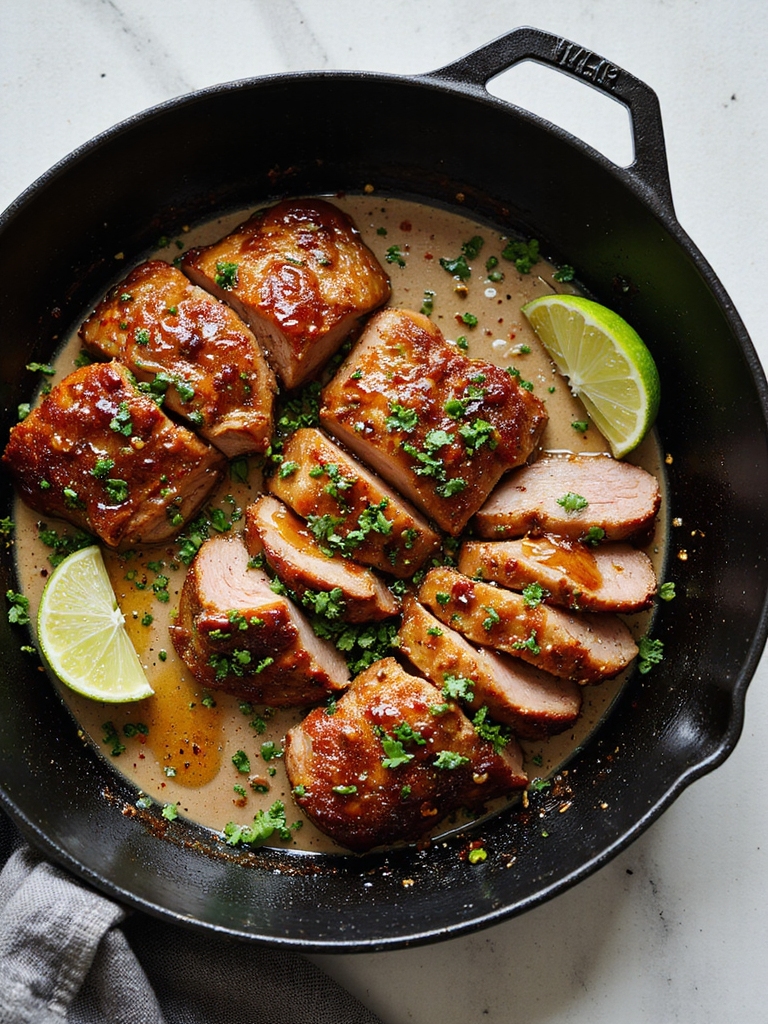

I’ve spent years coaxing juicy pork loin chops out of a hot oven, and I’ll tell you the tricks that actually work—brine briefly, dry well, sear, then finish to the right temp.
I like simple herb-garlic rubs or a maple-mustard glaze near the end, and a quick pan sauce always makes them feel special. Stick with me and I’ll show you methods, timing, and sides that turn plain chops into a meal worth repeating.
Why Pork Loin Chops Can Become Dry and How to Prevent It
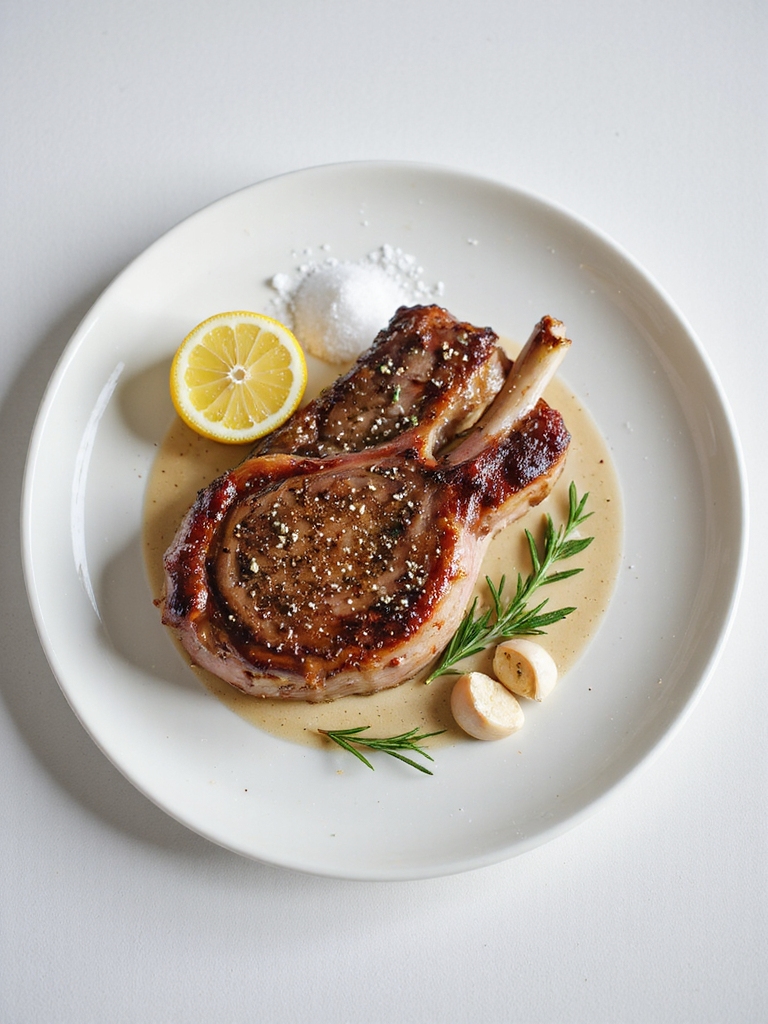
Pork loin chops are lean and can dry out quickly if overcooked, so this recipe focuses on brining, proper seasoning, searing, and finishing in the oven to lock in moisture and produce tender, juicy chops every time.
- 4 bone-in pork loin chops (about 1 to 1¼ inches thick)
- 4 cups water
- 1/4 cup kosher salt
- 1/4 cup brown sugar
- 2 cloves garlic, smashed
- 1 sprig rosemary or 1 tsp dried rosemary
- 1/2 tsp black pepper
- 2 tbsp olive oil or butter
- 1 tsp paprika (optional)
- Lemon wedges for serving
Pat chops dry, season lightly, then sear over medium-high heat for 2–3 minutes per side until golden, transfer to a 400°F (200°C) oven and roast 6–10 minutes until an instant-read thermometer reads 145°F (63°C) in the thickest part, rest chops 5 minutes before serving to redistribute juices.
Tip: Brine for 30 minutes to 2 hours, avoid overcooking by using a meat thermometer, rest after cooking, and slice against the grain for the most tender bites.
Brining with a salt and sugar solution helps the meat retain moisture and enhances flavor by allowing salt to penetrate the pork.
Simple Brine for Juicy Oven-Baked Chops
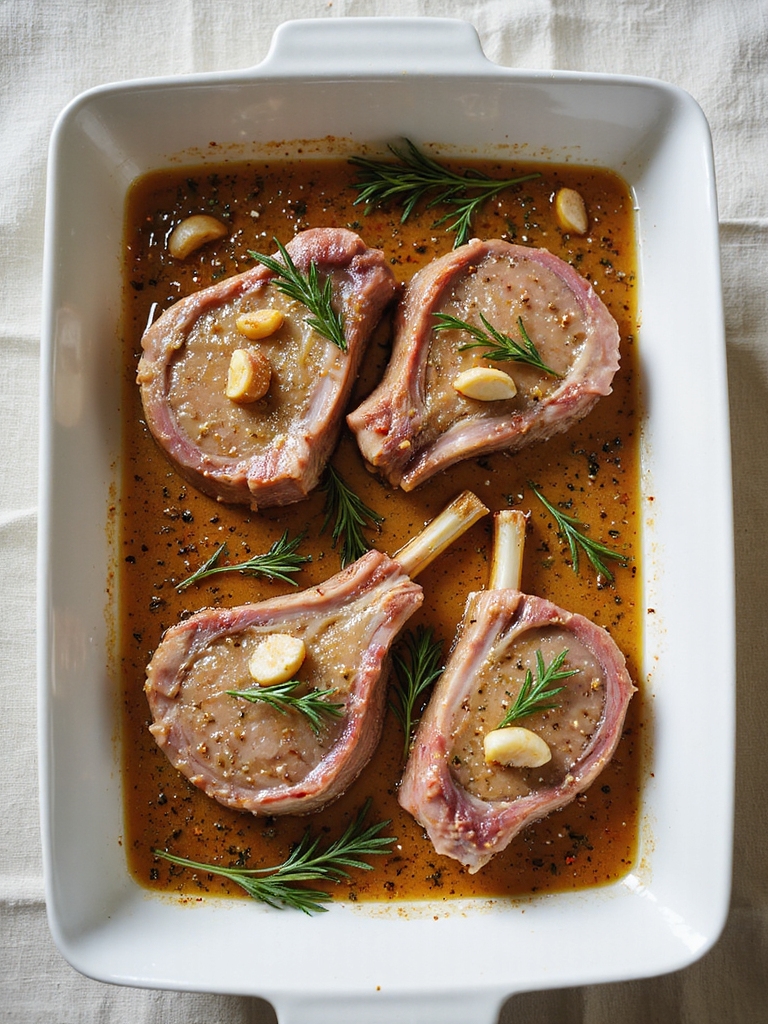
A simple brine adds flavor and keeps lean pork loin chops tender when oven-baked; this quick brine uses common pantry ingredients and only 30–90 minutes of soaking time so you can get juicy, well-seasoned chops on a weeknight without fuss.
- 4 bone-in pork loin chops (1–1¼ inches thick)
- 4 cups cold water
- 1/4 cup kosher salt
- 1/4 cup brown sugar
- 2 cloves garlic, smashed
- 1 sprig fresh rosemary or 1 tsp dried
- 1/2 tsp black pepper
- 2 tbsp olive oil or melted butter
- 1 tsp paprika (optional)
- Lemon wedges for serving
Pat chops dry, dissolve salt and sugar in the water with garlic, rosemary, and pepper, submerge the chops in the brine in a bowl or resealable bag for 30–90 minutes in the refrigerator.
Remove and rinse briefly then pat completely dry, season lightly with paprika and a little pepper, sear in a hot skillet with oil or butter 2–3 minutes per side until golden, transfer to a 400°F (200°C) oven and roast 6–10 minutes until an instant-read thermometer reads 145°F (63°C) in the thickest part, let rest 5 minutes before serving with lemon wedges.
Tip: Don’t brine longer than 2 hours for these thicknesses to avoid overly salty or spongy meat and always rest and slice against the grain for the juiciest results.
This method pairs well with other oven-baked pork chop techniques like roasting and pan-searing for consistent, reliable results with oven-baked pork chops.
Quick Marinades for Weeknight Meals
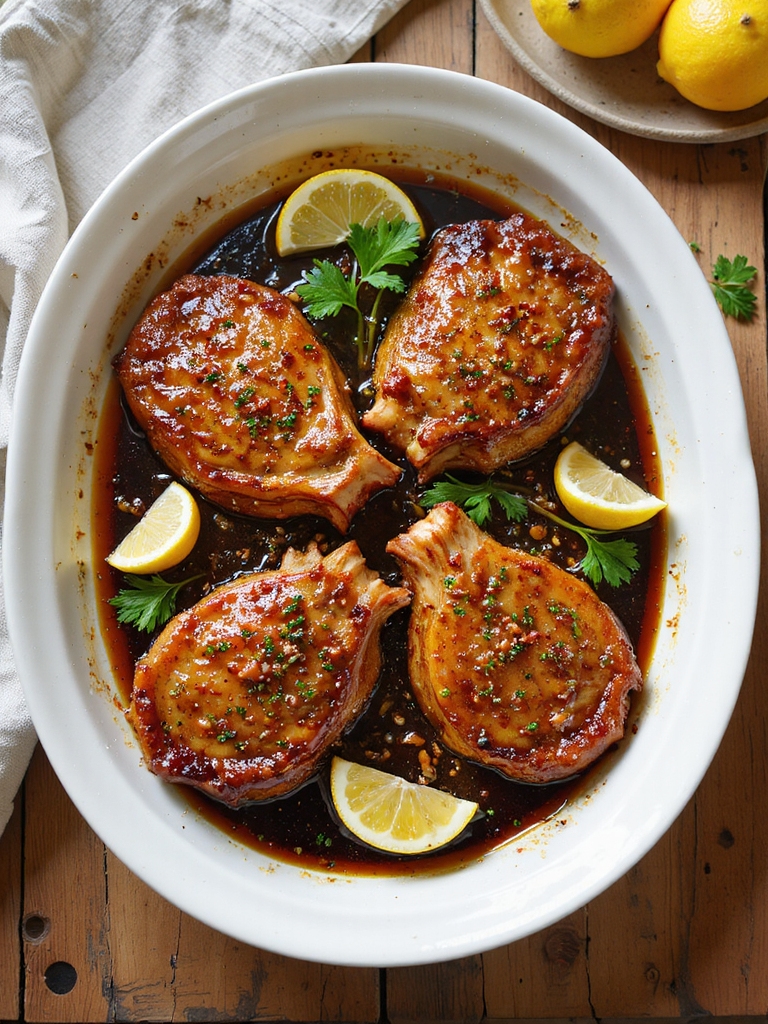
A quick, flavorful marinade livens up pork loin chops for an easy weeknight meal; this recipe uses pantry staples—soy, mustard, lemon, garlic, and a touch of honey—to tenderize and add savory-sweet depth so the chops roast quickly in the oven while staying juicy.
- 4 bone-in pork loin chops (1–1¼ inches thick)
- 3 tbsp soy sauce
- 2 tbsp olive oil
- 1 tbsp Dijon mustard
- 1 tbsp honey or maple syrup
- 2 tbsp lemon juice
- 3 cloves garlic, minced
- 1 tsp dried thyme or 1 tbsp fresh chopped
- 1/2 tsp black pepper
- 1/2 tsp smoked paprika (optional)
Whisk all marinade ingredients together, place chops in a shallow dish or resealable bag, pour marinade over, massaging to coat, and refrigerate for 20–60 minutes; preheat oven to 400°F (200°C), sear chops 2–3 minutes per side in a hot ovenproof skillet with a little oil until golden, then transfer to oven and roast 6–10 minutes until an instant-read thermometer reads 145°F (63°C); rest 5 minutes before serving.
Tip: Pat chops dry before searing to make certain a good crust and don’t over-marinate more than 2 hours to avoid a mushy texture.
Oven roasting at the recommended temperature helps ensure pork loin chops reach a safe internal temperature of 145°F while remaining tender, making oven baking a reliable weeknight method.
Garlic-Herb Baked Pork Loin Chops
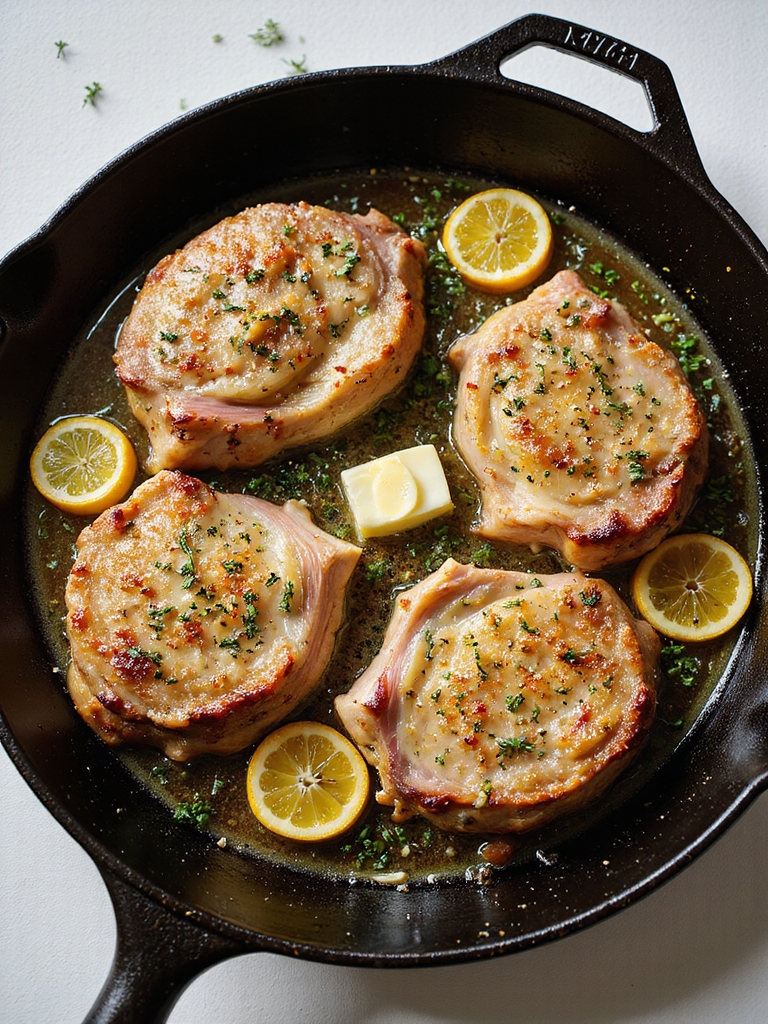
Garlic-Herb Baked Pork Loin Chops: tender pork loin chops are rubbed with a bright garlic-herb mixture, seared briefly, then finished in the oven for a juicy, flavorful main that pairs well with roasted vegetables or a simple salad.
- 4 bone-in pork loin chops (1–1¼ inches thick)
- 3 tbsp olive oil, divided
- 4 cloves garlic, minced
- 2 tbsp fresh parsley, chopped
- 1 tbsp fresh thyme leaves or 1 tsp dried thyme
- 1 tbsp fresh rosemary, finely chopped or 1 tsp dried rosemary
- Zest and juice of 1 lemon
- 1 tsp Dijon mustard
- 1 tsp kosher salt
- 1/2 tsp freshly ground black pepper
- 1/4 tsp red pepper flakes (optional)
- 1 tbsp butter (optional, for basting)
Preheat oven to 400°F (200°C); whisk together 2 tbsp olive oil, garlic, herbs, lemon zest and juice, mustard, salt, pepper and red pepper flakes, pat chops dry and rub both sides with the herb mixture, heat remaining oil in an ovenproof skillet over medium-high heat and sear chops 2–3 minutes per side until golden, transfer skillet to oven and bake 6–10 minutes until an instant-read thermometer registers 145°F (63°C) and rest chops 5 minutes before serving.
Tip: Pat chops very dry before searing for a better crust and avoid overcooking by using an instant-read thermometer; rest meat to let juices redistribute.
This simple technique is one of several reliable methods for cooking pork loin in the oven that yields consistently tender results, especially when paired with classic oven-roasted sides.
Maple-Mustard Glazed Pork Loin Chops

Maple-Mustard Glazed Pork Loin Chops: sweet maple syrup balanced with tangy Dijon and a touch of apple cider vinegar creates a glossy, savory glaze that caramelizes beautifully in the oven, keeping pork loin chops juicy while delivering rich flavor; this quick method uses a short sear and a finish under high heat to set the glaze and produce a slight crisp edge without overcooking.
- 4 bone-in pork loin chops (1–1¼ inches thick)
- 2 tbsp olive oil
- 3 tbsp pure maple syrup
- 2 tbsp Dijon mustard
- 1 tbsp whole-grain mustard (optional for texture)
- 1 tbsp apple cider vinegar
- 2 cloves garlic, minced
- 1 tsp fresh thyme leaves or ½ tsp dried thyme
- 1 tsp kosher salt
- ½ tsp freshly ground black pepper
- 1 tbsp butter (optional)
- Lemon wedges and chopped parsley for serving (optional)
Pat chops dry and season both sides with salt and pepper; heat olive oil in an ovenproof skillet over medium-high heat and sear chops 2 minutes per side until golden.
Whisk maple, mustards, vinegar, garlic and thyme, brush a generous layer over seared chops, transfer skillet to a preheated 425°F (220°C) oven and roast 6–8 minutes until an instant-read thermometer reads 145°F (63°C).
Remove and spoon any pan glaze over chops, rest 5 minutes before serving.
Tip: Use an instant-read thermometer to avoid overcooking, brush glaze on toward the end to prevent burning, and pat chops very dry before searing for the best caramelized crust.
For perfectly seasoned pork, consider a savory marinade before cooking to enhance tenderness and depth of flavor, especially when using a marinade that complements the maple-mustard glaze.
High-Heat Roast Method for a Perfect Crust
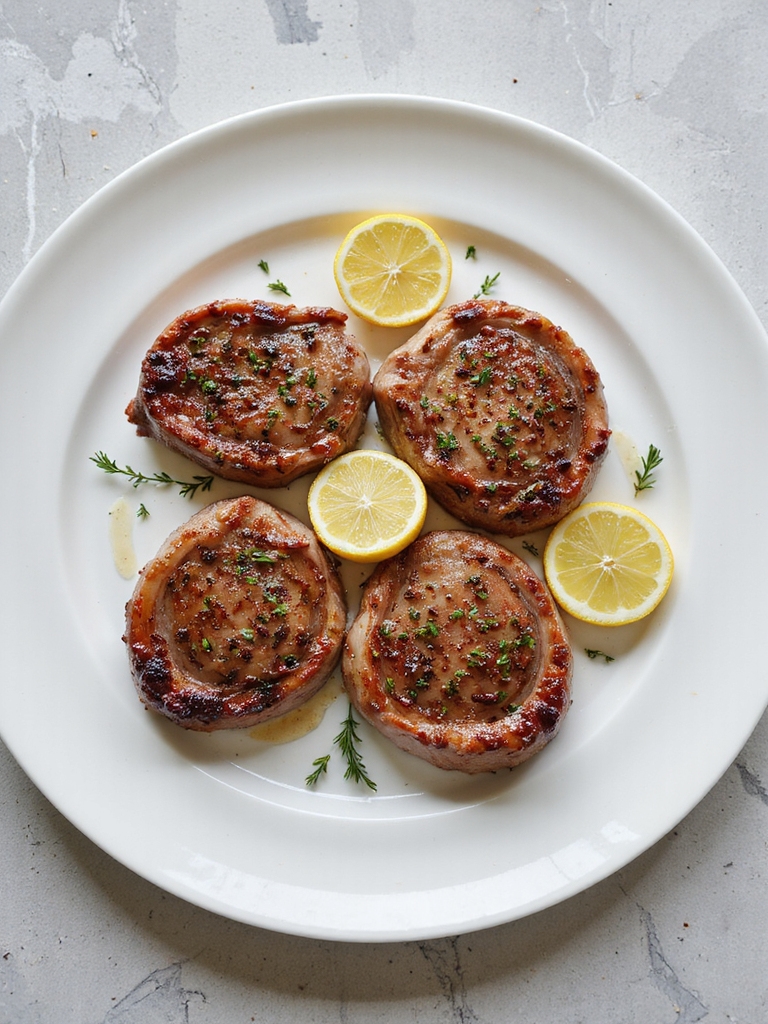
High-Heat Roast Method for a Perfect Crust: This technique uses an initial high oven temperature to rapidly develop a deeply browned, savory crust on pork loin chops while keeping the interior juicy; by starting hot and finishing briefly, you get a crisp edge and caramelized exterior without long cook times—best for chops about 1–1¼ inches thick and when you want a restaurant-style sear without an extra stovetop step.
- 4 bone-in pork loin chops (1–1¼ inches thick)
- 2 tbsp neutral oil (canola or vegetable)
- 1 tsp kosher salt
- ½ tsp freshly ground black pepper
- 1 tsp smoked paprika or sweet paprika
- 1 tsp garlic powder
- 1 tsp onion powder
- 1 tbsp butter (optional)
- 1 tsp fresh thyme leaves or ½ tsp dried thyme
- 1 small lemon, halved (optional)
Preheat oven to 500°F (260°C) and position rack in the middle; pat chops very dry and rub both sides with oil, salt, pepper, paprika, garlic and onion powders, and thyme, then set on a wire rack over a rimmed baking sheet to allow air circulation; place sheet in the hot oven and roast for 6–8 minutes, then check with an instant-read thermometer and if the internal temp is 140–145°F (60–63°C) remove the chops, add a pat of butter on each if using, tent loosely with foil and rest 5 minutes (carryover will bring to 145°F/63°C).
If under temperature, return to oven in 1–2 minute bursts until done, but avoid exceeding 150°F to keep tender.
Tip: Use a wire rack and a very hot oven for even high-heat roasting, pat chops dry to promote browning, monitor with an instant-read thermometer and rest briefly to retain juices.
This same approach works well for lean cuts like pork tenderloin when adjusted for size and roast times.
Slow-Roast Technique for Extra Tender Chops

Slow-roasting pork loin chops lets connective tissue gently break down and flavors deepen while keeping the meat uniformly pink and tender; this method is ideal for thicker bone-in or boneless chops (about 1–1½ inches) and involves seasoning, a low oven temperature, and a longer cook time with a short rest so juices redistribute for melt-in-your-mouth results.
- 4 pork loin chops (1–1½ inches thick)
- 2 tbsp olive oil
- 1½ tsp kosher salt
- ¾ tsp freshly ground black pepper
- 1 tsp garlic powder
- 1 tsp onion powder
- 1 tsp dried thyme or 1 tbsp fresh chopped thyme
- 1 tsp smoked paprika (optional)
- 2 cloves garlic, smashed
- 1 small onion, sliced
- 2 tbsp butter or 1 tbsp olive oil (for finishing)
- 1 lemon, halved (optional)
Preheat oven to 275°F (135°C); pat chops very dry, rub with oil and all seasonings, place in a single layer on a wire rack set over a rimmed baking sheet with onion slices and smashed garlic beneath to flavor the drippings, insert a probe or leave space for an instant-read thermometer, roast slowly until internal temperature reaches 135–138°F (57–59°C) for slightly pink tender chops (about 40–60 minutes depending on thickness), then remove, rest tented 5–10 minutes while finishing with a pat of butter and a squeeze of lemon which will raise final temp to 145°F (63°C).
Tip: Slow-roasting benefits from consistent low heat and monitoring with a thermometer—avoid overcooking by pulling chops a few degrees under target and resting so carryover brings them to safe, juicy doneness. The gentle heat also mirrors techniques used in smoked pork loin to develop deep, smoky flavors over a longer cook.
How to Use a Thermometer for Ideal Doneness
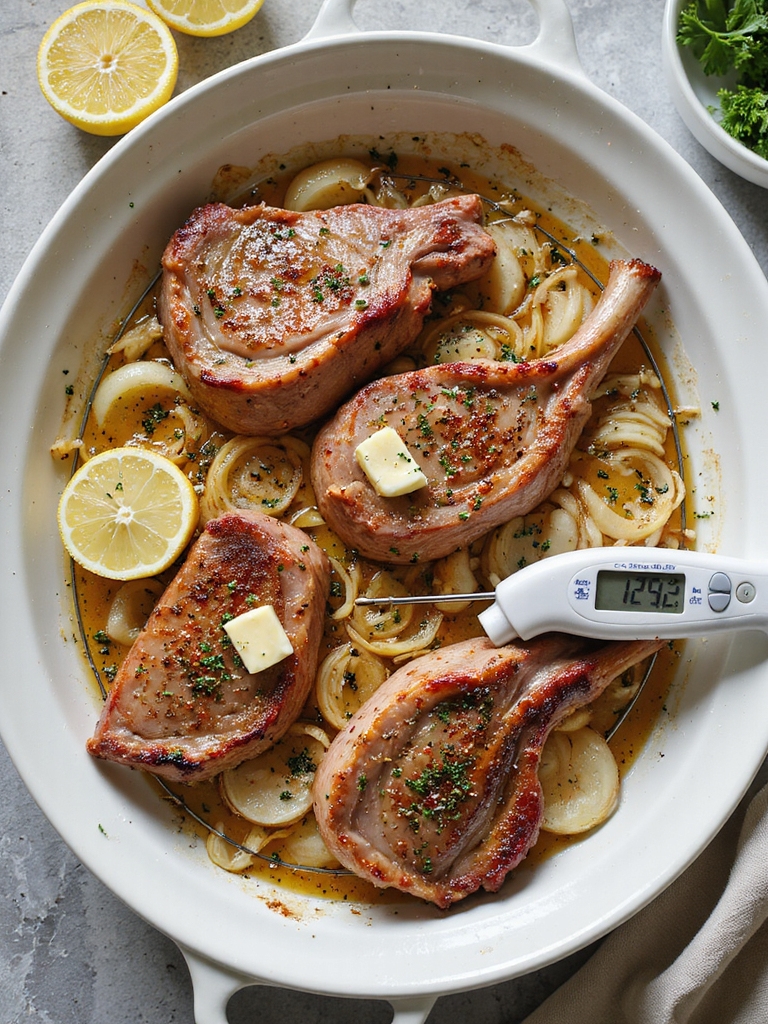
Using an instant-read or probe thermometer is the best way to guarantee perfectly cooked pork loin chops when slow-roasting; this recipe explains how to season and roast 1–1½-inch chops while using a thermometer to monitor internal temperature so you pull them at the ideal point for tender, slightly pink meat that finishes safely during rest.
- 4 pork loin chops (1–1½ inches thick)
- 2 tbsp olive oil
- 1½ tsp kosher salt
- ¾ tsp freshly ground black pepper
- 1 tsp garlic powder
- 1 tsp onion powder
- 1 tsp dried thyme or 1 tbsp fresh chopped thyme
- 1 tsp smoked paprika (optional)
- 2 cloves garlic, smashed
- 1 small onion, sliced
- 2 tbsp butter or 1 tbsp olive oil (for finishing)
- 1 lemon, halved (optional)
Preheat oven to 275°F (135°C), pat chops very dry and rub with oil and seasonings, set onion slices and smashed garlic on a rimmed baking sheet topped with a wire rack and place chops on the rack, insert a probe thermometer into the thickest part of a chop without touching bone (or plan to use an instant-read later).
Roast until the probe reads 135–138°F (57–59°C) for slightly pink, juicy chops (about 40–60 minutes), then remove and tent loosely to rest 5–10 minutes while finishing with a pat of butter and a squeeze of lemon which will bring the final temperature to about 145°F (63°C).
Tip: Calibrate your thermometer if possible, avoid touching bone with the probe, and remember to pull chops a few degrees under final target because carryover heat during resting will bring them to safe, juicy doneness.
Pork loin is a lean cut that benefits from slow roasting to stay moist and develop savory flavor, especially when using pork loin selected for uniform thickness.
Flavorful Pan Sauce Finishes for Baked Chops
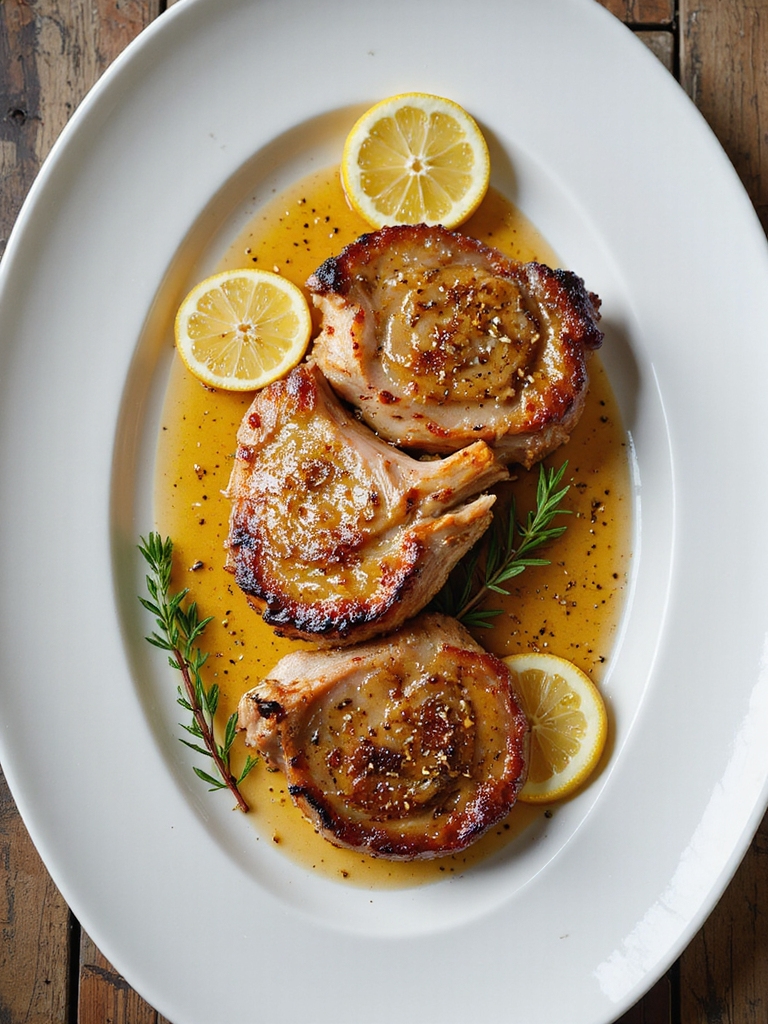
A bright, savory pan sauce is the perfect finishing touch for oven-baked pork loin chops—this recipe shows how to take the browned pan juices and aromatics left after searing or roasting and turn them into a glossy, flavorful sauce using wine or stock, mustard, herbs, and butter (or cream) that complements the meat without overpowering it.
- 1 tbsp olive oil or 1 tbsp butter (if searing first)
- 1 small shallot or 2 tbsp finely diced onion
- 1 clove garlic, minced
- 1/4 cup dry white wine or dry vermouth (or 1/4 cup apple cider or chicken stock)
- 1/2 cup low-sodium chicken stock (more as needed)
- 1 tsp Dijon mustard
- 1 tsp whole-grain mustard (optional)
- 1-2 tsp fresh lemon juice or 1 tbsp apple cider vinegar
- 1-2 tsp chopped fresh thyme or 1 tsp chopped fresh rosemary
- 1-2 tbsp cold unsalted butter or 2 tbsp heavy cream (for mounting)
- Salt and freshly ground black pepper to taste
- Optional: 1 tsp honey or 1 tbsp finely chopped capers for brightness
After removing chops from the oven or pan, keep pan over medium heat, add oil or butter if dry and sauté shallot until translucent (1–2 minutes).
Add garlic and deglaze with wine (or cider) scraping browned bits, reduce by half, stir in chicken stock and mustards and simmer until slightly thickened (2–4 minutes).
Whisk in lemon juice and herbs, lower heat and swirl in cold butter or creamor creamto emulsify, season to taste and spoon over rested chops; if sauce is too thin, simmer a little longer or whisk in a small slurry of cornstarch and water.
Tip: Use the same pan you roasted or seared the chops in for maximum flavor, taste and adjust acidity at the end, and keep the sauce warm but not boiling so butter or cream doesn’t separate.
For extra flavor variety, try marinating the chops briefly beforehand using a simple pork marinade to infuse them with complementary herbs and acidity.
Side Dishes That Complement Oven-Baked Pork Loin Chops
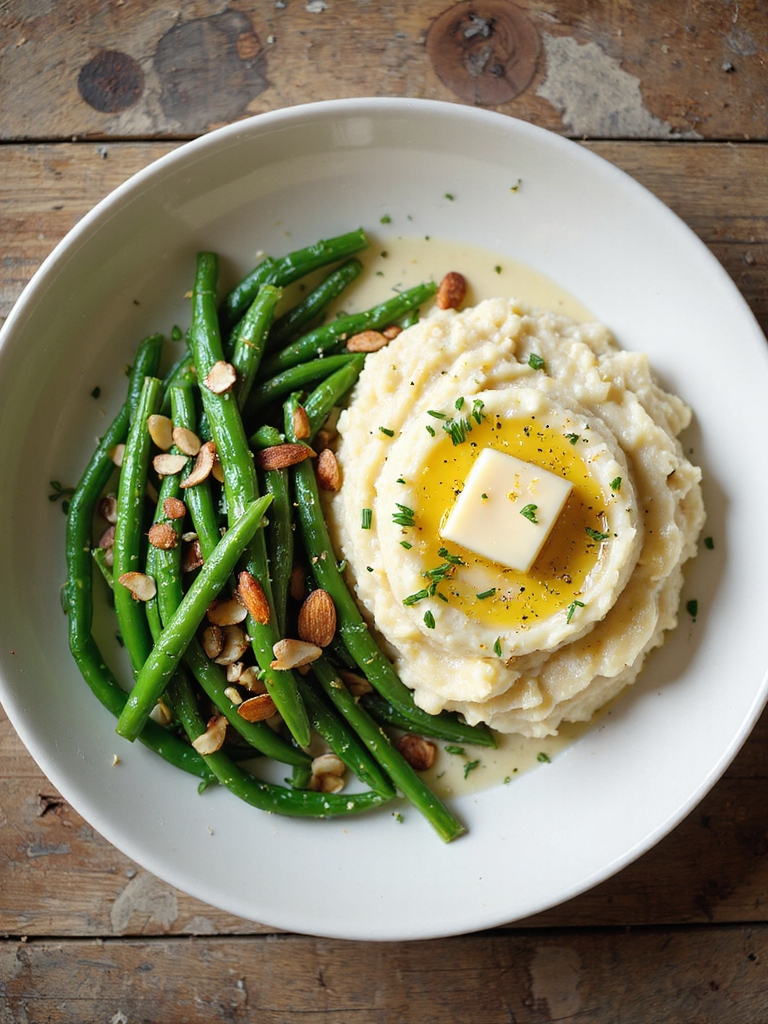
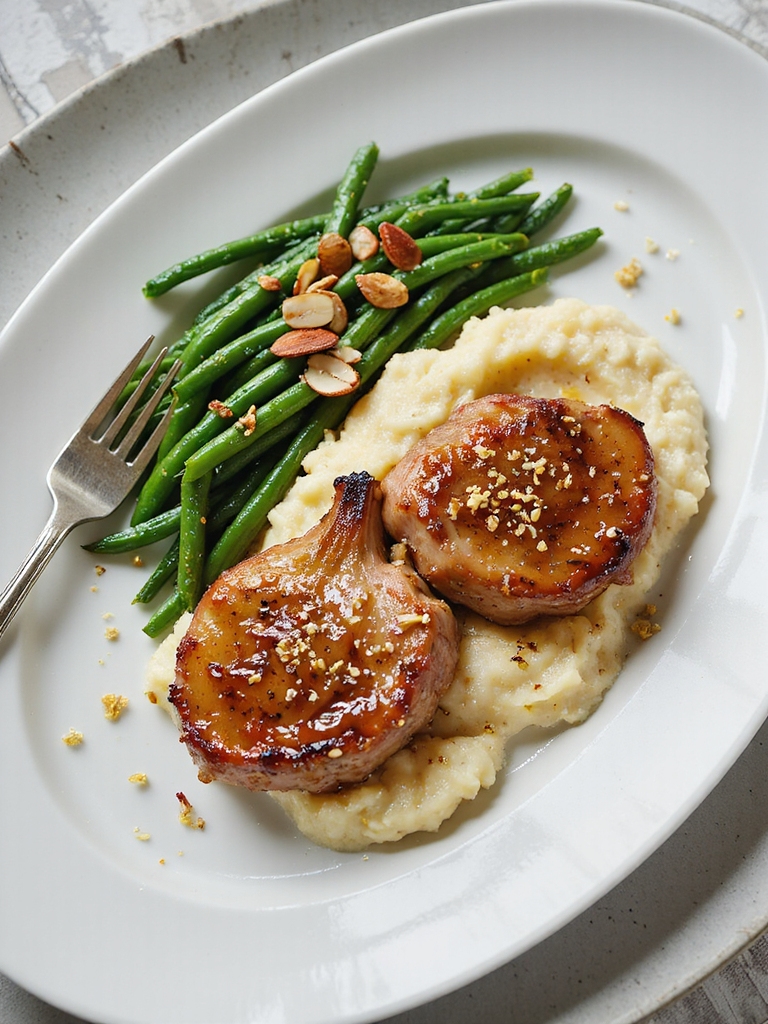
Roasted garlic mashed potatoes and buttered green beans make a classic, comforting side for oven-baked pork loin chops — the potatoes soak up pan sauce while the green beans add color and a crisp counterpoint; this recipe gives a simple method to roast garlic for flavor, mash potatoes until creamy with butter and cream, and quickly blanch and finish green beans with lemon and toasted almonds so both sides are ready alongside rested chops.
- 2 lb Yukon Gold or Russet potatoes, peeled and cut into 1–2″ cubes
- 1 head garlic
- 3 tbsp unsalted butter, plus 2 tbsp for beans
- 1/2 cup warm heavy cream or whole milk (adjust to texture)
- Salt and freshly ground black pepper
- 1 lb green beans, trimmed
- 1 tbsp olive oil
- Zest and 1 tbsp fresh lemon juice
- 2 tbsp sliced or slivered almonds, toasted
- Optional: 2 tbsp sour cream or cream cheese for extra tang
Preheat oven to 400°F (200°C), slice top off garlic head, drizzle with 1 tsp olive oil, wrap in foil and roast 30–35 minutes until soft; meanwhile simmer potatoes in salted water 15–20 minutes until tender, drain, mash with roasted garlic (squeezed from skins), 3 tbsp butter and warm cream, season to taste.
Bring a large pot of salted water to a boil, add green beans and blanch 2–3 minutes until bright and tender-crisp, plunge into ice water, then sauté 2 tbsp butter with 1 tbsp olive oil over medium heat, add beans, lemon zest and juice, toss in toasted almonds and season.
Tip: Make the mashed potatoes slightly looser than you think—they’ll thicken as they cool and absorb pan juices from chops, and blanch the beans a minute less if you prefer crisper texture.
For a main-focused meal, consider pairing these sides with a simple oven-roasted pork loin roast for evenly cooked results.