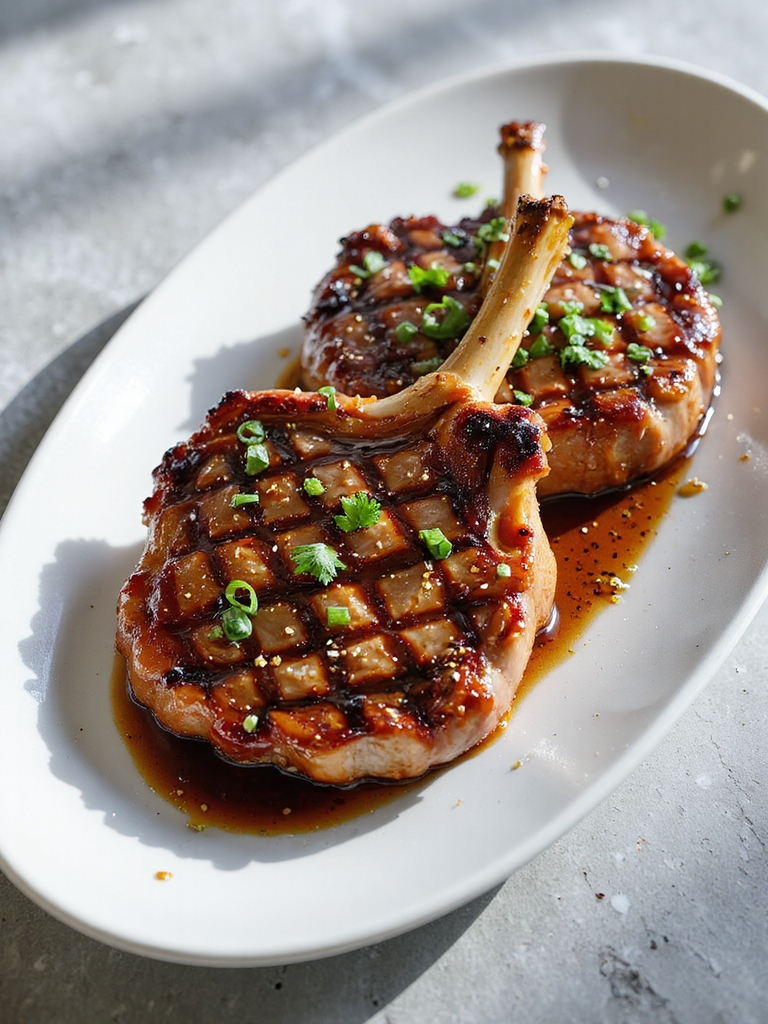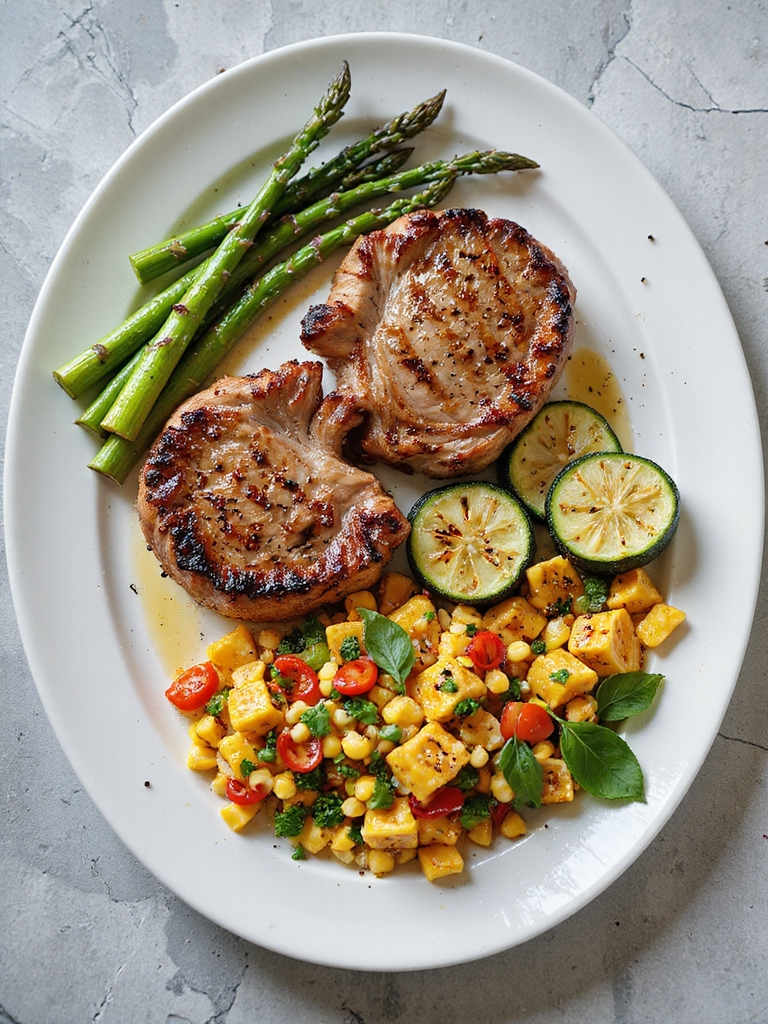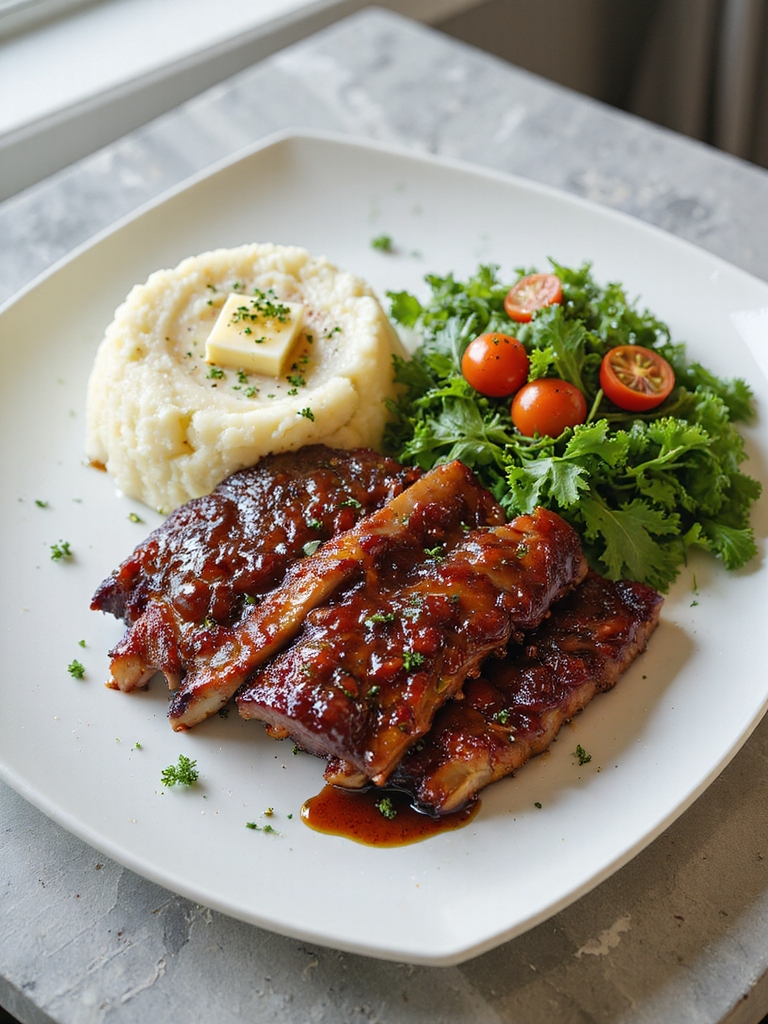

When it comes to creating fall-off-the-bone ribs right in your oven, I’ve got just the recipe to make your taste buds tingle with excitement. Imagine succulent St. Louis-style ribs, marinated and slow-cooked to perfection, wrapped tight to seal in the moisture and flavors.
A quick broil transforms them into caramelized, mouthwatering masterpieces. Hungry yet? Keep going, and I’ll guide you to rib heaven.
Choosing the Right Cut of Pork Ribs
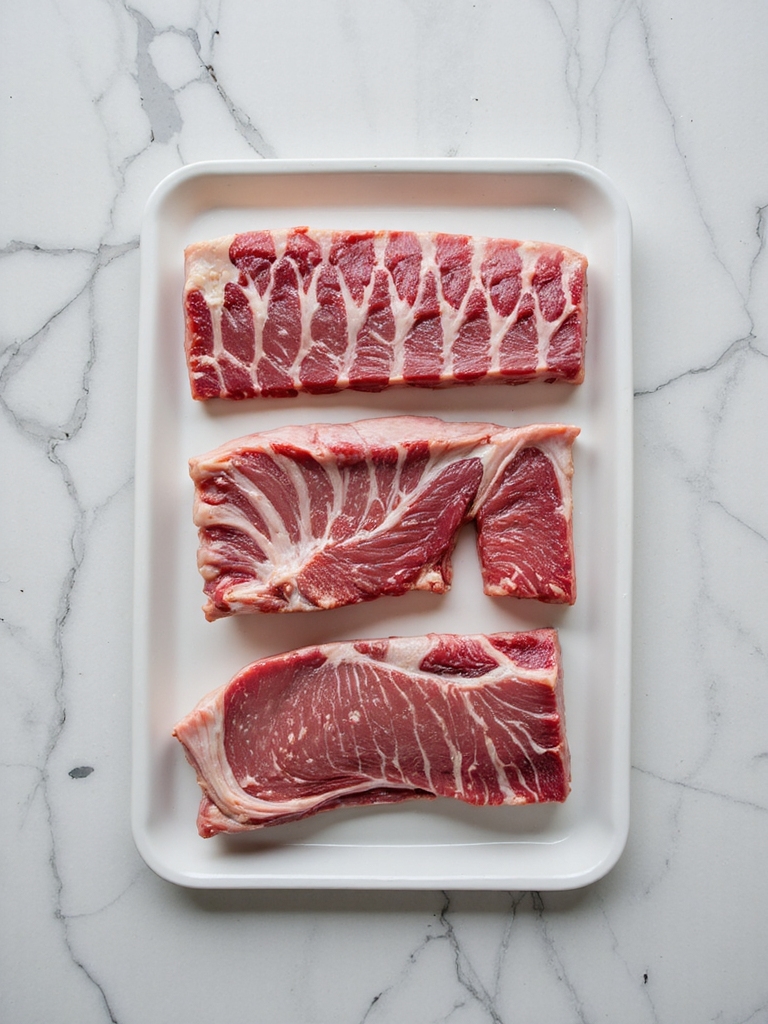
When it comes to preparing the perfect pork ribs, selecting the right cut is essential. St. Louis-style ribs boast a rectangular shape with greater meat fat interaction, guaranteeing juicy, flavorful results, while baby back ribs tend to be leaner and cook faster. For a rich, smoky taste with well-rendered fat, opt for spare ribs which typically have more connective tissue. This recipe will focus on classic St. Louis-style ribs. Additionally, choosing the right cooking method can impact the tenderness and flavor of your ribs, as oven cooking techniques allow for slow and even heat distribution.
Ingredients:
- 2 racks of St. Louis-style pork ribs
- 1 tablespoon paprika
- 1 tablespoon brown sugar
- 1 teaspoon garlic powder
- 1 teaspoon onion powder
- 1 teaspoon black pepper
- 1 teaspoon salt
- 1 cup barbecue sauce
- 1 tablespoon olive oil
Preheat the oven to 300°F. Mix the spices and rub onto the ribs, coating evenly. Drizzle olive oil over ribs and wrap in foil, then place on a baking sheet and bake for 2.5 hours. Remove foil, brush with barbecue sauce, and broil on high for 5-7 minutes, until sauce is bubbling and caramelized.
To guarantee the ribs remain tender, allow them to rest for at least 10 minutes after cooking to let the juices redistribute. When selecting ribs, make sure they have an even layer of meat across the bone to promote consistent cooking.
Essential Ingredients for Flavorful Ribs
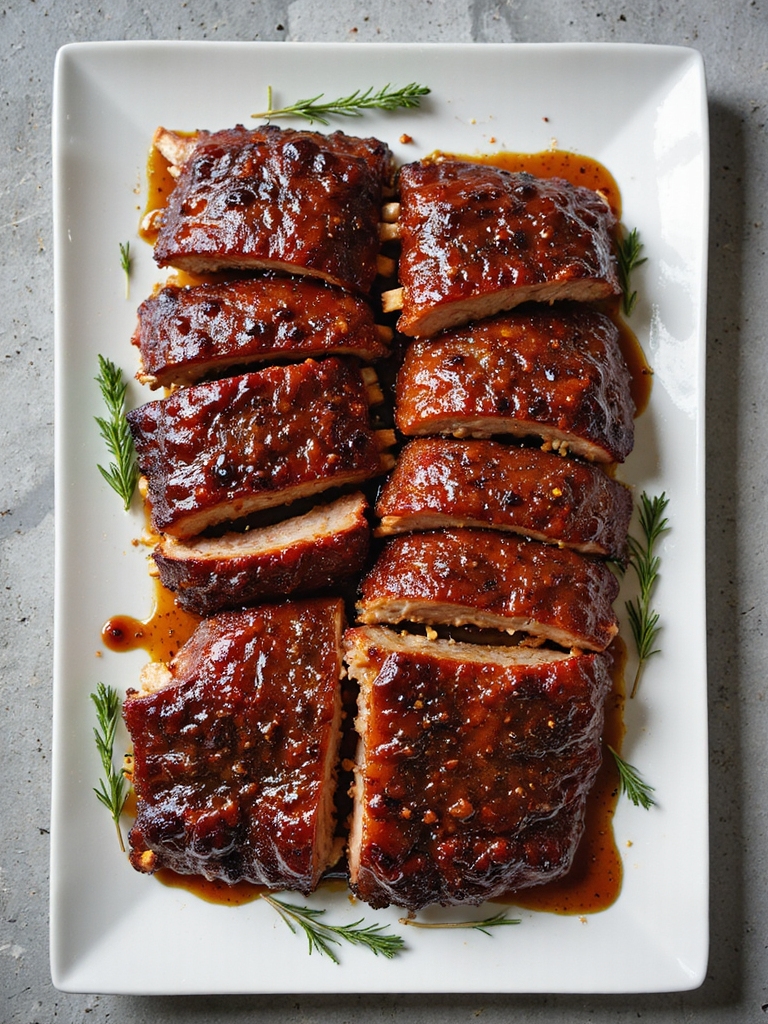
Ingredients:
For ribs that burst with flavor, focusing on a robust blend of spices is crucial. The following combination of ingredients guarantees a balance of sweetness, smokiness, and a hint of heat that perfectly complements the rich taste of St. Louis-style ribs. The spices infuse the meat with deep flavors, while the barbecue sauce adds a sticky, tangy glaze that caramelizes under high heat for a delicious finish.
- 2 racks of St. Louis-style ribs
- 2 tablespoons smoked paprika
- 1 tablespoon brown sugar
- 1 teaspoon cumin
- 1 teaspoon chili powder
- 1 teaspoon garlic powder
- 1 teaspoon onion powder
- 1 teaspoon kosher salt
- 1 teaspoon black pepper
- 1 cup favorite barbecue sauce
- 1 tablespoon olive oil
Combine all the dry spices in a bowl and mix well. Generously rub the spice mix over the ribs, guaranteeing even coverage. Drizzle olive oil over the ribs, wrap tightly in foil, and bake at 300°F for 2.5 hours. Unwrap the ribs, brush with barbecue sauce, and broil for 5-7 minutes until the glaze is bubbly and caramelized.
Let the ribs rest for at least 10 minutes before slicing to maintain their juiciness. Consistent cooking is facilitated by guaranteeing ribs have an even layer of meat, which also contributes to a well-balanced flavor profile. Additionally, ensure the ribs are cooked to the ideal temperature for pork to achieve perfectly tender results.
Preparing Your Ribs for Baking
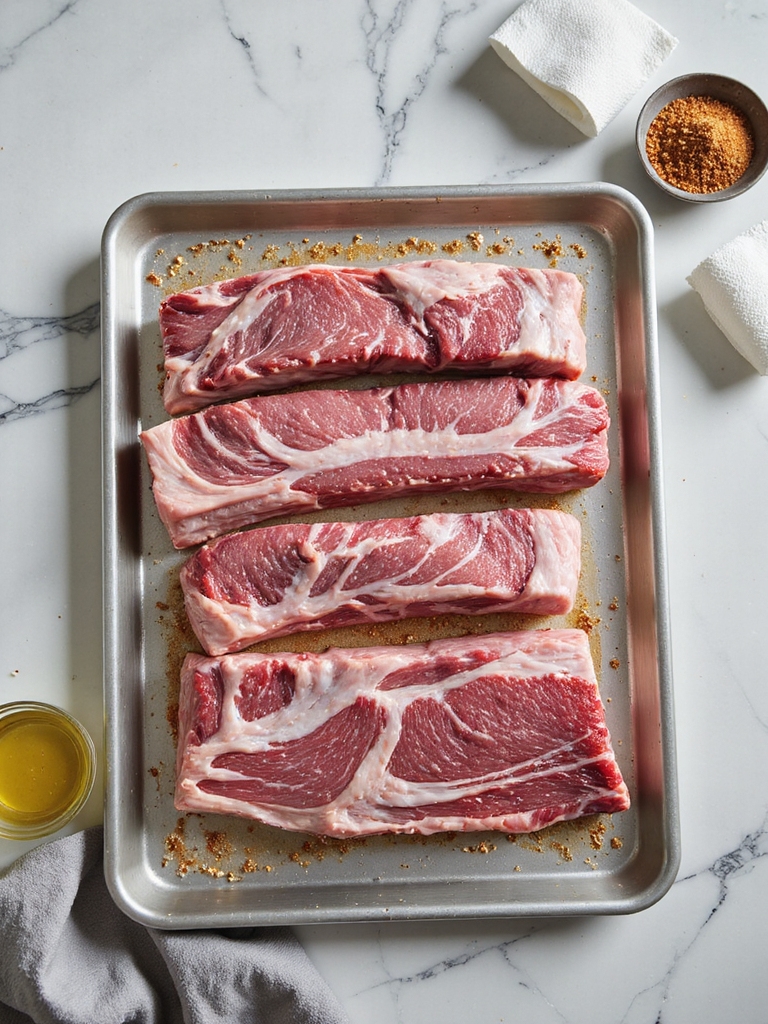
Before baking your ribs, it’s vital to prepare them properly to maximize their flavor and tenderness. Start by removing the membrane from the back of the ribs to guarantee the spices can penetrate the meat. Rinse the ribs under cold water and pat them dry with paper towels. This step is significant as it allows the spice rub to adhere better, creating a consistent flavor throughout the meat.
Ingredients:
- 2 racks St. Louis-style ribs
- Cold water
- Paper towels
Brush both sides of the ribs with olive oil to help the spice rub stick, then apply the spice mixture evenly across all surfaces. Wrap the ribs tightly in aluminum foil to trap moisture and steam, and place them on a rimmed baking sheet. Bake in a preheated oven set to 300°F for about 2.5 hours until tender.
Confirm the ribs are fully wrapped in foil to prevent moisture loss during baking, which results in tender, juicy ribs. Removing the membrane also guarantees the spices penetrate deeply, enhancing the flavor. Additionally, using the right cooking temperature is crucial for achieving tender meat without drying it out.
The Perfect Marinade for Maximum Tenderness
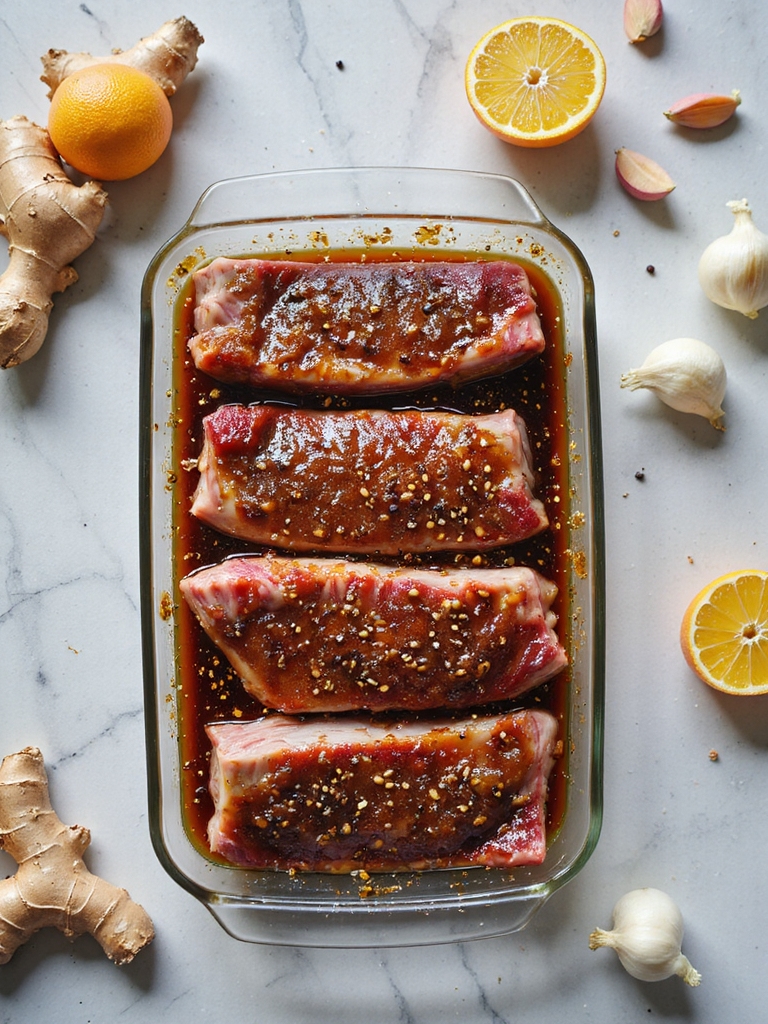
To achieve maximum tenderness in pork ribs, marinating them is essential. The marinade not only adds flavor but also breaks down proteins in the meat, making it juicy and tender. Begin by preparing a marinade that complements the natural richness of the pork ribs. Allow the ribs to soak up these flavors in the marinade for at least 4-6 hours, or ideally overnight, ensuring the meat absorbs the delicious ingredients, resulting in succulent, melt-in-your-mouth ribs after baking or grilling.
Ingredients:
- 1 cup soy sauce
- 1/2 cup apple cider vinegar
- 1/4 cup honey
- 4 cloves garlic, minced
- 1 tablespoon fresh ginger, grated
- 1 teaspoon black pepper
Combine soy sauce, apple cider vinegar, honey, minced garlic, grated ginger, and black pepper in a large bowl. Place the ribs in a ziplock bag or shallow dish, and pour the marinade over the ribs, ensuring they are fully immersed. Seal the bag or cover the dish with plastic wrap, then refrigerate the ribs for the recommended time, turning occasionally to coat evenly.
For best results, let the ribs return to room temperature before cooking. Always use fresh ingredients for marinade to maximize flavor, and save extra marinade to baste the ribs during baking, adding layers of taste throughout the cooking process. Additionally, the longer the marinade time, the more effective it is in enhancing the meat’s tenderness.
Crafting a Flavor-Packed Dry Rub
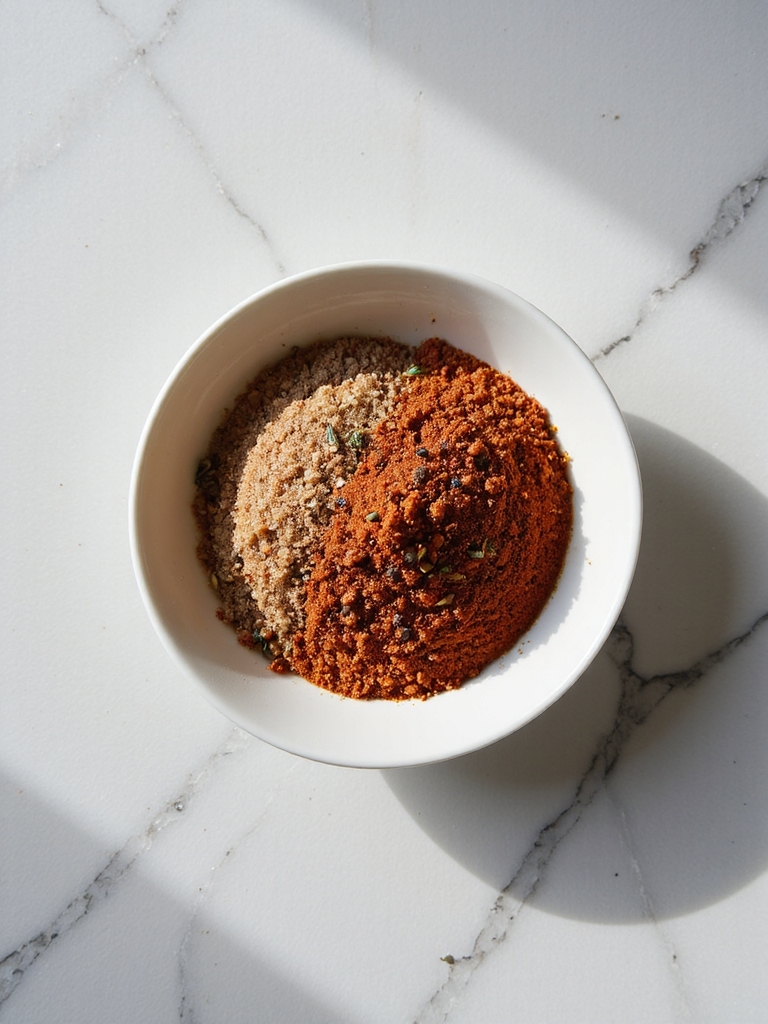
A dry rub can enhance the natural flavors of pork ribs while adding an invigorating kick of spice and aroma. Unlike wet marinades, a dry rub mixes savory and sweet seasonings that form a delicious crust on the ribs as they cook. This crust seals in moisture and imparts an enticing texture and taste. To create a standout dry rub, select spices that balance each other and provide a memorable experience for the palate.
Ingredients:
- 1/4 cup brown sugar
- 2 tablespoons smoked paprika
- 1 tablespoon salt
- 1 tablespoon garlic powder
- 1 tablespoon onion powder
- 1 teaspoon cayenne pepper
- 1 teaspoon black pepper
- 1 teaspoon dried thyme
Pat the ribs dry with paper towels, then generously coat them with the mixed dry rub, guaranteeing every surface is well-covered. Leave the ribs to sit with the rub for at least 30 minutes, allowing the flavors to meld into the meat. Preheat your oven or grill, then cook the ribs low and slow until they reach tender perfection, frequently checking for doneness.
For best results, use high-quality spices for a more potent flavor and consider preparing the dry rub a day ahead to allow the flavors to fully develop. Adjust the amount of cayenne pepper according to your desired spice level, and always taste the rub before applying it to ascertain it meets your flavor preference. Additionally, the combination of savory and sweet seasonings in a dry rub is key to achieving that perfect balance of flavor that keeps everyone coming back for more.
Marinating Time: Finding the Sweet Spot
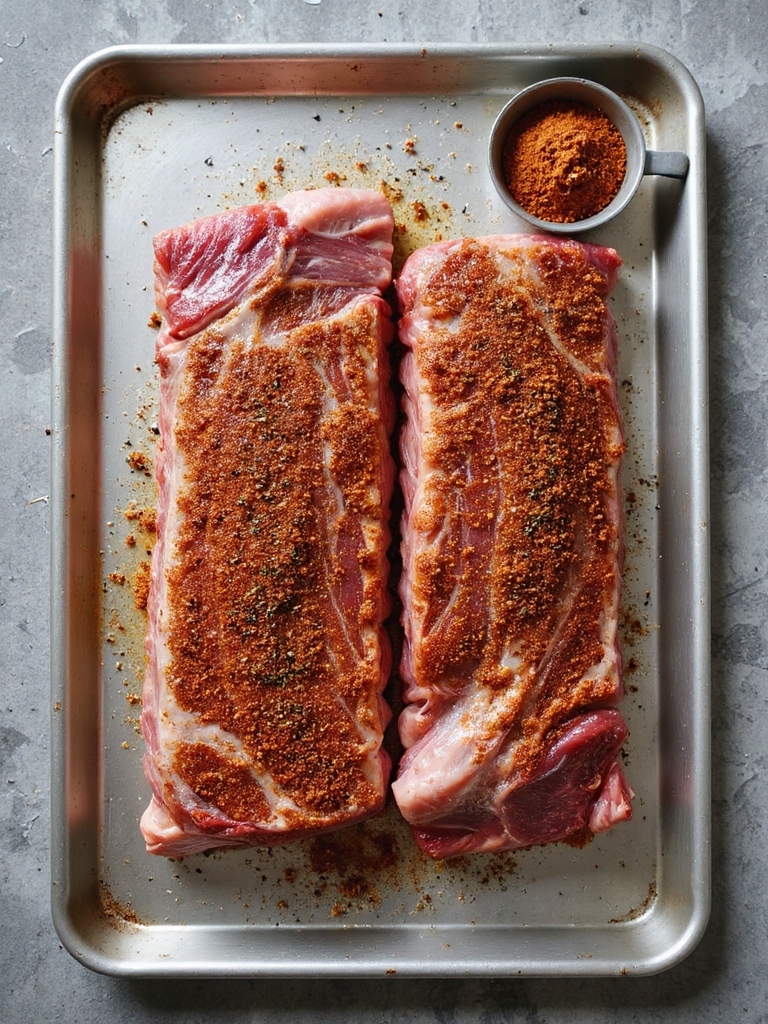
Marinating time is essential when preparing pork ribs, as it allows the flavors from a dry rub to truly penetrate and enhance the meat. Finding the sweet spot in marinating time can be the key to achieving succulent and flavorful ribs. Generally, ribs should marinate for at least 30 minutes but giving them several hours or overnight will yield more profound flavors. However, avoid marinating for too long—over 24 hours—as this can lead to overly salty and compromised texture due to the breakdown of proteins. Additionally, savory pork stew meat recipes can be a great source of inspiration for other seasoning ideas.
Ingredients:
- 1/4 cup brown sugar
- 2 tablespoons smoked paprika
- 1 tablespoon salt
- 1 tablespoon garlic powder
- 1 tablespoon onion powder
- 1 teaspoon cayenne pepper
- 1 teaspoon black pepper
- 1 teaspoon dried thyme
- 2 racks of pork ribs
Coat the pork ribs thoroughly with the dry rub, ensuring all areas are evenly covered. Let them sit and marinate in the refrigerator for at least 30 minutes but up to overnight, if possible. Preheat your oven to 275°F (135°C), and then roast the ribs, bone-side down, for about 2.5 to 3 hours until tender, basting occasionally with any juices collected in the pan.
For extra depth of flavor, consider adding a splash of apple cider vinegar or juice to maintain moisture. Keep the ribs wrapped in foil if you’re marinating for longer than 6 hours, so the spices permeate without drying the surface.
Setting Up Your Oven for Success
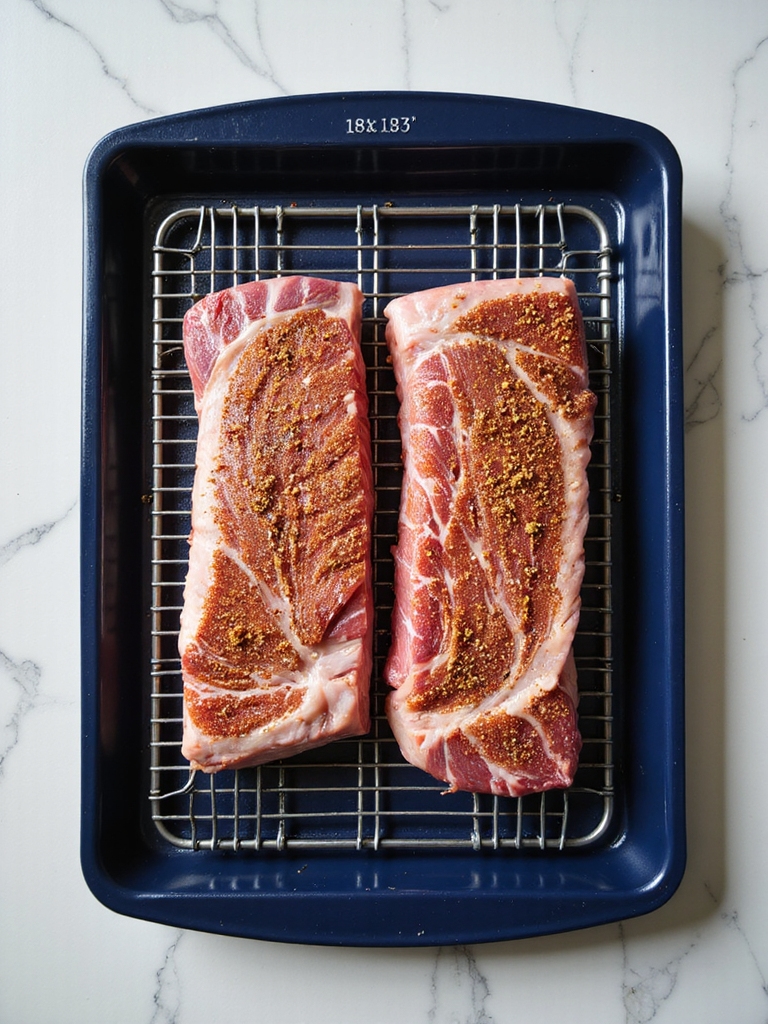
To achieve the perfect pork ribs using your oven, proper setup is vital. Begin by verifying your oven is preheated to the appropriate temperature of 275°F (135°C). Make use of a rack set inside a baking sheet to elevate the ribs, allowing heat to circulate evenly around the meat for consistent cooking. This method not only guarantees tenderness but also aids in fat rendering, resulting in deliciously melt-in-your-mouth ribs. Moreover, country style pork ribs are particularly suited for this slow-roasting technique due to their rich marbling.
Ingredients:
- 1/4 cup brown sugar
- 2 tablespoons smoked paprika
- 1 tablespoon salt
- 1 tablespoon garlic powder
- 1 tablespoon onion powder
- 1 teaspoon cayenne pepper
- 1 teaspoon black pepper
- 1 teaspoon dried thyme
- 2 racks of pork ribs
Place the ribs on a rack set atop a baking sheet, and roast in the preheated oven, bone-side down, for about 2.5 to 3 hours, basting occasionally with juices in the pan. Maintain a consistent oven temperature and check for tenderness by lifting one end of the rib rack to confirm it bends gently. Serve hot, complemented by your choice of sides or a tangy barbecue sauce.
For the best results, keep the oven door closed as much as possible to maintain heat levels and prevent inconsistencies. Wrapping the ribs in foil after they’ve had a good initial roast can help lock in juices, enhancing flavor and making the meat more succulent.
Wrapping and Sealing for Moisture Retention
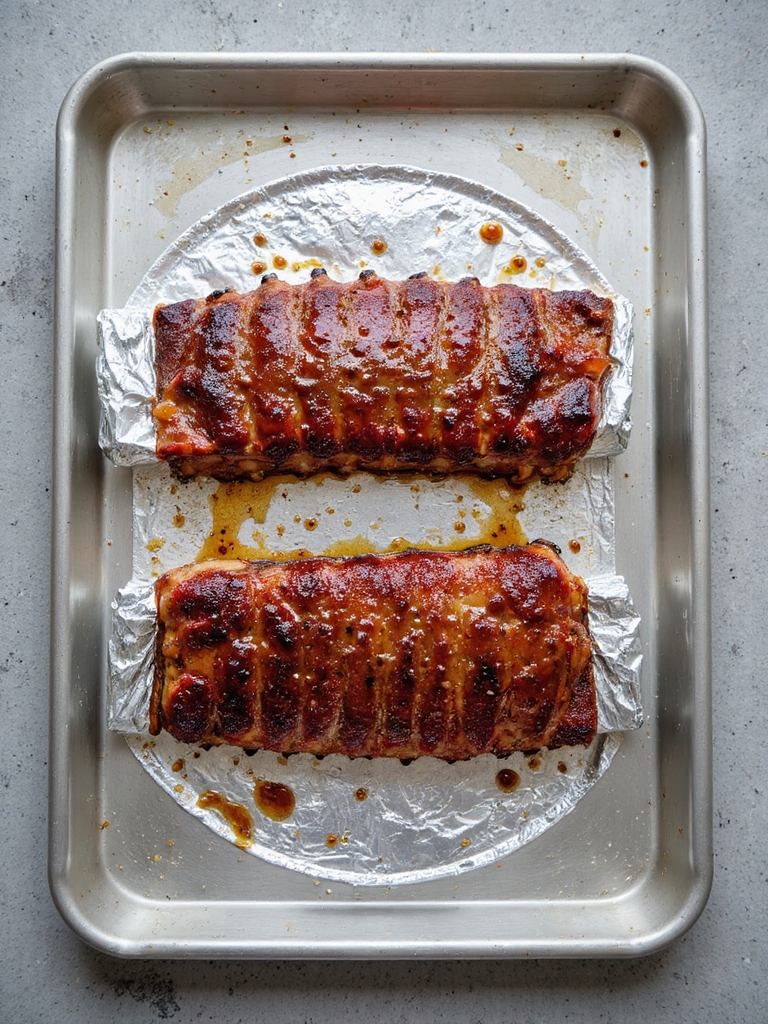
To guarantee juicy and flavorful pork ribs, wrapping and sealing the ribs in foil after an initial roast is an essential step for moisture retention. This method not only locks in the juices but also allows for a more concentrated taste, enhancing the texture and tenderness of the ribs. After the ribs spend a good amount of time roasting in the oven to create a slight crust, wrapping them in foil for the remainder of the cooking time results in a luscious, melt-in-your-mouth delight. Additionally, following this technique closely is key to achieving mouthwatering pulled pork sandwiches, where the ribs can be shredded and served for a delightful meal.
- 1/4 cup honey
- 1/4 cup apple cider vinegar
- 1 tablespoon Dijon mustard
- 1 tablespoon Worcestershire sauce
- 2 racks pork ribs
Once the ribs have roasted for 2 hours, remove them from the oven and place each rack on a piece of foil. Mix honey, apple cider vinegar, mustard, and Worcestershire sauce, and brush the mixture generously over the ribs. Seal the foil tightly around each rack, return to the oven, and continue roasting for an additional 30-60 minutes until perfectly tender.
To achieve ideal tenderness, be sure to wrap the foil completely around the ribs, sealing any edges tightly. Keeping the foil intact will guarantee that all the flavors meld together as they steam, resulting in perfectly succulent ribs that impress every time.
Recommended Cooking Times and Temperatures
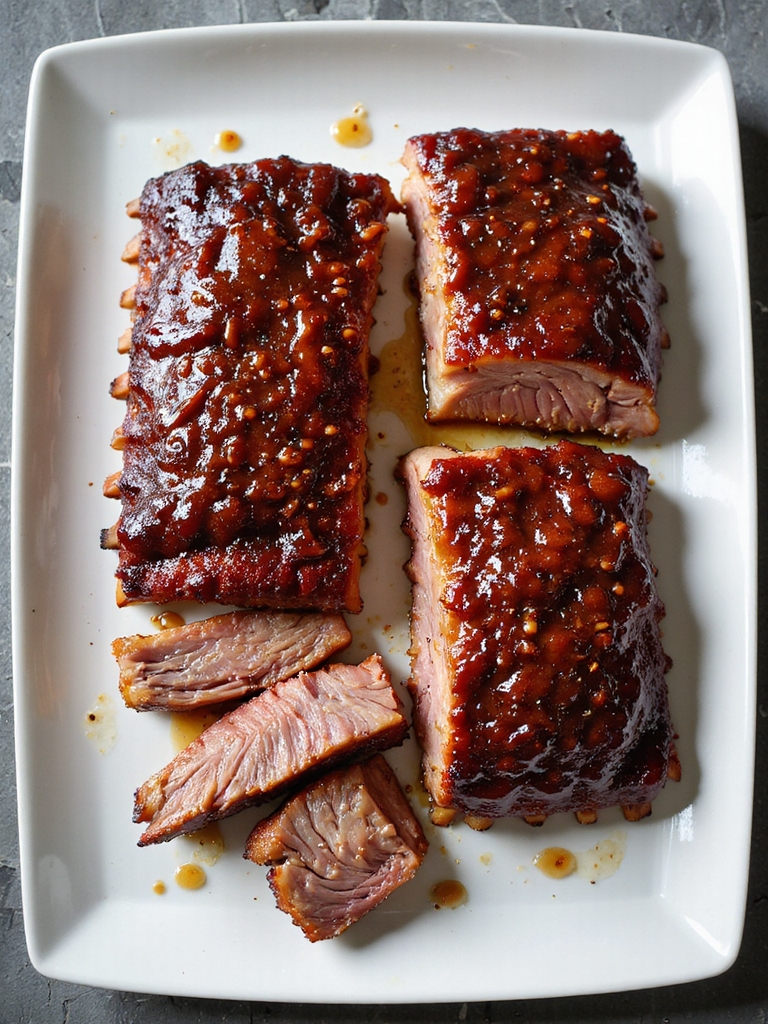
Achieving the perfect balance of tenderness and flavor when cooking pork ribs requires attention to cooking times and temperatures. For best results, start by preheating the oven to 275°F (135°C) for a low and slow cooking process. This temperature guarantees the breakdown of connective tissues without drying out the meat. Cooking the ribs for approximately 3-4 hours, until they are tender enough to pull apart with ease, will yield excellent results. Remember to monitor the ribs during this time to guarantee ideal tenderness and flavor.
- 2 racks of pork ribs
- Olive oil
- 2 teaspoons salt
- 1 teaspoon black pepper
- 1 tablespoon garlic powder
- 2 tablespoons paprika
- Your favorite BBQ sauce
Preheat oven to 275°F (135°C) and line a baking sheet with foil. Brush ribs with olive oil, then season with salt, pepper, garlic powder, and paprika, rubbing it all over. Place ribs on the baking sheet, cover with foil, and bake for 3 hours; uncover, brush with BBQ sauce, and bake uncovered for an additional hour, or until ribs are tender.
Extra tip: Use a meat thermometer to check ribs for doneness, aiming for an internal temperature of at least 190°F (88°C). This guarantees they are cooked through and perfectly tender. Additionally, you can incorporate Crock Pot Pork Loin recipes to explore other flavorful ways to enjoy pork dishes.
Checking for Doneness: The Bend Test
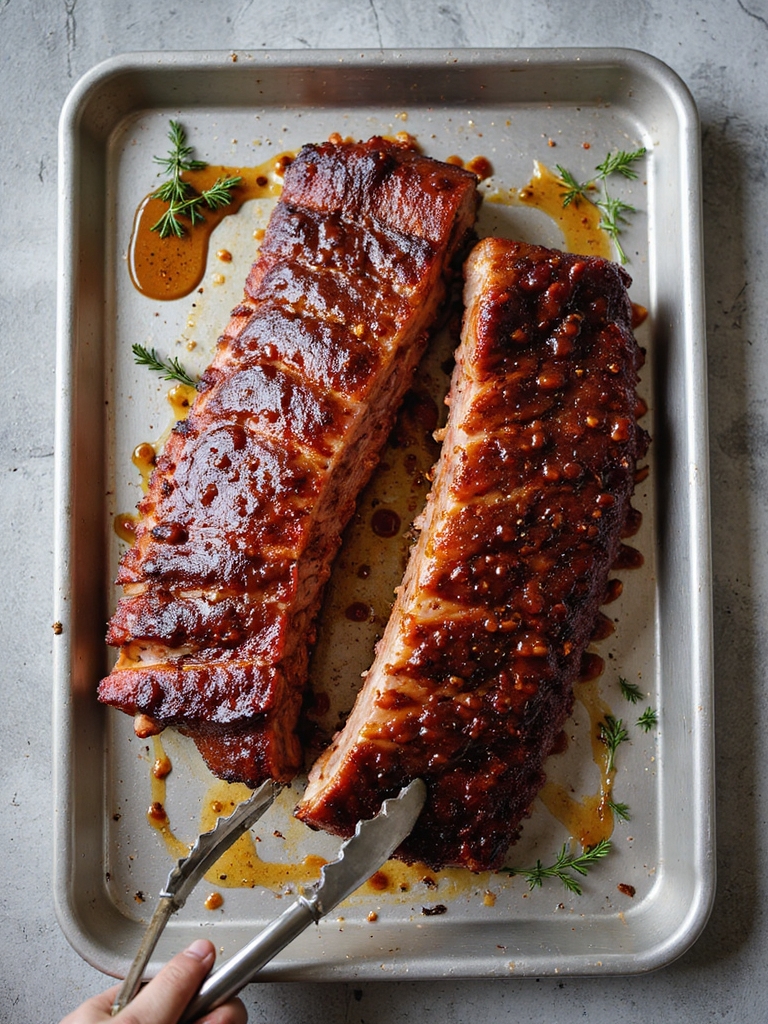
The “Bend Test” is a foolproof method to check for doneness when cooking pork ribs, guaranteeing they have reached the perfect tenderness. As the ribs cook, pay attention to their flexibility—a sign they are ready is when the meat easily bends without breaking, creating a curve almost in the form of a U. This method allows you to visually and physically assess the texture and readiness of your ribs without relying solely on temperature, enhancing both the flavor and presentation. Additionally, using Crock Pot for pork ribs can result in similarly tender and flavorful outcomes.
- 2 racks of pork ribs
- Olive oil
- 2 teaspoons salt
- 1 teaspoon black pepper
- 1 tablespoon garlic powder
- 2 tablespoons paprika
- Favorite BBQ sauce
Brush ribs with olive oil and season with salt, pepper, garlic powder, and paprika, guaranteeing an even coat. Wrap seasoned ribs in foil and bake at 275°F (135°C) for 3 hours, then remove foil, apply BBQ sauce, and bake uncovered for another hour. Perform the bend test by lifting the ribs and checking their flexibility—if they bend easily, they’re done.
For ideal results, guarantee to maintain a consistent oven temperature and avoid opening the oven frequently, which can disrupt the cooking process. If needed, baste the ribs occasionally during the last hour for added moisture and flavor.
Creating a Killer Basting Sauce
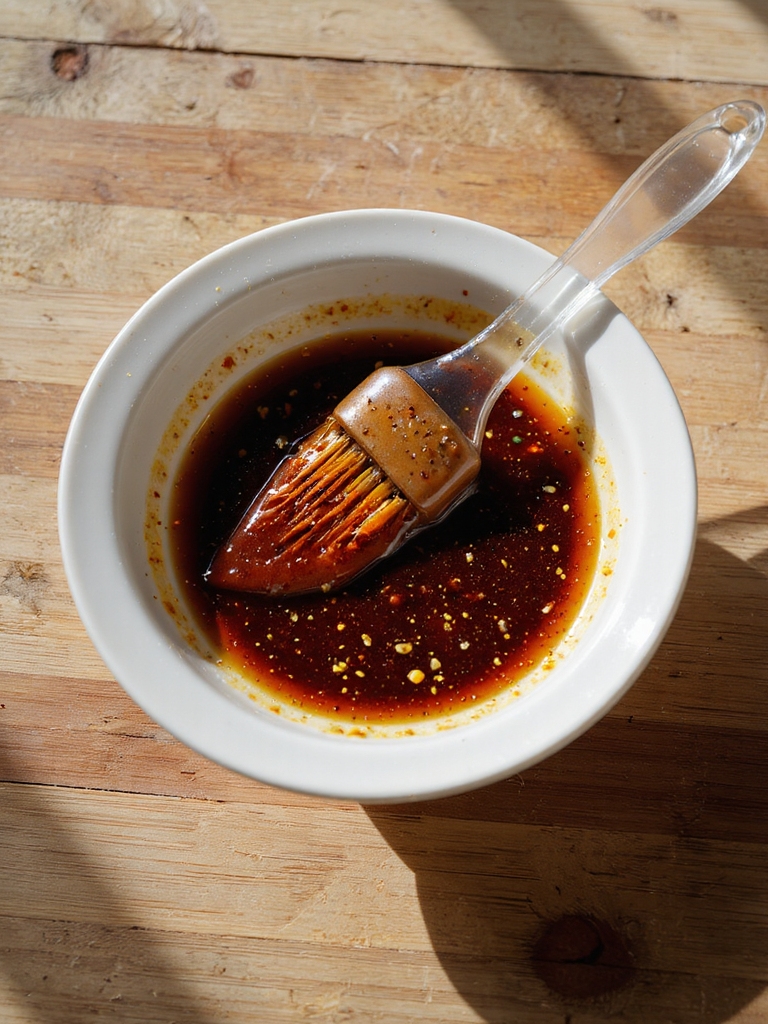
Creating a basting sauce for pork ribs can greatly enhance their flavor profile, adding layers of sweetness, tanginess, and spice. Start by choosing a base like apple cider vinegar or Worcestershire sauce and then blend with elements such as brown sugar, mustard, and cayenne pepper for a touch of heat. The key is to balance the flavors so that the sauce complements the spices on the ribs without overpowering them, allowing the natural essence of the pork to shine through.
- 1/2 cup apple cider vinegar
- 1/2 cup Worcestershire sauce
- 1/4 cup brown sugar
- 2 tablespoons mustard
- 1 teaspoon cayenne pepper
Combine all ingredients in a saucepan and heat over medium heat until the sugar dissolves completely. Allow the sauce to simmer gently for about 5 minutes, stirring occasionally, until slightly thickened. Use this sauce to baste your ribs during the final hour of cooking, ensuring the flavors meld beautifully with the rib spices.
A basting sauce works best when used sparingly at first to test for taste, applying more if desired. Remember, the aim is to enhance rather than saturate — let the sauce naturally blend into the ribs for maximum flavor impact.
Finishing off With the Perfect Glaze
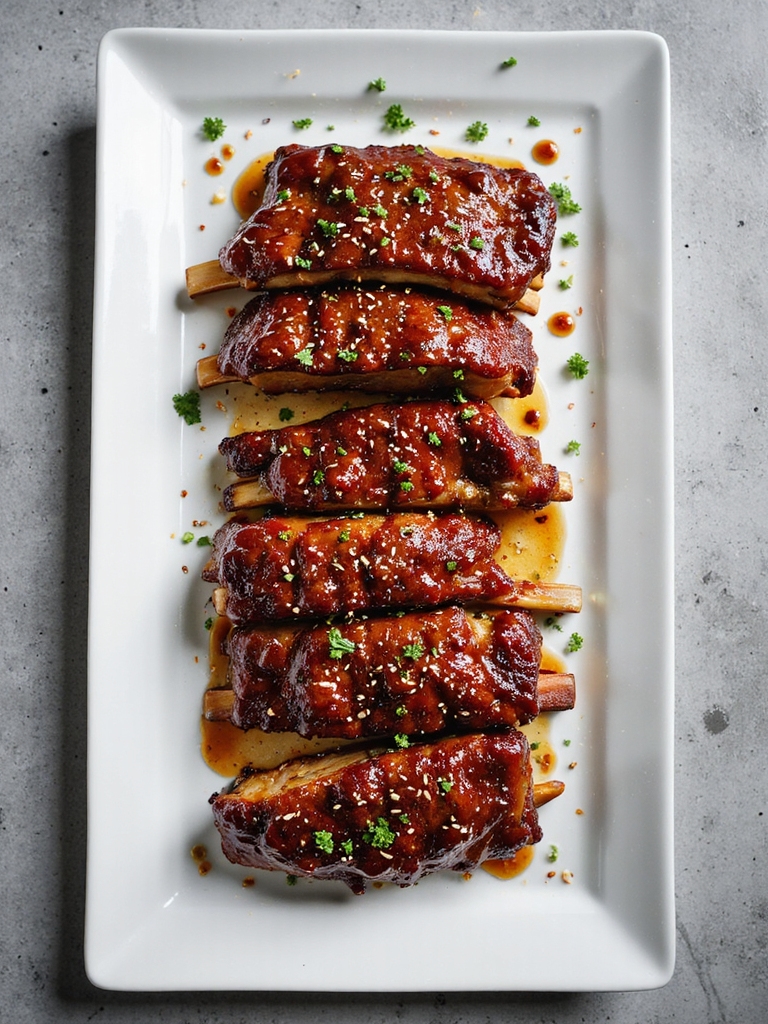
To achieve the perfect glaze on your pork ribs, you’ll want to create a concoction that seals in moisture while providing a sticky, flavorful finish. Glazing is done during the last stages of cooking, allowing the sugars to caramelize and add a beautiful sheen to the ribs. This glaze combines sweet, spicy, and savory elements to round out the flavor, leaving your ribs with a mouth-watering exterior that’s both visually appealing and delectable to taste.
- 1/2 cup honey
- 1/4 cup soy sauce
- 2 tablespoons sriracha
- 1 tablespoon lime juice
- 1 teaspoon garlic powder
Reduce your oven temperature to 300°F (150°C). Combine honey, soy sauce, sriracha, lime juice, and garlic powder, then brush generously over the ribs. Continue cooking the ribs in the oven for an additional 20 minutes, allowing the glaze to set and develop its signature sticky texture, turning once halfway through.
Ensure the ribs rest for a few minutes post-glazing for the flavors and juices to settle and mature. To prevent the glaze from burning, keep an eye on the ribs in the oven, adjusting cooking time as needed based on rib thickness.
Enhancing Flavor With a Quick Broil
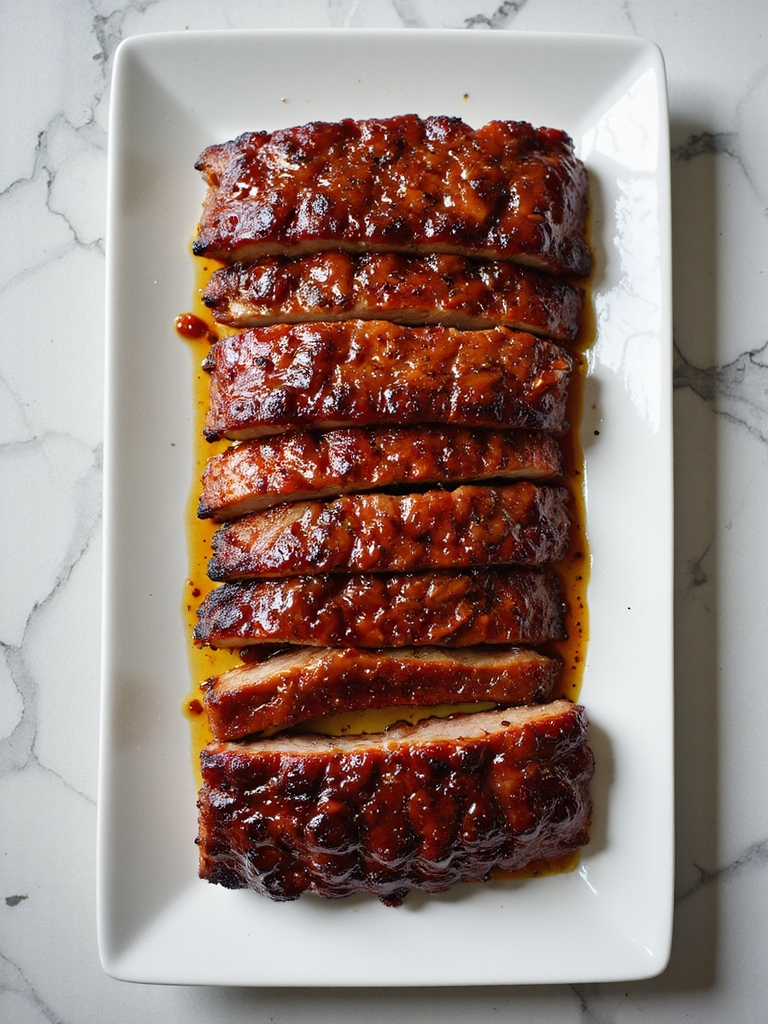
To enhance the flavor of your perfectly glazed pork ribs, a quick broil can add the final touch of smoky caramelization. Broiling allows the glaze to bubble up, concentrating the flavors and adding a delightful char to the ribs’ surface. This step is perfect for those who crave a subtle smokiness without using a grill, providing the ribs a crisp exterior and a juicy interior.
Ingredients:
- Glazed pork ribs
- 1 teaspoon olive oil
Adjust your oven to broil and position the rack 6 inches from the heat source. Lightly brush the ribs with olive oil and place them on a baking sheet. Broil for 3-5 minutes, paying close attention to avoid burning, until the edges have slightly crisped and the glaze has bubbled.
To achieve ideal results, verify the ribs are evenly coated with olive oil, which helps prevent sticking during broiling. Keep a close watch, as broiling occurs rapidly, ensuring you achieve a perfectly caramelized finish without overcooking.
Resting the Ribs Before Serving
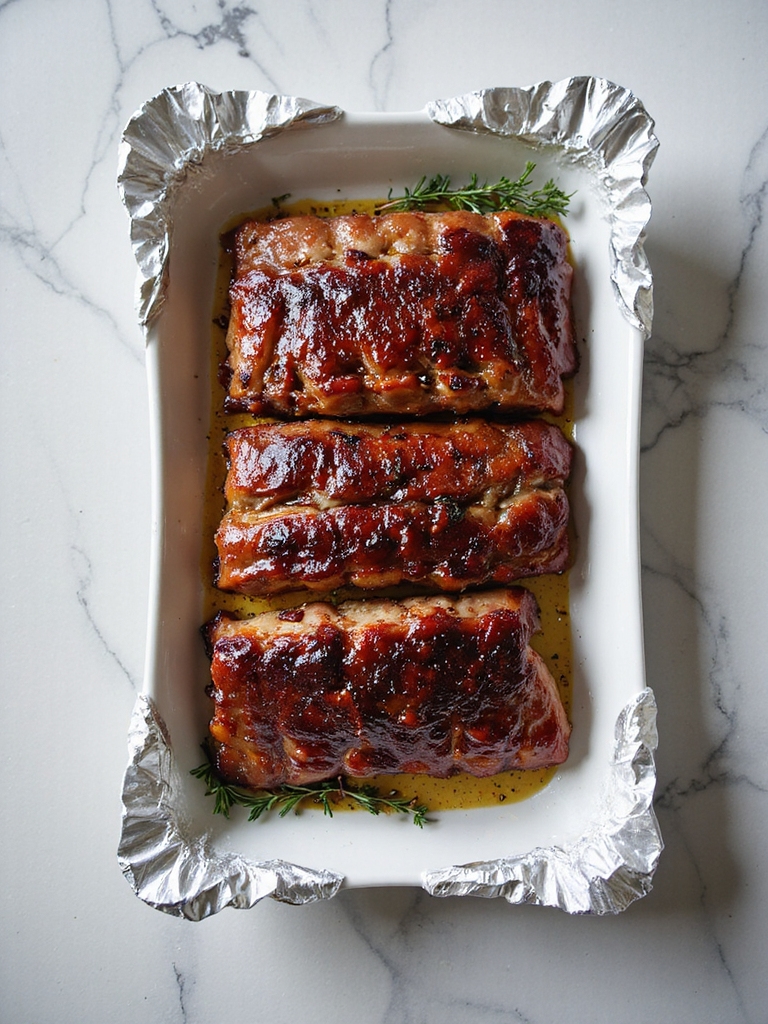
Resting ribs before serving is an essential step that allows the juices to redistribute throughout the meat, enhancing tenderness and flavor. After cooking, remove the ribs from the heat source and let them sit at room temperature for about 10-15 minutes. This resting period guarantees that the ribs remain juicy and flavorful when you slice into them, offering a perfectly moist bite every time.
- Cooked pork ribs
- Aluminum foil
After removing the ribs from the heat source, tent them loosely with aluminum foil on a cutting board or platter. Allow the ribs to rest for 10-15 minutes, undisturbed. This resting phase permits the juices to redistribute within the ribs, resulting in a tender, juicy bite upon slicing.
Don’t skip resting as it greatly impacts the ribs’ tenderness and juiciness. If you’re in a rush, try resting them for at least 5 minutes as it’s better than none.
Serving Suggestions to Complement Your Ribs
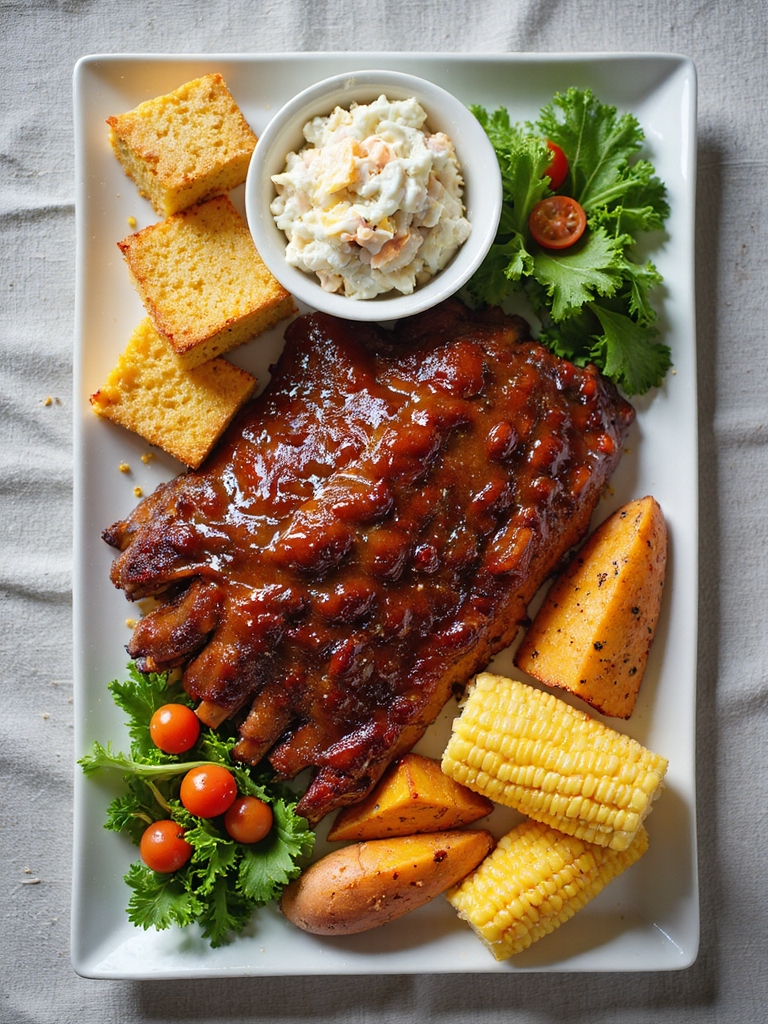
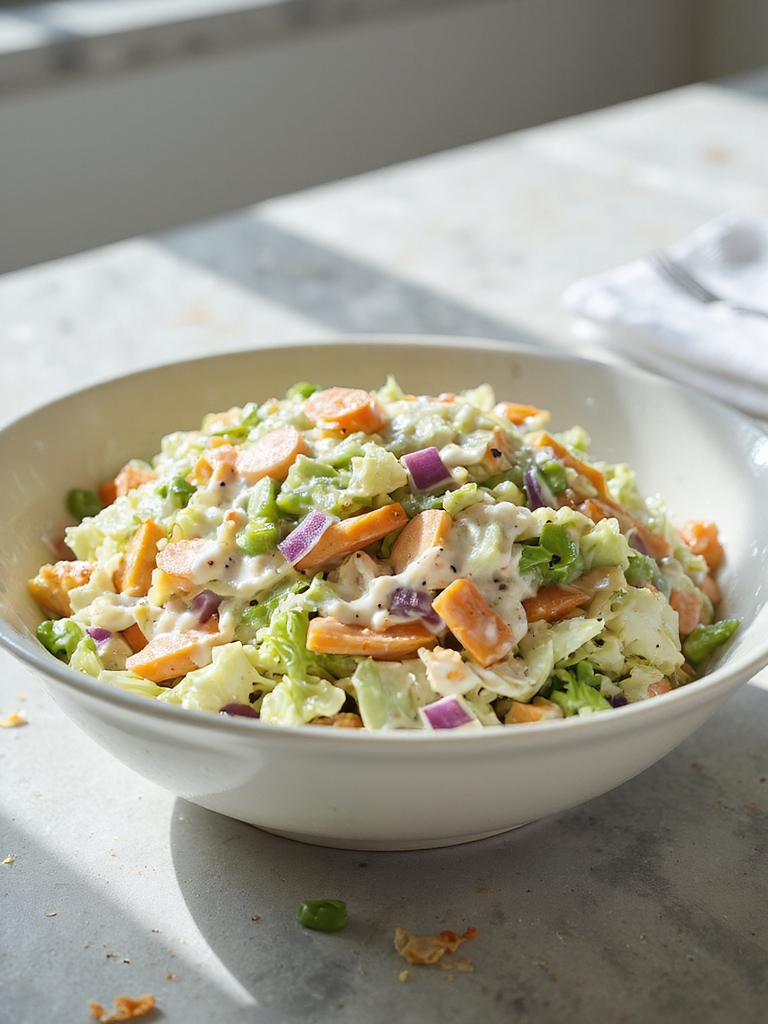
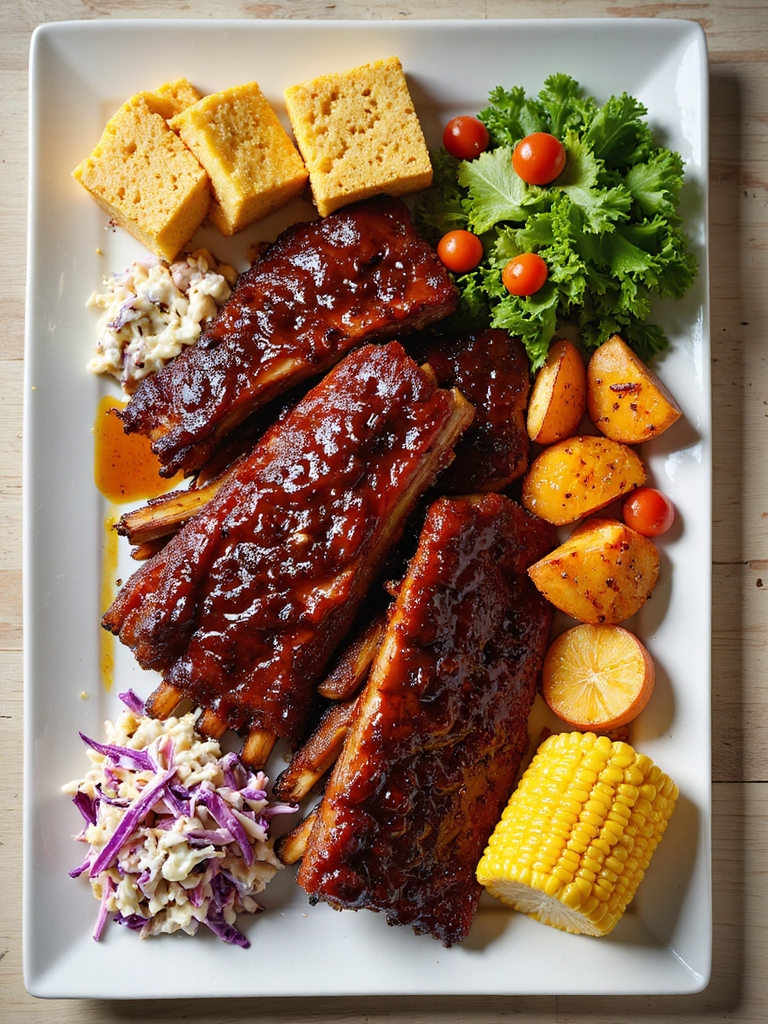
When serving pork ribs, a variety of side dishes can elevate your meal to another level. Consider pairing your ribs with classic cornbread, a tangy coleslaw, or a fresh green salad to balance the savory flavors of the meat. Roasted sweet potatoes or grilled corn on the cob also make excellent accompaniments, offering a delightful contrast in textures and tastes.
- Cornbread mix
- Ingredients for coleslaw (cabbage, carrots, dressing)
- Fresh greens for salad
- Sweet potatoes
- Corn on the cob
- Butter and seasoning for corn
Prepare the cornbread according to package instructions, bake until golden. For coleslaw, mix shredded cabbage and carrots with your favorite dressing. Roast sweet potatoes at 400°F until tender, and grill corn on the cob, brushing with butter and seasoning until charred.
Once finished, allow corn to rest before serving to let the butter soak in, enhancing flavor and ensuring appealing presentation. Adjust seasoning and dressing to taste, keeping side dishes light to complement the rich flavor of the ribs.