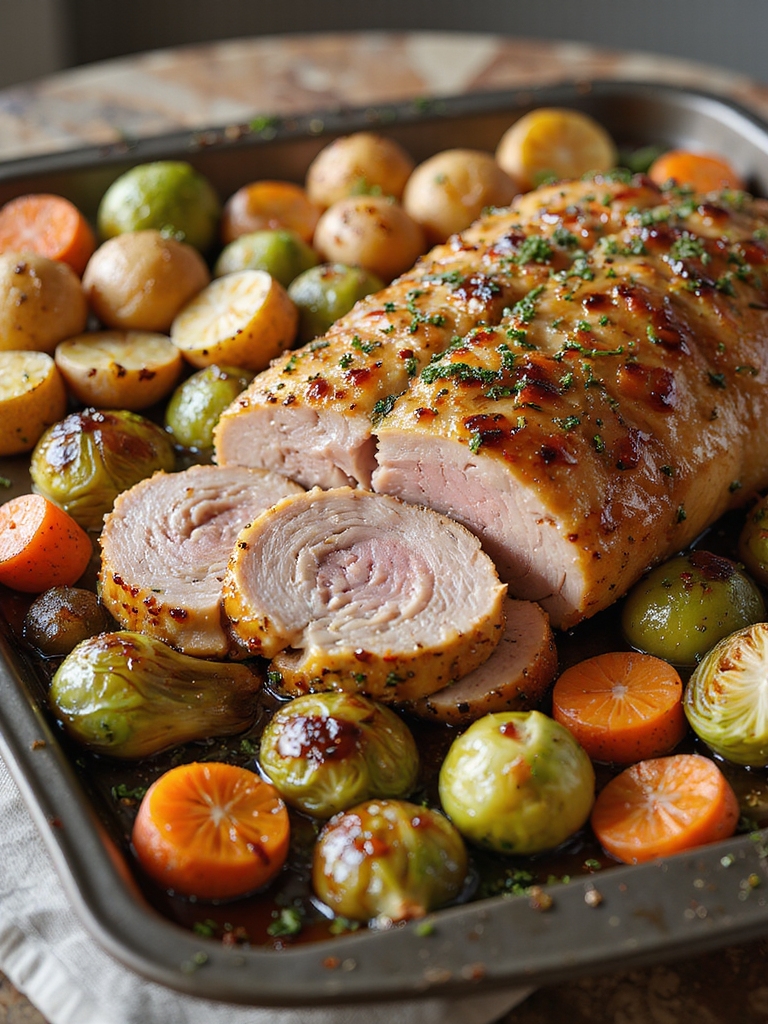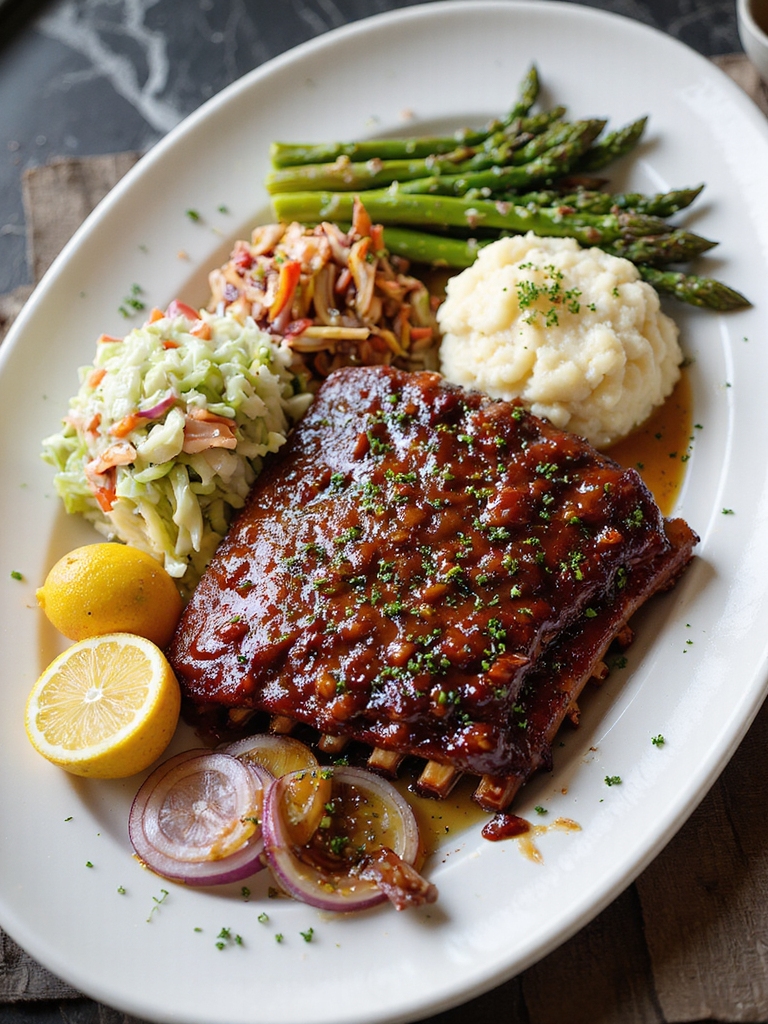

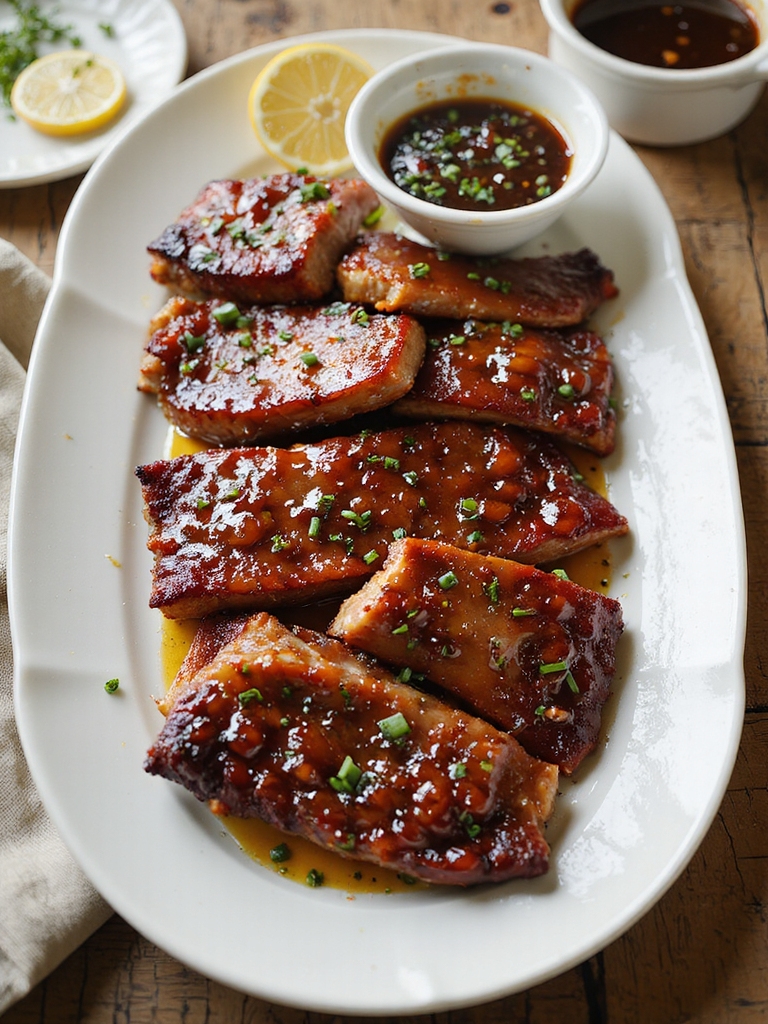
I love the way spare ribs soak up bold flavors and turn sticky-sweet under low heat, and I’ll walk you through choosing, trimming, seasoning, and finishing them so every bite clings to your fingers.
I keep techniques simple—brine or rub, slow cook, then glaze and char—so the meat becomes tender without fuss. Stick with me and you’ll learn the little tricks that make a glaze glossy and unforgettable, plus how to serve them right.
Why Spare Ribs Are Perfect for Sticky Glazes
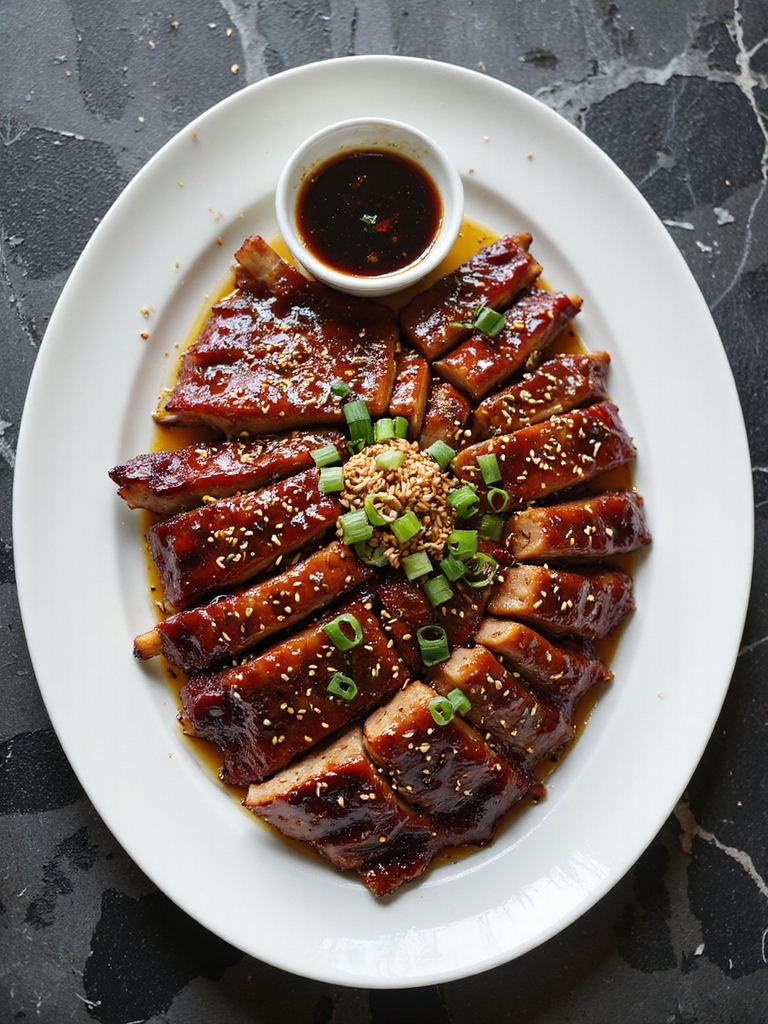
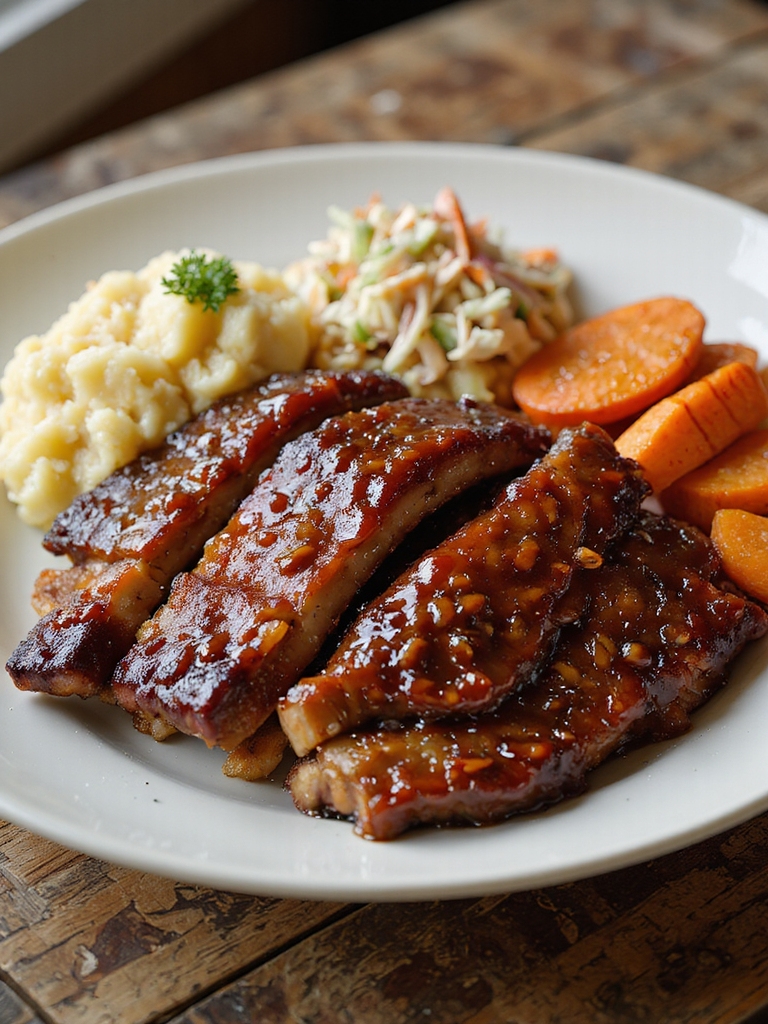
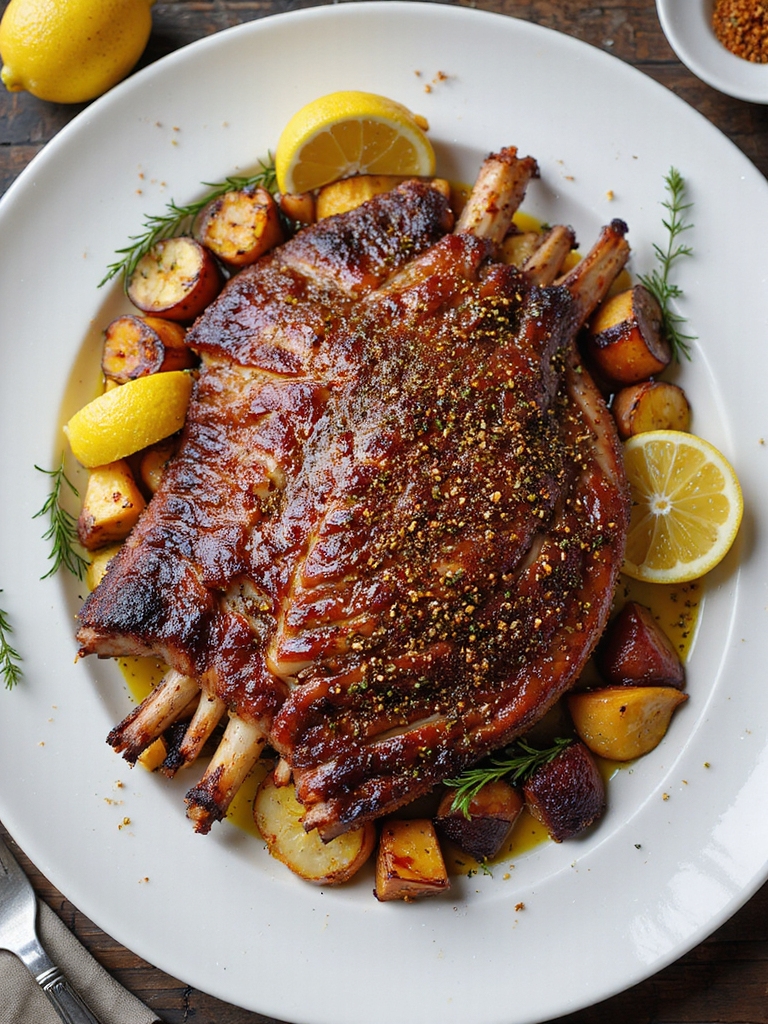
Sticky-glazed spare ribs are a perfect balance of richly caramelized sauce and tender fall-off-the-bone meat; the glaze clings to the ribs because its sugars and gelatinized collagen reduce and tack to the surface, creating deep flavor and glossy finish that pairs with both sweet and savory seasonings.
- 2–3 lb pork spare ribs
- 1 cup hoisin sauce
- 1/2 cup honey
- 1/4 cup soy sauce
- 2 tbsp rice vinegar
- 2 tbsp brown sugar
- 2 cloves garlic, minced
- 1 tbsp fresh ginger, grated
- 1 tsp sesame oil
- 1/2 tsp chili flakes (optional)
- 1 tbsp cornstarch mixed with 2 tbsp water (slurry)
- Salt and black pepper to taste
- Sliced green onions and sesame seeds for garnish
Preheat oven to 300°F (150°C); season ribs with salt and pepper, place bone-side down on a foil-lined baking sheet, cover tightly with foil and bake for 2–2.5 hours until tender.
Meanwhile combine hoisin, honey, soy, vinegar, brown sugar, garlic, ginger, sesame oil and chili in a saucepan, simmer to meld flavors then whisk in cornstarch slurry until glossy and thick.
Remove ribs, brush generously with glaze, set oven to 425°F (220°C) and roast uncovered 10–15 minutes until caramelized, turning and basting once more for an even sticky coat.
For best results, let glazed ribs rest 5–10 minutes before cutting, and save some glaze to reheat and serve on the side for extra stickiness and flavor.
Smoking low and slow can enhance tenderness and infuse a smoky depth that complements the glaze, especially when using pork shoulder techniques.
Choosing the Right Cut and How to Trim It
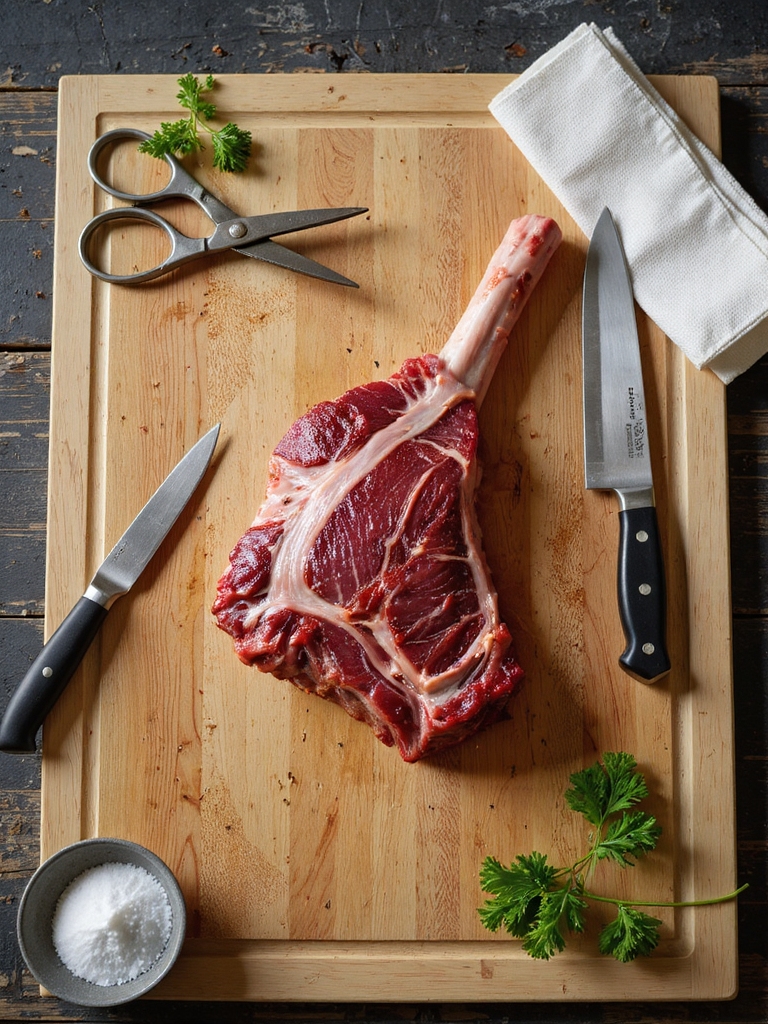
Choosing the right cut and trimming spare ribs is essential for tender, evenly cooked sticky-glazed ribs; for this recipe start with 2–3 lb of pork spare ribs (st. louis–style trimmed from a full rack is ideal) remove the silver skin membrane from the bone side with a paper towel for grip, trim excess fat and any ragged cartilage, and if needed square off the rack for even cooking and better glaze coverage.
- 2–3 lb pork spare ribs (St. Louis–style trimmed preferred)
- 1 tsp kosher salt
- 1/2 tsp freshly ground black pepper
- 1 cup hoisin sauce
- 1/2 cup honey
- 1/4 cup soy sauce
- 2 tbsp rice vinegar
- 2 tbsp brown sugar
- 2 cloves garlic, minced
- 1 tbsp fresh ginger, grated
- 1 tsp sesame oil
- 1/2 tsp chili flakes (optional)
- 1 tbsp cornstarch mixed with 2 tbsp water (slurry)
- Sliced green onions and sesame seeds for garnish
Preheat oven to 300°F (150°C); after removing the membrane and trimming excess fat, season both sides of the ribs with salt and pepper, place bone-side down on a foil-lined baking sheet, tent tightly with foil and bake for 2–2½ hours until a knife slides through easily.
While ribs bake combine hoisin, honey, soy, rice vinegar, brown sugar, garlic, ginger, sesame oil and chili flakes in a saucepan, simmer to meld flavors then whisk in cornstarch slurry until glossy and thick.
Remove ribs from oven and brush generously with glaze, increase oven to 425°F (220°C) and roast uncovered 10–15 minutes until caramelized, turning and basting once more, rest 5–10 minutes before slicing and serve with extra warmed glaze.
Tip: Always remove the membrane and trim uneven fat for consistent cooking, taste and adjust the glaze seasoning before glazing, and let the ribs rest after finishing to allow juices to redistribute. A great technique is to finish the ribs over direct heat on a hot grill for a minute or two per side to add smoky char and extra caramelization.
Essential Tools and Equipment for Tender Ribs
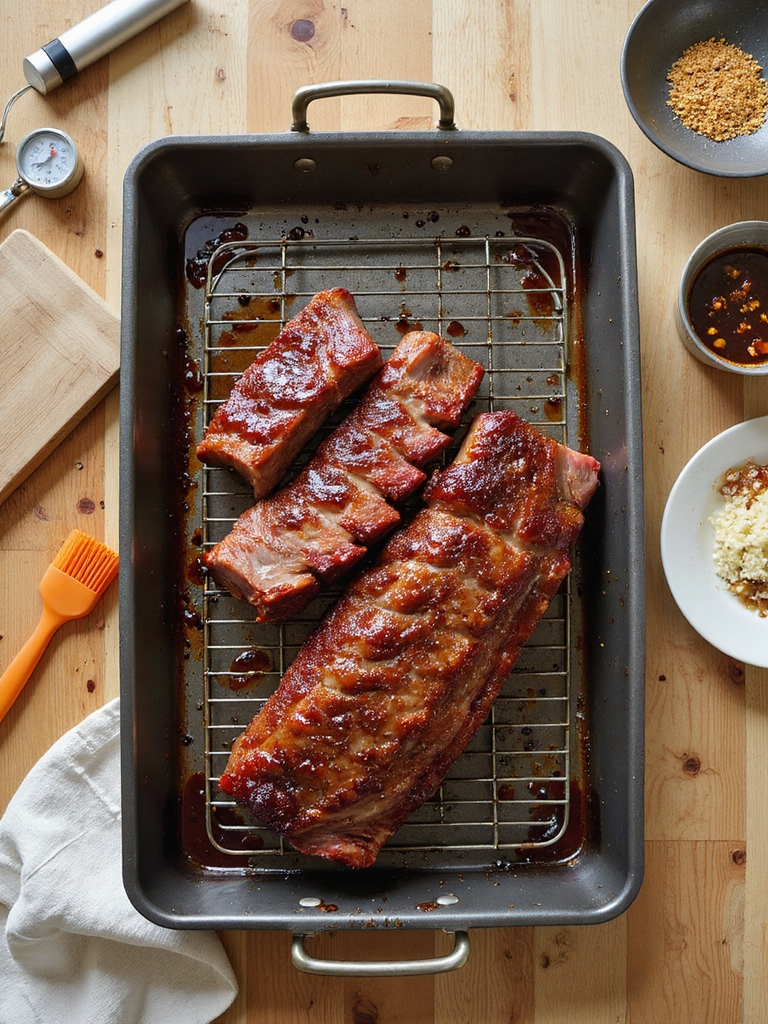
Tender, fall-off-the-bone spare ribs start with the right tools — a sharp boning or chef’s knife and sturdy cutting board for trimming, a heavy-duty baking sheet or roasting pan, aluminum foil for tight tenting, an instant-read thermometer to check doneness, a small saucepan and whisk for the glaze, a silicone or heatproof basting brush, tongs for turning, and optionally a wire rack so heat circulates evenly under the ribs for consistent caramelization.
- 2–3 lb pork spare ribs (St. Louis–style trimmed preferred)
- 1 tsp kosher salt
- 1/2 tsp freshly ground black pepper
- 1 cup hoisin sauce
- 1/2 cup honey
- 1/4 cup soy sauce
- 2 tbsp rice vinegar
- 2 tbsp brown sugar
- 2 cloves garlic, minced
- 1 tbsp fresh ginger, grated
- 1 tsp sesame oil
- 1/2 tsp chili flakes (optional)
- 1 tbsp cornstarch mixed with 2 tbsp water (slurry)
- Sliced green onions and sesame seeds for garnish
- Instant-read thermometer
- Heavy-duty baking sheet or roasting pan
- Wire rack (optional)
- Aluminum foil
- Basting brush and tongs
Preheat oven to 300°F (150°C); remove membrane, trim fat and square the rack if needed, season both sides with salt and pepper and place bone-side down on a foil-lined baking sheet set over a wire rack if using, tent tightly with foil and bake 2–2½ hours until an instant-read thermometer registers about 195–203°F (or a knife slides through easily).
Meanwhile simmer hoisin, honey, soy, rice vinegar, brown sugar, garlic, ginger, sesame oil and chili flakes in a saucepan until melded then whisk in cornstarch slurry until glossy and thick.
Remove ribs, brush generously with glaze, raise oven to 425°F (220°C) and roast uncovered 10–15 minutes until caramelized, turning and basting once, let rest 5–10 minutes before slicing and serve with extra warmed glaze.
Tip: Use the instant-read thermometer to avoid overcooking (aim for 195–203°F), remove the membrane and trim uneven fat for consistent results, and always tent while resting to keep ribs juicy. A properly trimmed St. Louis–style rack can improve even cooking and presentation, making it easier to achieve consistent caramelization.
Dry Rubs That Build Deep Flavor
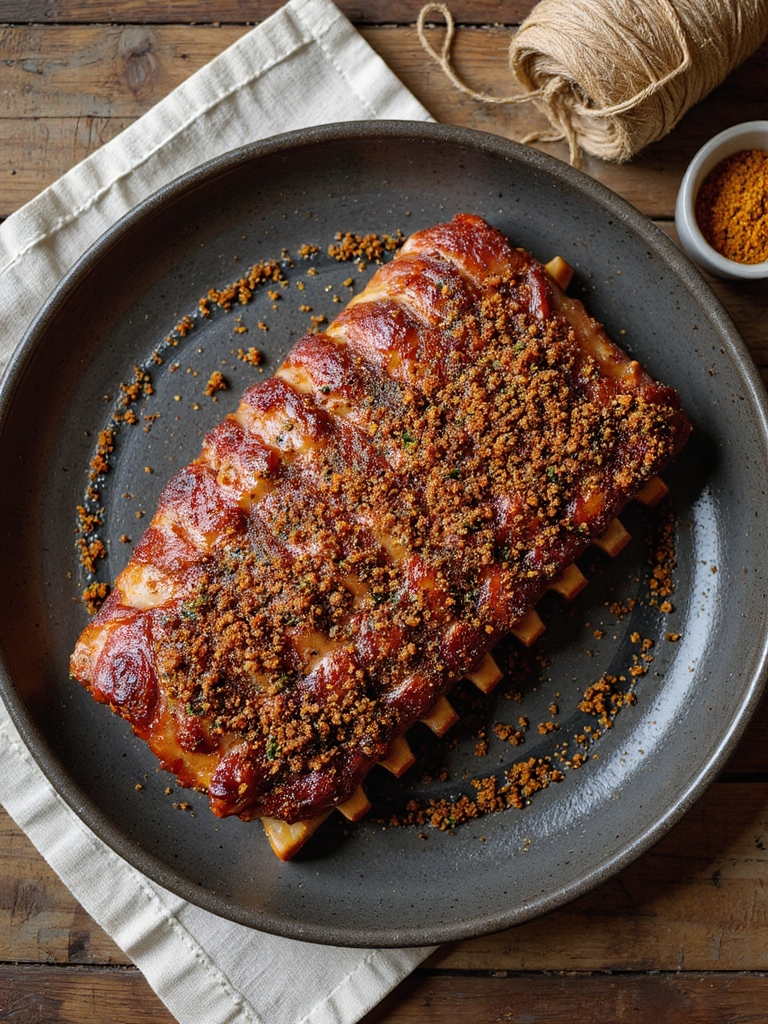
A bold, layered dry rub transforms spare ribs into deeply flavored, caramelized pieces without adding extra liquid — perfect when you want intense savory, sweet, and smoky notes that form a crust during low-and-slow cooking then finish with a quick blast of high heat or glaze; this recipe builds aromatics with brown sugar for caramel, a blend of paprika and chili for warmth, and dried herbs and mustard powder for complexity, and works equally well whether you bake, smoke, or grill the ribs.
- 2–3 lb pork spare ribs (St. Louis–style trimmed)
- 2 tbsp brown sugar
- 1 tbsp kosher salt
- 1 tsp freshly ground black pepper
- 1 tbsp smoked paprika
- 1 tsp sweet paprika
- 1 tsp chili powder
- 1/2 tsp cayenne pepper (optional)
- 1 tsp garlic powder
- 1 tsp onion powder
- 1 tsp dry mustard powder
- 1/2 tsp ground cumin
- 1/2 tsp dried thyme or oregano
- 1 tbsp neutral oil (for rub adhesion)
Trim the membrane from the back of the ribs and pat the meat dry with paper towels; in a small bowl combine brown sugar, salt, both paprikas, chili powder, cayenne, garlic and onion powders, mustard powder, cumin, thyme, and pepper, rub the oil evenly over the ribs to help the mix adhere then massage the dry rub all over both sides of the rack, wrap tightly in plastic and refrigerate at least 2 hours or overnight for best flavor penetration.
Preheat oven to 300°F (150°C) or set your smoker/grill for indirect heat at 225–275°F, place ribs bone-side down on a foil-lined baking sheet over a wire rack (or directly on the smoker grate), bake/smoke covered or tented for 2–2½ hours until tender (195–203°F internal or meat easily pulls), unwrap and increase heat to 425°F (or move to direct heat) for 10–15 minutes to caramelize the crust, brush with glaze in the final minutes if desired, rest 5–10 minutes before slicing between bones and serve.
Tip: Apply the rub at least 2 hours ahead or overnight for deeper flavor, remove the membrane for better bite and even seasoning, and use an instant-read thermometer to hit 195–203°F for tender but not dry ribs. This method echoes the hearty, country-style approach used in many classic Country Style Pork Ribs preparations.
Wet Marinades and Brines for Juiciness
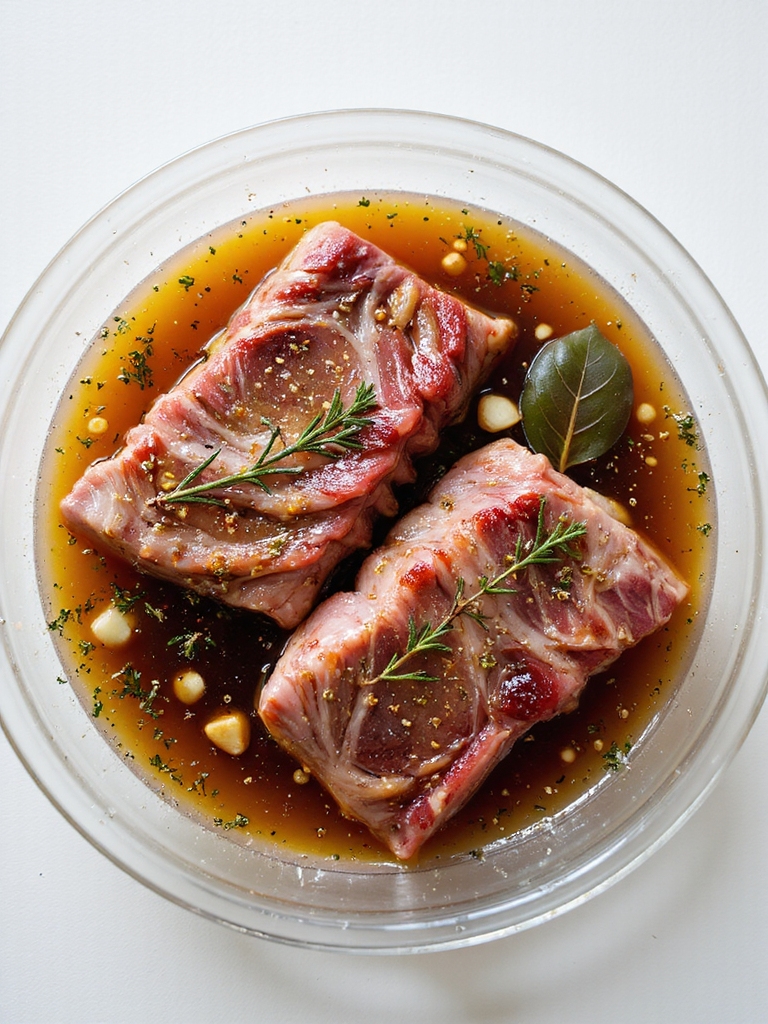
A tangy, herbaceous wet marinade and optional brine will keep spare ribs juicy and flavorful through low-and-slow cooking by infusing salt and acid for moisture retention, aromatics for depth, and oil to carry fat-soluble flavors; this recipe offers a simple overnight brine for maximum juiciness or a quicker 4–6 hour wet marinade that layers sweetness, acidity, and spice, and works for oven, grill, or smoker preparations.
- 2–3 lb pork spare ribs (St. Louis–style trimmed)
- 4 cups cold water (for brine) or 1 cup apple juice + 1 cup water (for quick marinade)
- 1/4 cup kosher salt (brine) or 2 tbsp soy sauce (marinade)
- 1/4 cup brown sugar or honey
- 1/4 cup apple cider vinegar
- 2 tbsp Worcestershire sauce
- 3 cloves garlic, crushed
- 1 tbsp Dijon mustard
- 1 tsp black pepper
- 1 tsp smoked paprika
- 1 tsp onion powder
- 2 sprigs fresh thyme or 1 tsp dried
- 1 bay leaf
- 2 tbsp neutral oil (vegetable or canola)
For a full brine: dissolve salt and brown sugar in 4 cups cold water, add vinegar, Worcestershire, garlic, mustard, spices, herbs and bay leaf, submerge ribs in brine in a nonreactive container or zip-top bag, refrigerate 8–12 hours.
For a quicker wet marinade combine apple juice, water, salt or soy, sugar, vinegar, Worcestershire, garlic, mustard, spices and oil, marinate ribs 4–6 hours refrigerated, then remove and pat dry, reserve marinade for basting (boil before using as sauce), cook ribs low-and-slow in oven at 275°F or smoker at 225–275°F for 2–3 hours until tender (195–203°F internal), finish with high heat or glaze for 10–15 minutes to caramelize, rest 5–10 minutes and slice between bones.
Tip: Always rinse and pat dry brined ribs to avoid overly salty surface, save marinade to reduce and use as glaze after boiling, and use an instant-read thermometer to hit 195–203°F for tender but juicy ribs. Many pitmasters pair these preparations with an irresistible dry rub for a final flavor layer, especially when aiming for perfect pork ribs.
Smoking Techniques for Low-and-Slow Perfection
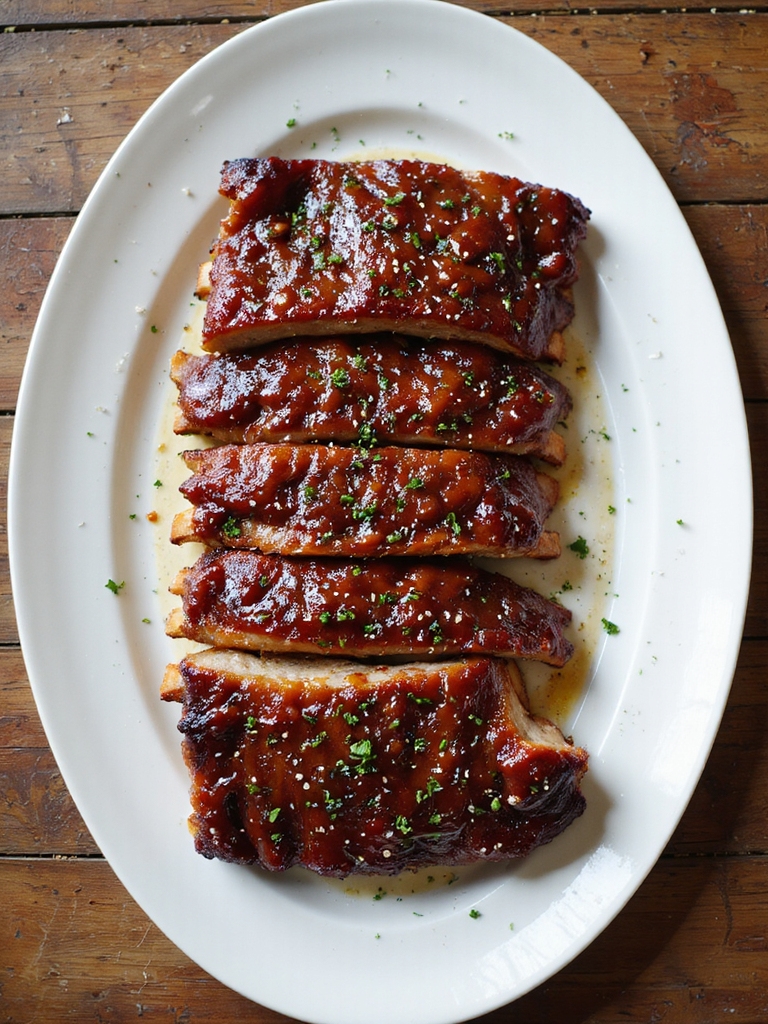
Smoking spare ribs low-and-slow produces deep smoke flavor and tender, fall-off-the-bone meat when you control temperature, smoke, and moisture; this recipe walks you through prepping St. Louis–style spare ribs, setting up a charcoal or pellet smoker for a steady 225–250°F, maintaining clean hardwood smoke, and finishing with a glaze so you get evenly cooked, juicy ribs with a crisp, caramelized bark.
- 2–3 lb pork spare ribs (St. Louis–style trimmed)
- 2–3 tbsp yellow mustard (binder)
- 2–3 tbsp brown sugar
- 1 tbsp smoked paprika
- 1 tbsp kosher salt
- 1 tsp black pepper
- 1 tsp garlic powder
- 1 tsp onion powder
- 1/2 tsp cayenne (optional)
- 1 cup apple juice or apple cider (for mop)
- 1/2 cup apple cider vinegar (for mop)
- 1/2 cup barbecue sauce or reserved reduced marinade for glaze
- Wood chunks or chips (apple, hickory, or oak)
Pat ribs dry and remove membrane, rub a thin layer of mustard over both sides then coat with the dry rub, let rest refrigerated for 1–4 hours (or overnight) while you bring smoker to a steady 225–250°F using indirect heat and clean white smoke; place ribs bone-side down on the grate, smoke for 2–3 hours until a nice smoke ring forms and bark builds, then spritz every 45–60 minutes with a mix of apple juice and cider vinegar to maintain surface moisture.
Wrap tightly in foil with a splash of the spritz liquid and return to the smoker for another 1–1.5 hours until internal temp 195–203°F and meat pulls back from the bones about 1/4–1/2 inch, unwrap and brush with sauce, place back on the grate for 10–20 minutes to set the glaze and firm the bark, then rest 10–15 minutes before slicing between bones.
Tip: Use a reliable thermometer and avoid thick gray smoke—thin blue or white smoke is best—manage vents to hold 225–250°F, spritz to prevent drying, and wrap when bark is set to accelerate tenderizing while keeping moisture. The same principles apply when smoking other cuts, such as pork chops, though cooking times and internal temperatures will differ.
Oven Methods for Reliable Weeknight Ribs
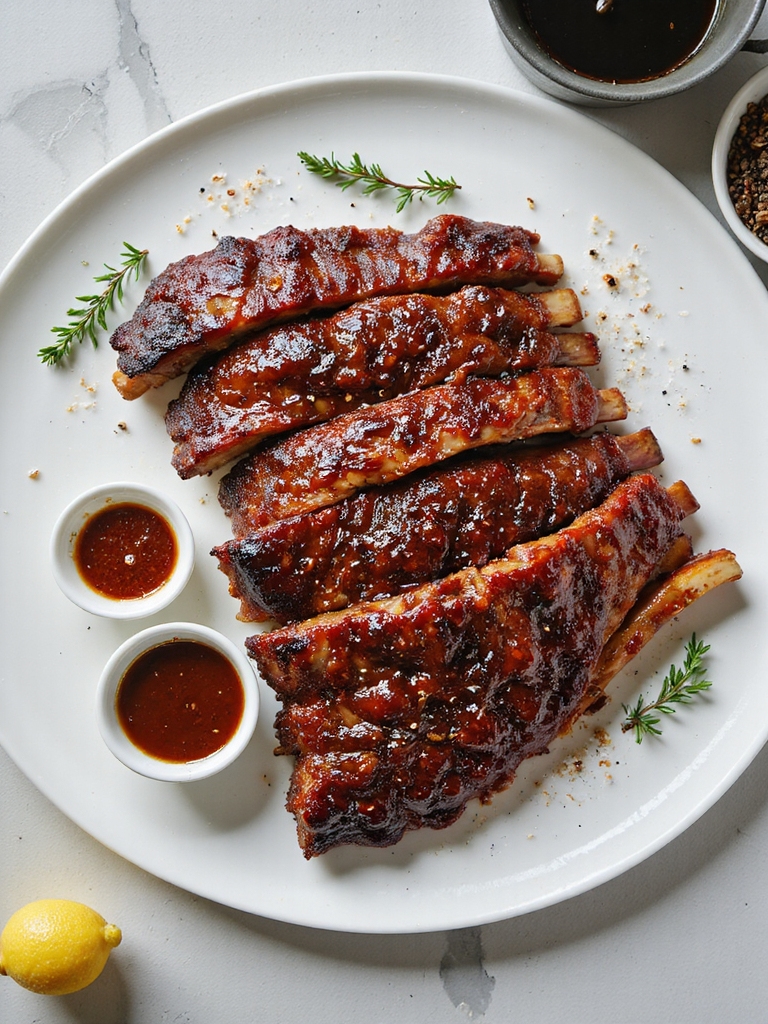
Oven-baked spare ribs give you tender, reliably juicy results on a weeknight when you don’t have time for smoking; this method uses a low, steady oven temperature, a flavorful dry rub and a brief finish under high heat (or broiler) to build a caramelized glaze while keeping hands-on time minimal—start these in the afternoon or early evening, and they’ll be ready by dinner with mostly hands-off cooking.
- 2–3 lb pork spare ribs (St. Louis–style trimmed)
- 2–3 tbsp yellow mustard (or olive oil as binder)
- 2–3 tbsp brown sugar
- 1 tbsp smoked paprika
- 1 tbsp kosher salt
- 1 tsp black pepper
- 1 tsp garlic powder
- 1 tsp onion powder
- 1/2 tsp cayenne (optional)
- 1/2 cup apple juice or apple cider (for pan)
- 1/2 cup apple cider vinegar (optional for pan)
- 1/2 cup barbecue sauce (for glaze)
Preheat oven to 275°F (135°C); pat ribs dry, remove membrane, rub a thin layer of mustard or oil over both sides then massage on the dry rub and let sit 30 minutes at room temp or refrigerate up to overnight.
Place ribs bone-side down on a foil-lined sheet pan or in a roasting pan, add 1/2–3/4 cup apple juice (and a splash of cider vinegar if using) to the pan to create steam, cover tightly with foil and bake low and slow for 2.5–3 hours until meat pulls back about 1/4–1/2 inch and is tender.
Uncover, brush both sides with barbecue sauce and increase oven to 425°F (or broil 4–6 inches from heat) and cook 8–12 minutes until sauce caramelizes and edges char slightly, then rest 10 minutes before slicing between bones.
Tip: Use a thermometer or probe to confirm tenderness (aim ~195–203°F internal where meat feels tender) and avoid over-broiling—watch closely during the final caramelize step to prevent burning.
This oven method produces results similar to low-and-slow smoking by using steady low heat and moisture to break down collagen for tender ribs.
Grilling Tips for Charred, Caramelized Edges
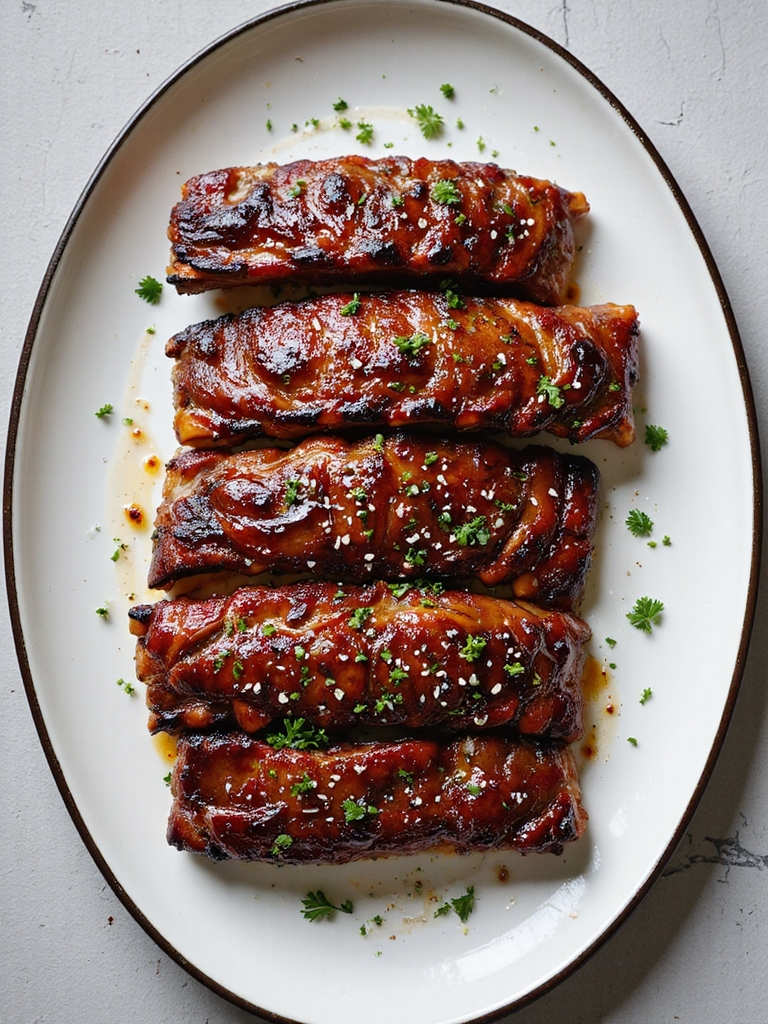
Grilling spare ribs to get those coveted charred, caramelized edges is all about high direct heat at the end of a gentle cook, a bold dry rub up front, and a sticky finishing glaze to build layers of flavor; this recipe uses a two-zone grill (indirect for low-and-slow, direct for sear), a spice rub, smoke if desired, and a final saucing stage so you get tender meat with crisp, caramelized edges.
- 2–3 lb pork spare ribs (St. Louis–style trimmed)
- 2 tbsp yellow mustard (or oil, as binder)
- 2 tbsp brown sugar
- 1 tbsp smoked paprika
- 1 tbsp kosher salt
- 1 tsp black pepper
- 1 tsp garlic powder
- 1 tsp onion powder
- 1/2 tsp cayenne (optional)
- Wood chips or chunks (hickory, apple, or cherry), soaked 30 min (optional)
- 1/2 cup apple juice or beer (for pan)
- 1/2 cup barbecue sauce (or glaze of choice)
Prepare the ribs by removing the membrane and rubbing a thin layer of mustard or oil over both sides, then generously apply the dry rub and let rest refrigerated 1 hour or up to overnight; preheat a grill for two-zone cooking (one side at medium-low indirect heat ~250–275°F and one side for direct high heat), add soaked wood if using, place ribs bone-side down over indirect heat with a foil pan of apple juice/beer beneath to keep moisture, smoke/roast covered with the lid on for 1.5–2 hours until meat is pulling back from the bones about 1/4–1/2 inch and tender, then move to the direct-heat side and brush both sides with sauce, sear 2–4 minutes per side until caramelized and slightly charred—watch closely to avoid burning, and rest 10 minutes before slicing between bones.
Tip: Keep a spray bottle of apple juice or cider to mist during the indirect stage if they look dry, monitor flare-ups during the high-heat sear, and resist over-saucing too early to prevent burning. Many home cooks also enjoy trying country style ribs for a meatier alternative with similar techniques.
Sticky Glaze Recipes — Sweet, Spicy, and Tangy
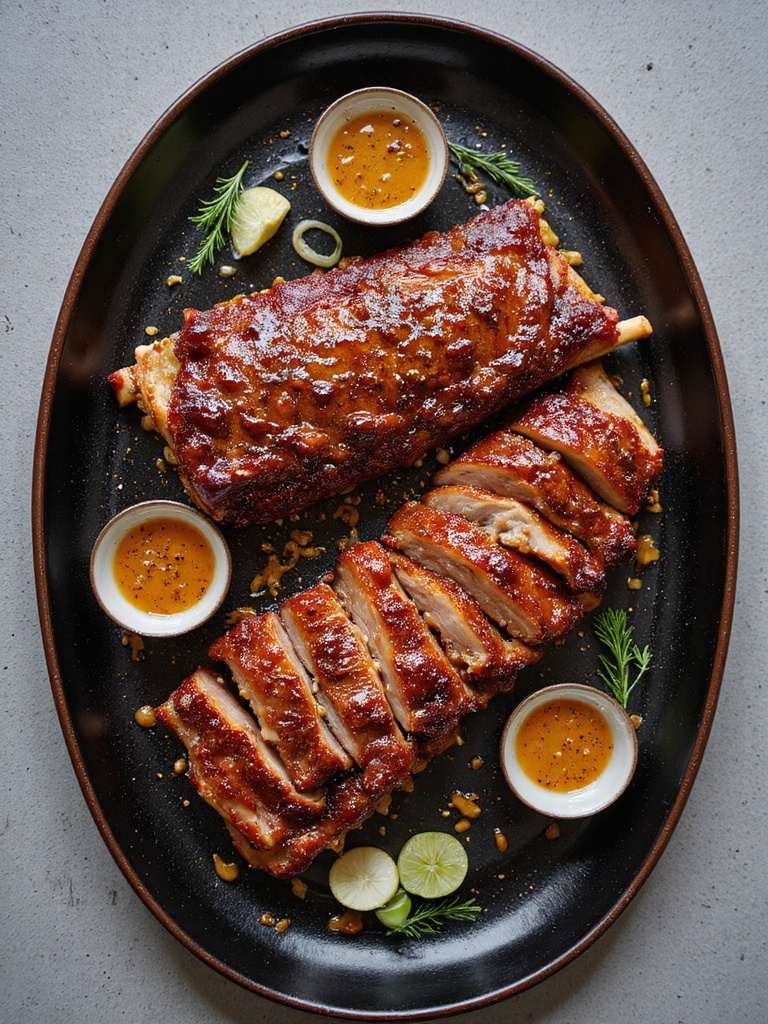
A trio of sticky glazes—sweet honey-bourbon, spicy gochujang-maple, and tangy mustard-apple—gives spare ribs layers of glossy flavor and caramelized edges; pick one or make small batches of each to brush during the final sear so you have contrasting finishes to suit different palates.
- Honey-Bourbon Glaze: 1/2 cup honey
- Honey-Bourbon Glaze: 2 tbsp bourbon
- Honey-Bourbon Glaze: 2 tbsp soy sauce
- Honey-Bourbon Glaze: 1 tbsp apple cider vinegar
- Honey-Bourbon Glaze: 1 tsp Dijon mustard
- Honey-Bourbon Glaze: 1/4 tsp smoked paprika
- Gochujang-Maple Glaze: 1/3 cup maple syrup
- Gochujang-Maple Glaze: 2 tbsp gochujang
- Gochujang-Maple Glaze: 1 tbsp rice vinegar
- Gochujang-Maple Glaze: 1 tsp toasted sesame oil
- Gochujang-Maple Glaze: 1 clove garlic, minced
- Mustard-Apple Glaze: 1/2 cup apple butter or applesauce
- Mustard-Apple Glaze: 1/4 cup brown sugar
- Mustard-Apple Glaze: 3 tbsp yellow or whole-grain mustard
- Mustard-Apple Glaze: 1 tbsp apple cider vinegar
- Mustard-Apple Glaze: 1/2 tsp ground cloves or cinnamon
Simmer your chosen glaze ingredients in a small saucepan over medium heat until slightly thickened and glossy (5–8 minutes), keep warm; after low-and-slow cooking and when ribs have pulled back and are tender, move them to direct high heat and brush a thin coat of glaze on both sides, sear 2–4 minutes per side until caramelized and sticky (watch closely to prevent burning), brushing a second thin layer during the last minute if desired and letting the glaze set 5 minutes before slicing.
Use glazes sparingly at first—thin coats caramelize better than thick slatherings—taste for balance and adjust sweet/acid/heat, have backup sauce for dipping, and remember alcohol in glazes will flame briefly so step back during searing. Modern BBQs often feature regional variations and techniques developed from classic BBQ pork recipes.
Resting, Serving, and Reheating for Best Results
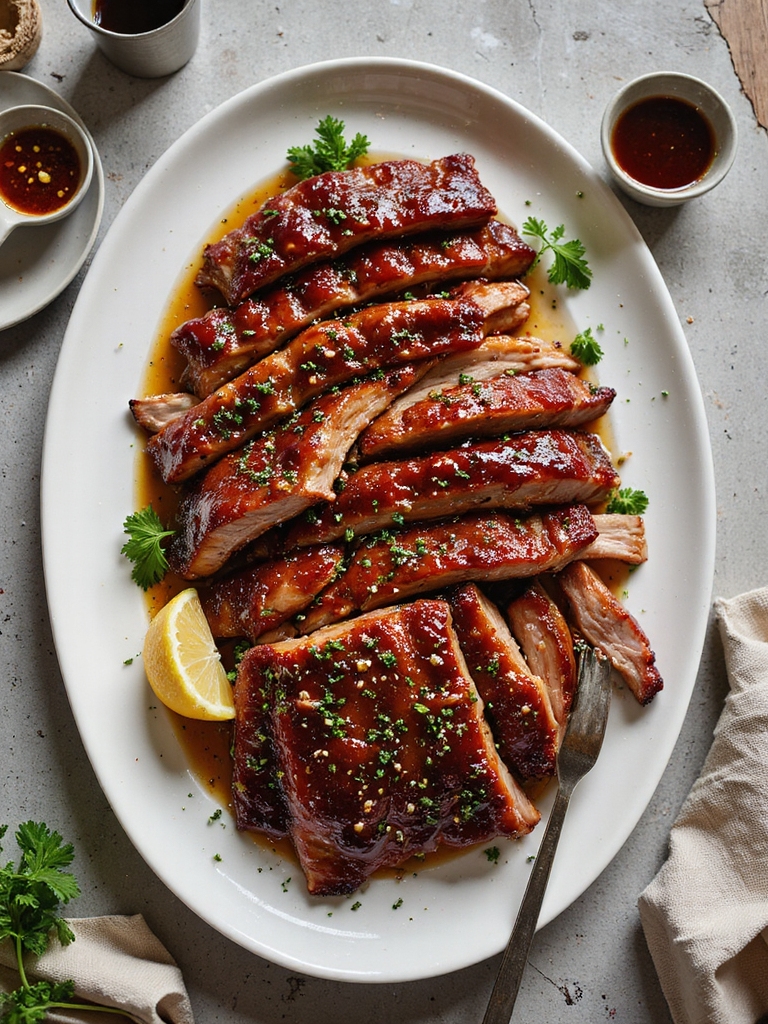
After slow-cooking and glazing your spare ribs to glossy perfection, proper resting, serving, and reheating make sure the meat stays juicy and the glaze retains its shine; these steps help the juices redistribute, the sauce set without becoming sticky-muddy, and leftovers stay flavorful for quick meals later.
- Cooked spare ribs (whole racks or portions)
- Reserved pan juices or 1/4 cup broth
- Extra glaze or barbecue sauce (for serving)
- Fresh herbs (parsley, cilantro, or chives), optional
- Lemon or lime wedges, optional
- Heavy-duty foil
- Baking sheet or shallow roasting pan
- Airtight container for storage
Remove ribs from heat and tent loosely with foil for 10–20 minutes to let juices redistribute, then slice between bones and transfer to a warmed platter, serve with extra glaze on the side and garnish.
For reheating, wrap individual portions with a splash of reserved pan juices or broth in foil and warm gently in a 275°F (135°C) oven until heated through (about 20–30 minutes depending on thickness), or reheat slices covered in a skillet over low heat with a lid, finishing with a quick sear to refresh the glaze.
Store cooled ribs in an airtight container in the refrigerator for up to 3–4 days or freeze portions for up to 3 months.
When serving leftovers, always reheat gently to avoid drying, refresh glaze sparingly and finish under high heat briefly for a renewed caramelized surface.
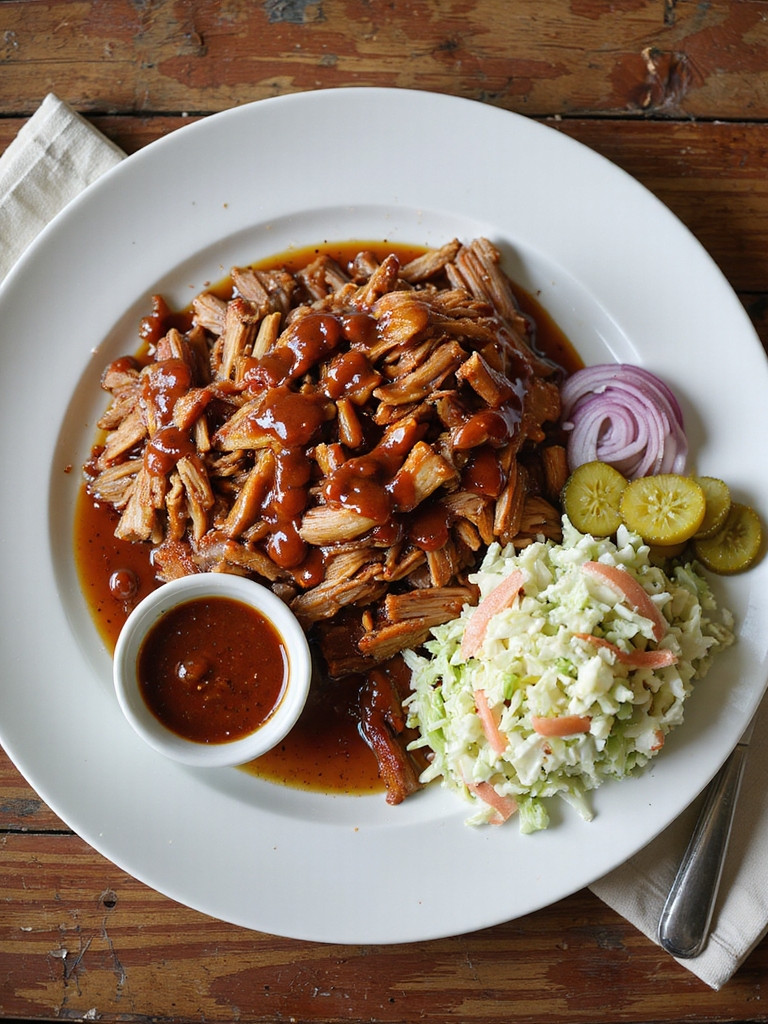
Smoked pulled pork ideas can complement spare ribs on a shared platter, offering contrasting textures and flavors with smoke-forward profiles.