
As the holiday season approaches, I often find myself reminiscing about the classic turkey gravy that graced my family’s festive table. Its silky texture and rich flavor were always the stars of our meal.
Crafting it might seem intimidating at first—after all, a good gravy can make or break your dinner. Yet, it’s entirely achievable once you know the secrets. Let’s unravel these time-tested techniques together, shall we?
Choosing the Right Ingredients for Your Turkey Gravy
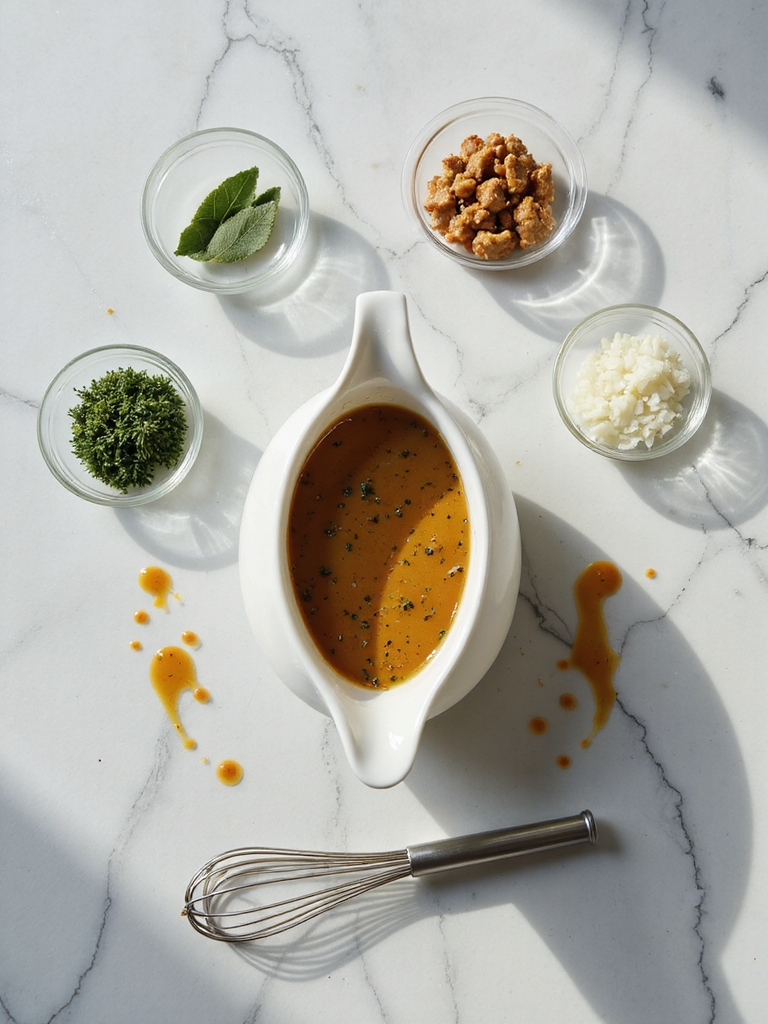
To make a delicious turkey gravy, it’s essential to select the right ingredients that will not only enhance the taste but also complement the turkey’s natural flavors. Start with a good quality turkey stock or drippings from a roasted turkey, which will form the base of your gravy. By adding aromatics like onions, fresh herbs, and a splash of wine or cider, you can create a rich, savory flavor profile that brings out the best in your dish. Don’t forget to include a thickening agent, such as flour or cornstarch, to achieve the desired consistency.
- Turkey drippings or stock
- Onion, finely chopped
- Fresh thyme and sage
- Worcestershire sauce
- Dry white wine or cider
- All-purpose flour or cornstarch
- Salt and pepper
In a saucepan, heat the turkey drippings over medium heat, adding onions, herbs, and Worcestershire sauce. After lightly sautéing, pour in the wine or cider and let it simmer. Gradually whisk in the flour or cornstarch until the mixture thickens, ensuring a smooth consistency. Season with salt and pepper to taste.
For the best result, use warm stock or drippings when preparing the gravy as it helps the thickening process. Delicious turkey stuffing recipes can also be the perfect accompaniment to your holiday feast. Stir constantly while adding the flour or cornstarch to prevent lumps, and adjust the seasoning at the end for the perfect balance of flavors.
The Importance of a Good Stock Base
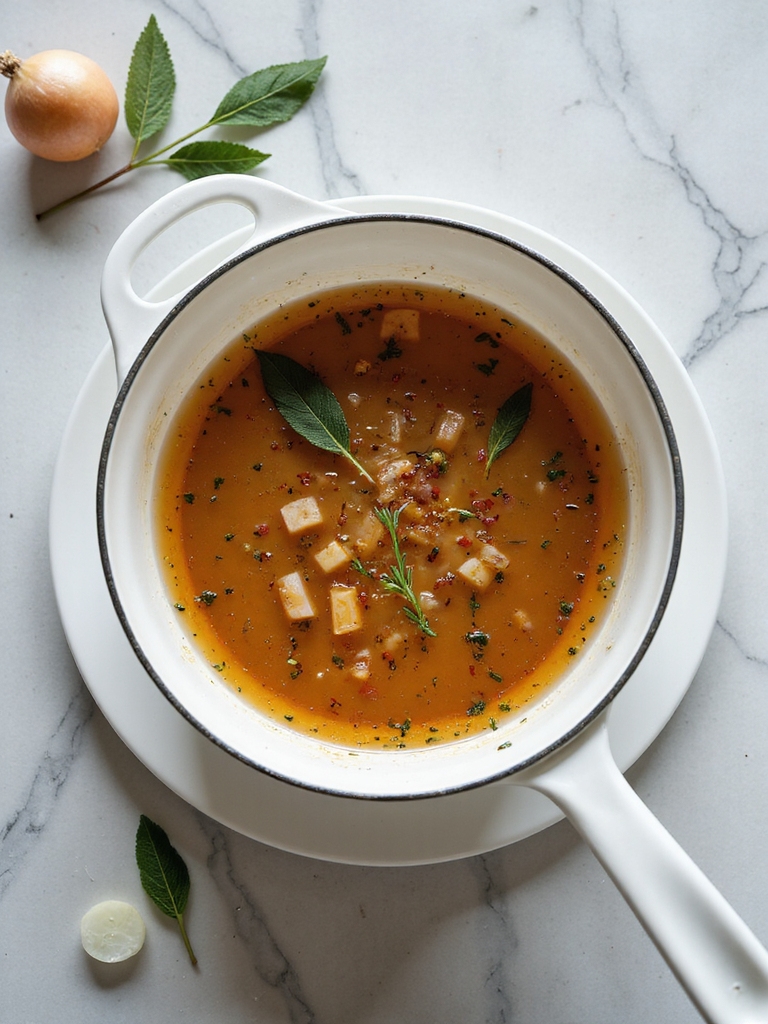
A rich and flavorful turkey gravy begins with a good stock base, elevating the natural essence of the turkey. Regardless of using homemade or store-bought turkey stock, aim for a base that is gelatinous when chilled, indicating ample collagen. A high-quality stock will provide depth and complexity to your gravy, making it an irresistible accompaniment to your holiday meal. This base, when combined with carefully chosen aromatics and spices, results in a harmonious balance of flavors that complement the roasted turkey beautifully.
- Turkey stock (homemade or store-bought)
- Turkey drippings
- Onion, finely chopped
- Fresh thyme and sage
- Worcestershire sauce
- Dry white wine or cider
- All-purpose flour or cornstarch
- Salt and pepper
In a saucepan over medium heat, combine turkey stock and drippings, adding onions, herbs, and Worcestershire sauce. As the mixture begins to simmer, slowly incorporate the wine or cider and gradually whisk in the flour or cornstarch to thicken. Stir continuously to achieve a smooth consistency, then season with salt and pepper to balance the flavors.
For a superior gravy, verify the stock is warm before use as it aids in better integration of ingredients. Whisk constantly to prevent lumps and remember to taste and adjust the seasoning at the end for the perfect savory note.
Mastering the Roux Technique
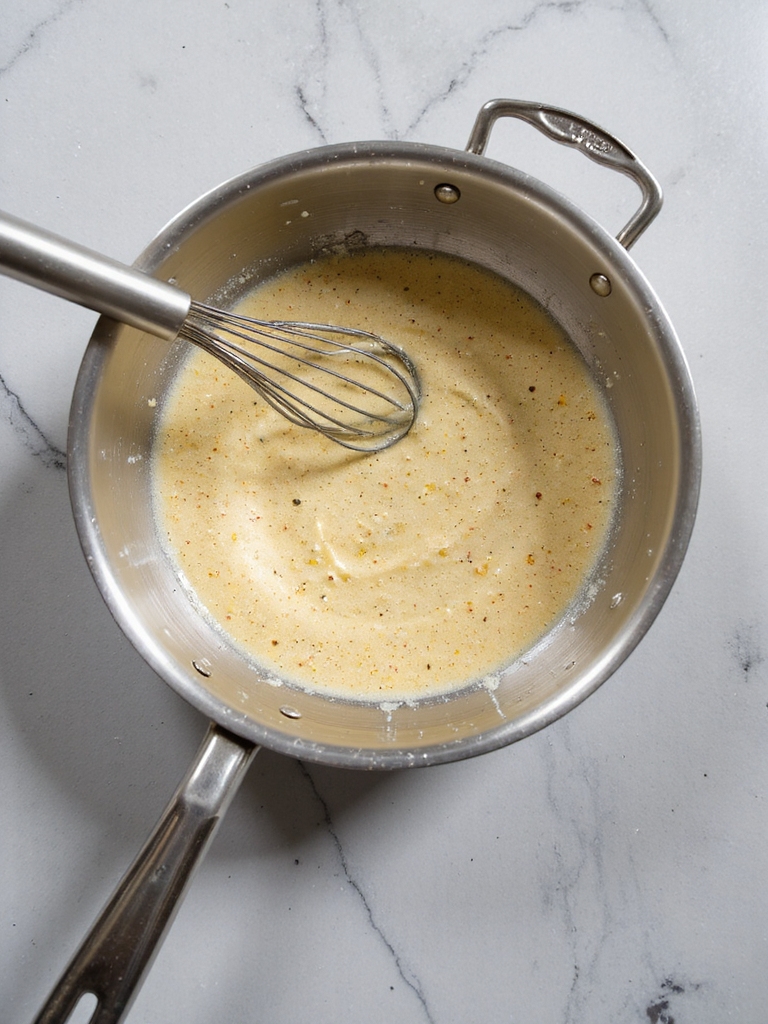
To master the roux technique for turkey gravy, start by creating a roux, which will serve as a thickening agent. A well-cooked roux develops a nutty aroma and transforms the gravy into a smooth, cohesive mixture. You’ll need equal parts fat and flour, typically about two tablespoons of each for every cup of broth. The roux is made by melting fat, like butter or turkey drippings, and cooking it with flour until it turns a light golden color. This mixture is then gradually whisked into your warm stock to guarantee the flavors meld perfectly and the gravy achieves a luscious consistency.
- Turkey drippings or butter
- All-purpose flour
- Turkey stock
- Salt and pepper
In a saucepan over medium heat, melt the turkey drippings or butter, then whisk in flour slowly, cooking until the mixture is light brown. Gradually whisk in warm stock, stirring constantly until smooth and thickened. Add salt and pepper to taste, allowing the mixture to simmer until flavors meld and desired consistency is achieved.
Make sure your roux doesn’t over-brown as this can impart a bitter flavor; aim for a light golden color. Consistent stirring when incorporating stock prevents lumps and guarantees your gravy is silky smooth, enhancing its appeal.
Enhancing Flavor With Aromatics
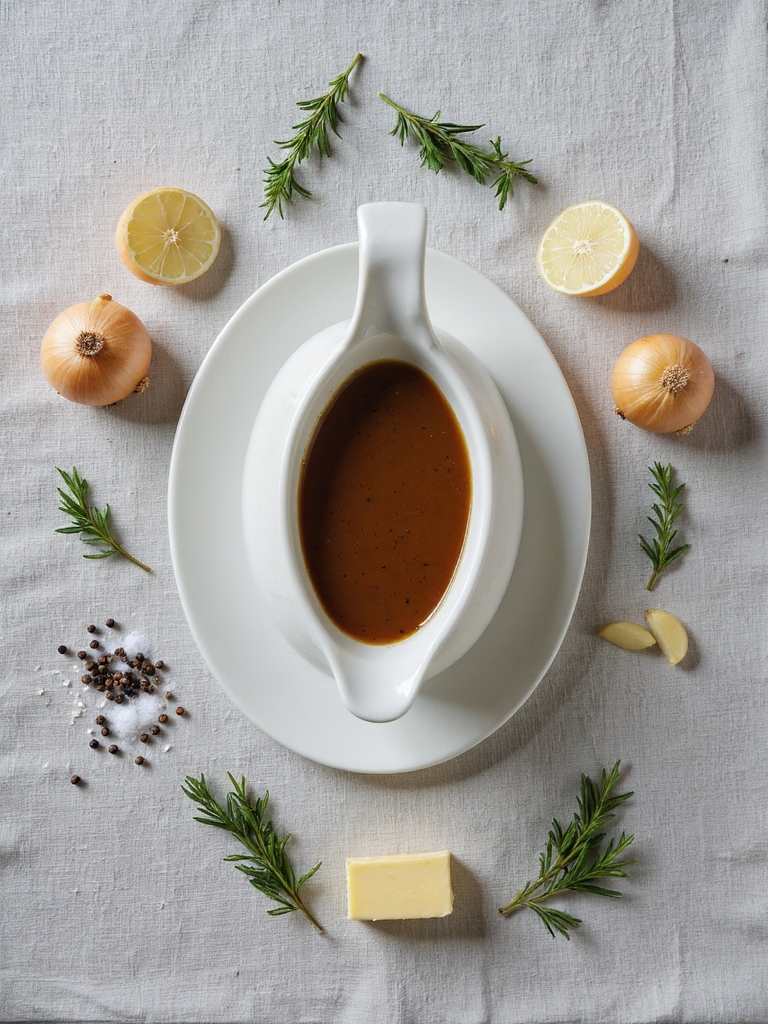
To enhance the flavor of turkey gravy, incorporating aromatics like onions, garlic, and herbs can transform it from a simple sauce to a rich, savory masterpiece. Begin by sautéing these aromatic ingredients in turkey drippings or butter until they release their fragrant oils, creating a flavorful base for the gravy. This layer of flavor adds depth and complexity, making your gravy more robust and inviting.
- Turkey drippings or butter
- All-purpose flour
- Turkey stock
- Onion, finely chopped
- Garlic, minced
- Fresh herbs (such as thyme or rosemary)
- Salt and pepper
In a saucepan over medium heat, melt the drippings or butter, add onion and garlic, sauté until softened. Stir in flour until light golden, then whisk in warm stock gradually. Add fresh herbs, salt, and pepper, simmer until flavors meld and desired consistency is achieved.
For extra flavor, caramelize onions very slowly on low heat to optimize sweetness without burning. Use fresh herbs for a bright, aromatic finish and remember to strain out solids for a perfectly smooth texture.
Achieving the Perfect Consistency
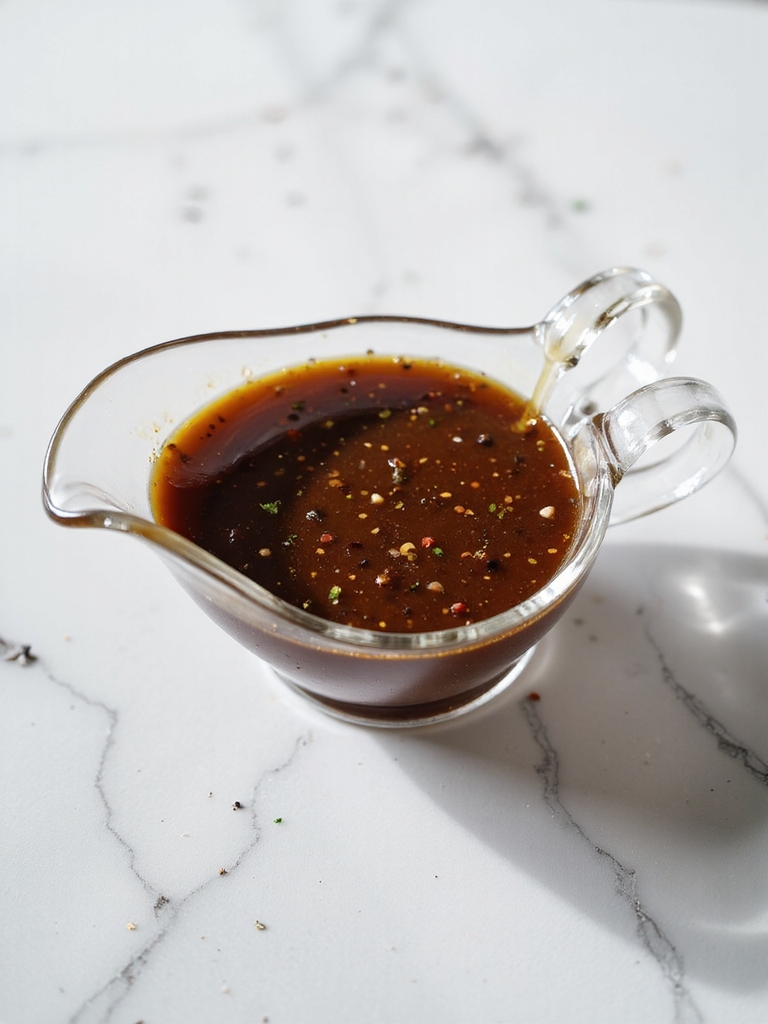
To achieve the perfect consistency for turkey gravy, focus on balancing the thickness and smoothness to complement your holiday meal. The goal is to create a silky-smooth texture that coats the back of a spoon without being too runny or overly thick. This requires careful attention to the flour-to-stock ratio and consistent whisking during the cooking process.
- Turkey drippings or butter
- All-purpose flour
- Turkey stock
- Onion, finely chopped
- Salt and pepper
In a saucepan over medium heat, melt the turkey drippings or butter, and add flour gradually, stirring continuously until a roux forms. Slowly whisk in warm turkey stock, ensuring a smooth mixture, while incorporating sautéed onions, salt, and pepper. Simmer until the mixture naturally thickens to a desired consistency, ensuring that any lumps are dissolved with constant stirring.
To enhance the smoothness, always use warm stock to prevent drastic temperature changes that cause lumps, and whisk continuously. If the gravy becomes too thick, add additional stock in small increments until you reach your desired consistency. Additionally, incorporating the turkey brining process can significantly improve the flavor profile of your gravy.
Tips for Avoiding Lumps
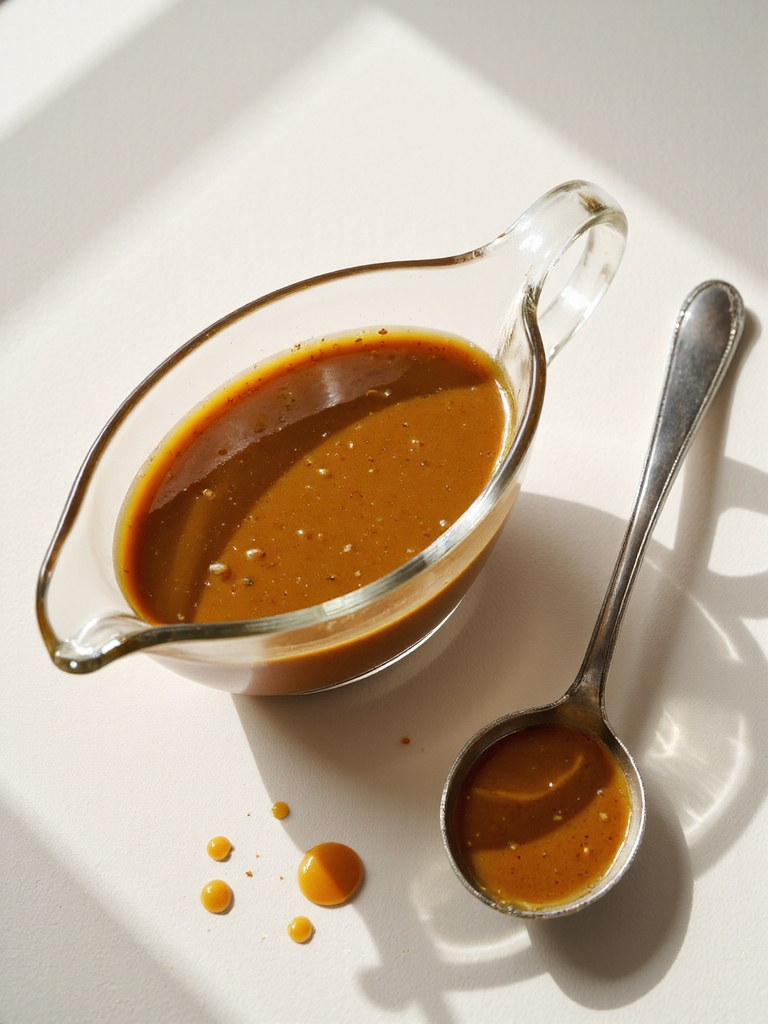
To make a lump-free turkey gravy, start by ensuring that your flour and turkey drippings (or butter) are well blended to create a smooth roux. This is the vital step to avoid lumps when combining with turkey stock. Use warm stock, whisking continuously, to maintain a seamless blend and produce a silky gravy.
- Turkey drippings or butter
- All-purpose flour
- Warm turkey stock
- Onion, finely chopped
- Salt and pepper
In a saucepan over medium heat, melt the turkey drippings and whisk in flour gradually until a smooth paste forms. Slowly pour in the warm turkey stock, stirring continuously to maintain smoothness, and add the sautéed onions. Season with salt and pepper, simmer until thick, ensuring smoothness by whisking consistently.
To prevent lumps, combine flour with fats thoroughly to avoid clumping, and always add warm liquids gradually while whisking. If lumps do form, strain the gravy through a fine mesh sieve to achieve ultimate smoothness. Additionally, a well-prepped turkey with dry brining can enhance the flavor of your gravy by providing rich drippings.
Balancing Salt and Seasonings
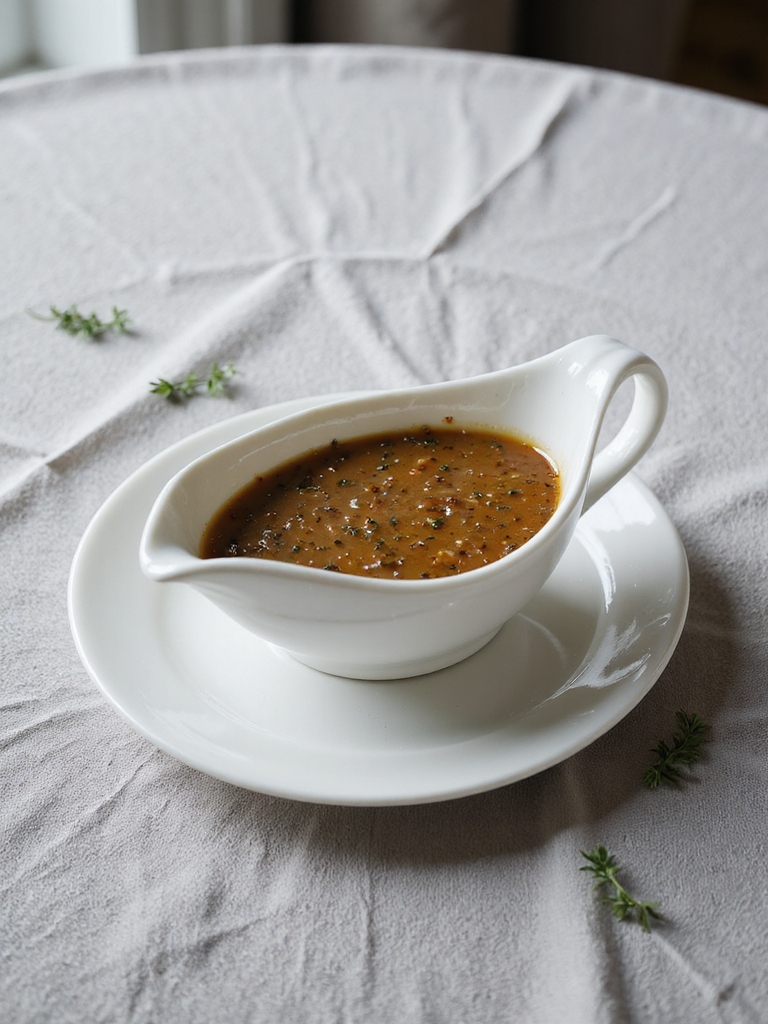
Balancing salt and seasonings in turkey gravy is essential to enhance its flavor without overpowering it. Start by using a light hand with seasonings. Taste the gravy before adding any salt, as turkey drippings can be quite salty. Slowly add salt, tasting frequently to avoid making the gravy too salty. Additional seasonings like herbs can add depth, but should be used sparingly.
- Turkey drippings or butter
- All-purpose flour
- Warm turkey stock
- Onion, finely chopped
- Low-sodium soy sauce
- Fresh thyme, finely chopped
- Salt and pepper
Melt turkey drippings in a saucepan over medium heat and whisk in flour until a smooth paste forms. Gradually add warm turkey stock while whisking continuously, then stir in sautéed onions, soy sauce, and thyme. Simmer until thickened, adding salt and pepper to taste, while consistently whisking for a lump-free texture.
To avoid overpowering flavors, add seasonings incrementally and taste frequently throughout the cooking process. If you oversalt, adjust with a small amount of sugar or even a slight bit more stock.
How to Deglaze for Extra Depth
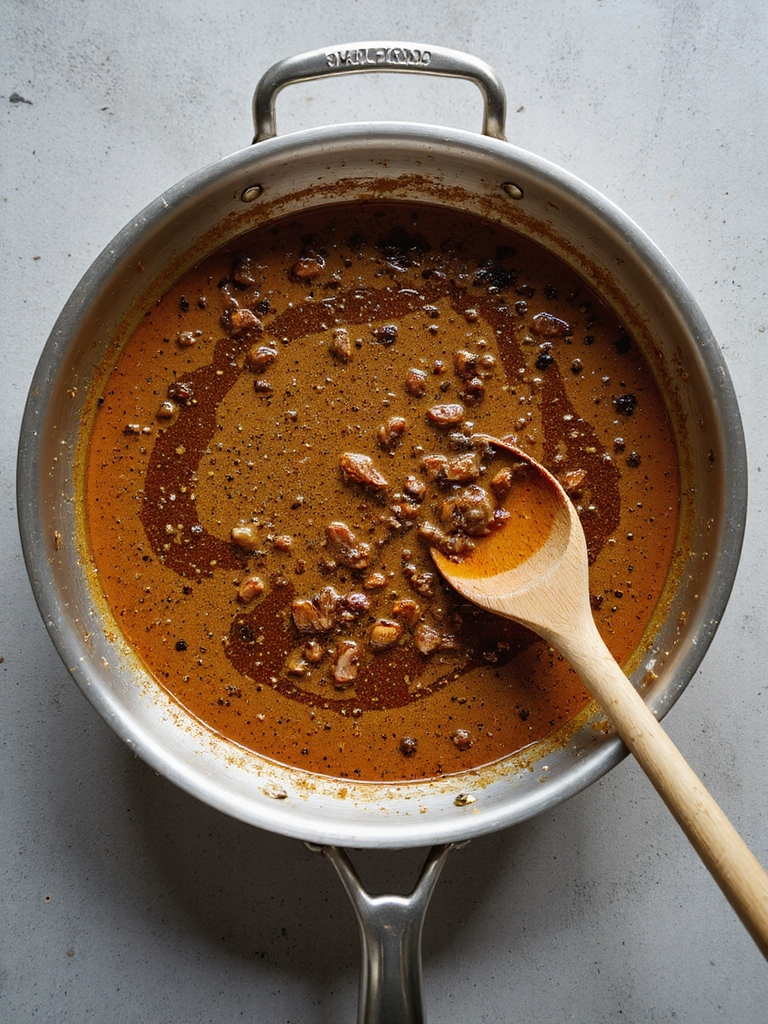
To create a rich turkey gravy with extra depth, deglazing plays an essential role by lifting flavorful browned bits from the pan. After transferring your turkey to rest, place the roasting pan over medium heat. Pour in some warm turkey stock into the hot pan, and use a wooden spoon to scrape up all the delicious bits stuck to the bottom. Reduce the mixture until it thickens slightly and strain it to obtain a smooth, flavorful liquid that will form the base for your gravy.
- Turkey roasting pan with drippings
- Warm turkey stock
- Wooden spoon
- Strainer
Heat the roasting pan on the stove and pour warm turkey stock into it. Scrape up the brown bits using a wooden spoon, letting it simmer to reduce and thicken slightly before straining. Use the strained liquid as a base for your turkey gravy.
To enhance the flavor, consider adding a splash of white wine or a touch of vinegar along with the stock when deglazing, adjusting for additional liquid reduction. If the deglazed liquid is intensely flavorful, remember to balance with stock to avoid an overpowering gravy.
Incorporating Wine or Spirits
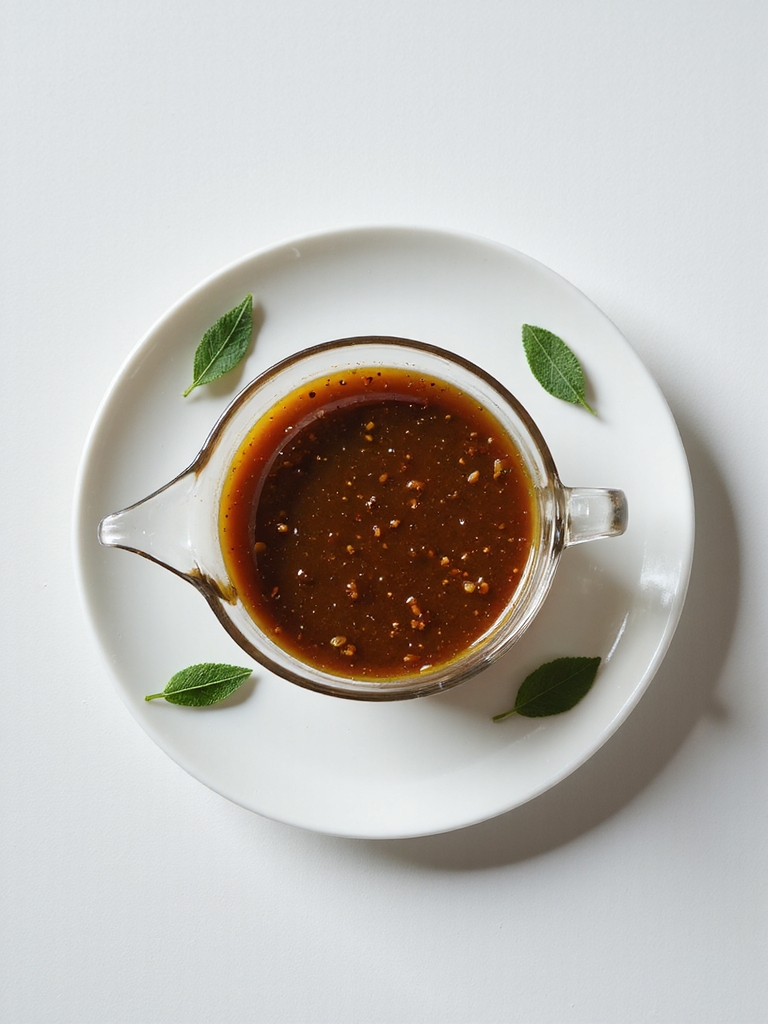
Enhance your turkey gravy by incorporating wine or spirits to add depth and richness to the flavor profile. Once your deglazed liquid is ready, introduce a splash of white wine, vermouth, or a touch of bourbon to the mix. The alcohol will add complexity and enhance the natural flavors of the turkey gravy without overwhelming it. The key is to balance the intensity of the flavor by cooking off the alcohol, resulting in a smooth and harmonious sauce that elevates your holiday meal.
Ingredients:
- Deglazed turkey pan liquid
- White wine, vermouth, or bourbon
- Additional turkey stock (if needed)
In the deglazed pan liquid, add a splash of your chosen wine or spirit and let it simmer gently, allowing the alcohol to cook off and the flavors to meld, enhancing the base. If needed, balance the richness by incorporating extra turkey stock. Continue simmering until the liquid thickens to your desired consistency, creating a rich and complex gravy.
Consider the type of wine or spirit carefully to complement your turkey’s flavors. If the flavor becomes too robust, dilute with more turkey stock and adjust seasonings accordingly to maintain a well-balanced and savory gravy.
Adding Herbs and Spices for Complexity
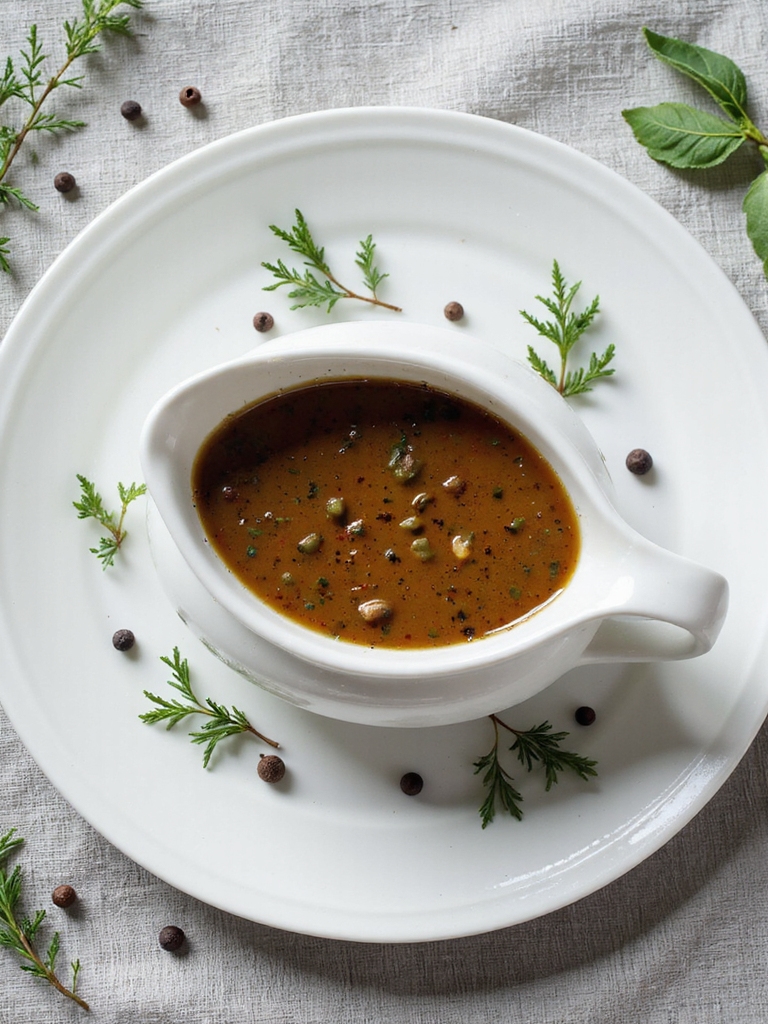
Adding herbs and spices to your turkey gravy can greatly enhance its flavor complexity, introducing aromatic elements that complement the dish. Once your gravy has a desirable base, incorporate finely chopped herbs like thyme, rosemary, or sage, which pair beautifully with turkey. Don’t forget a hint of freshly ground black pepper or a pinch of nutmeg to add warmth. The goal is to create a rich, layered depth that harmonizes with the turkey without overpowering its natural flavors.
Ingredients:
- Turkey gravy base
- Fresh thyme
- Fresh rosemary
- Fresh sage
- Black pepper
- Nutmeg
Simmer your gravy base on low heat and add fresh thyme, rosemary, and sage, mixing well to distribute the herbs evenly. Season with black pepper and a sprinkle of nutmeg, ensuring the flavors meld thoroughly as the gravy continues to cook. Adjust the seasoning to your taste, maintaining a balance that enhances the turkey’s savoriness.
For the best results, use fresh herbs when possible as their natural oils and flavors are more potent. Remember, a little spice goes a long way—start with small amounts and adjust according to your taste preferences to achieve a perfectly balanced gravy.
Adjusting Thickness to Your Preference
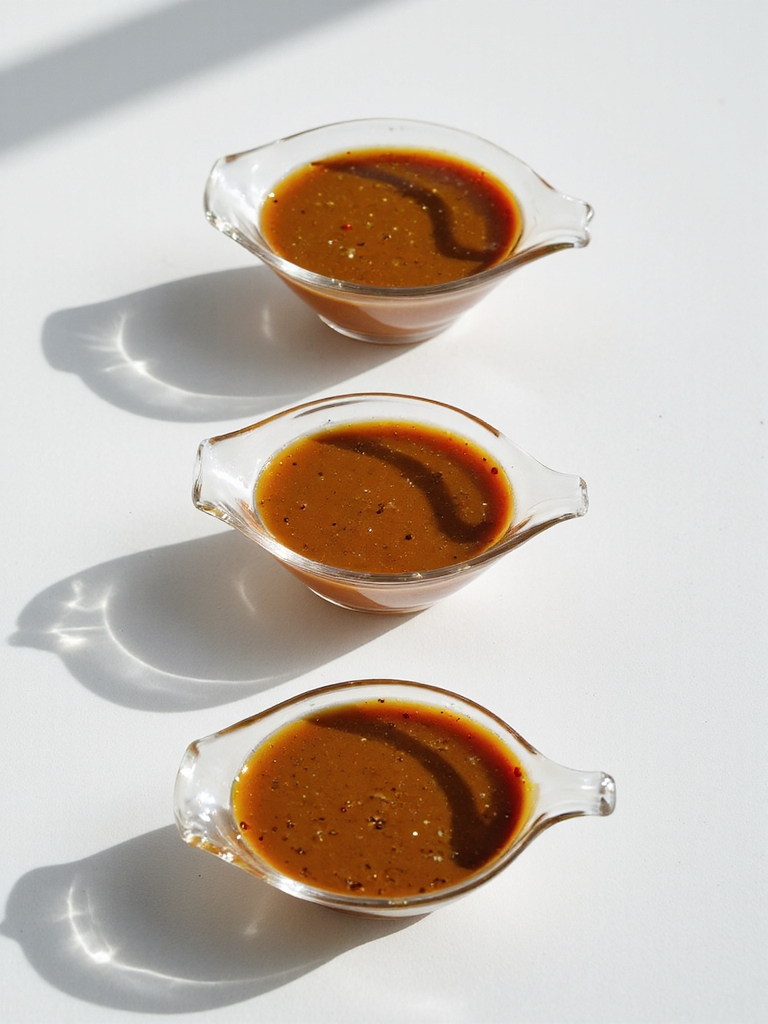
In adjusting the thickness of your turkey gravy, achieve the desired consistency that best complements your meal by modifying the amount of thickening agent or liquid used. For a thinner gravy, incorporate more broth or pan drippings, while for a thicker consistency, increase the flour or cornstarch. This flexibility allows you to cater the viscosity to suit various dining preferences and dish pairings while guaranteeing the gravy remains smooth and flavorful.
Ingredients:
- Turkey gravy base
- Broth or pan drippings
- Flour or cornstarch
To adjust thickness, heat the gravy base over medium heat and gradually whisk in broth for a thinner consistency or a flour/cornstarch mixture for a thicker texture. Stir constantly to avoid lumps and cook for an additional 5 minutes, allowing the flavors to blend and the gravy to reach the desired consistency. Taste and adjust seasoning as needed.
When thickening with flour, make sure it’s dissolved in a small amount of cold water or broth before adding it to prevent clumping. If using cornstarch, dissolve it in cold water for a slurry and add it gradually, maintaining a constant whisk for smooth integration.
Making Gravy Ahead of Time
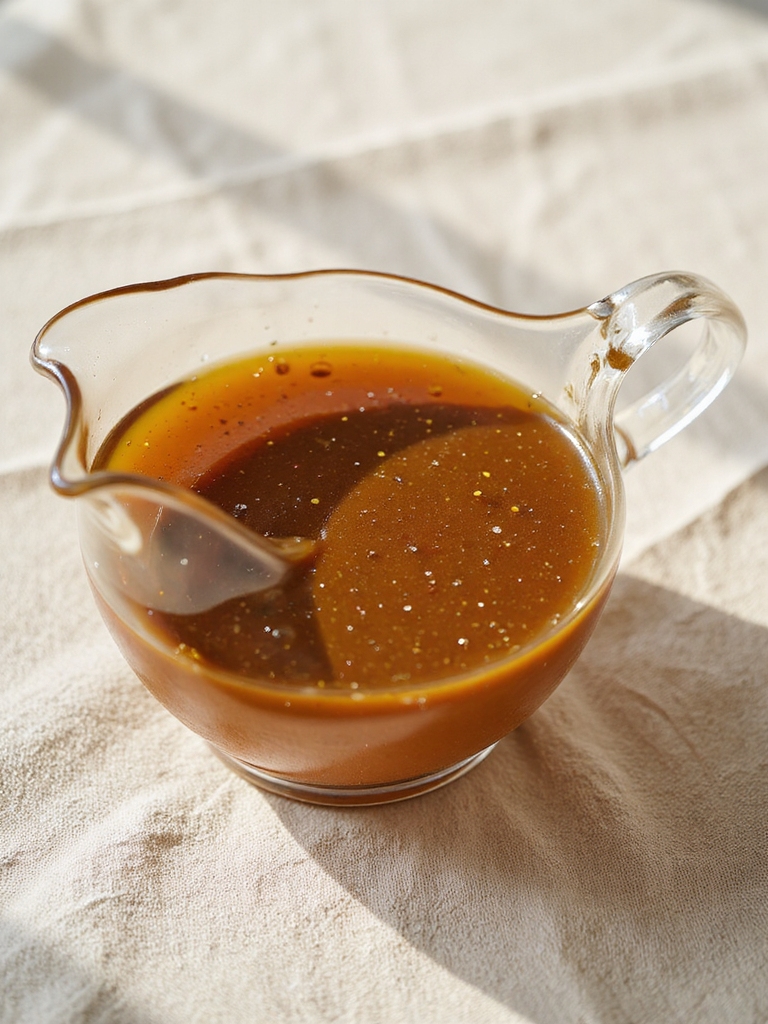
To make turkey gravy ahead of time, start by preparing a rich and flavorful base using turkey drippings or broth. This process allows you to guarantee the gravy is well-seasoned and gives flavors time to meld. By making it in advance, you reduce stress on the day of serving and guarantee a smoother meal service.
- Turkey drippings or broth
- Butter
- All-purpose flour
- Salt
- Black pepper
In a saucepan, melt the butter and whisk in the flour over medium heat to create a roux, cooking until golden. Slowly add the turkey drippings or broth, whisking to break up any lumps, and bring the mixture to a gentle boil until thickened. Season with salt and pepper, then cool before refrigerating until needed; reheat gently before serving, whisking to restore consistency.
To keep the gravy smooth when reheating, add a touch of broth if it thickens too much while stored. Always taste and adjust the seasonings before serving to maintain the best flavor profile.
Storing and Reheating Leftover Gravy
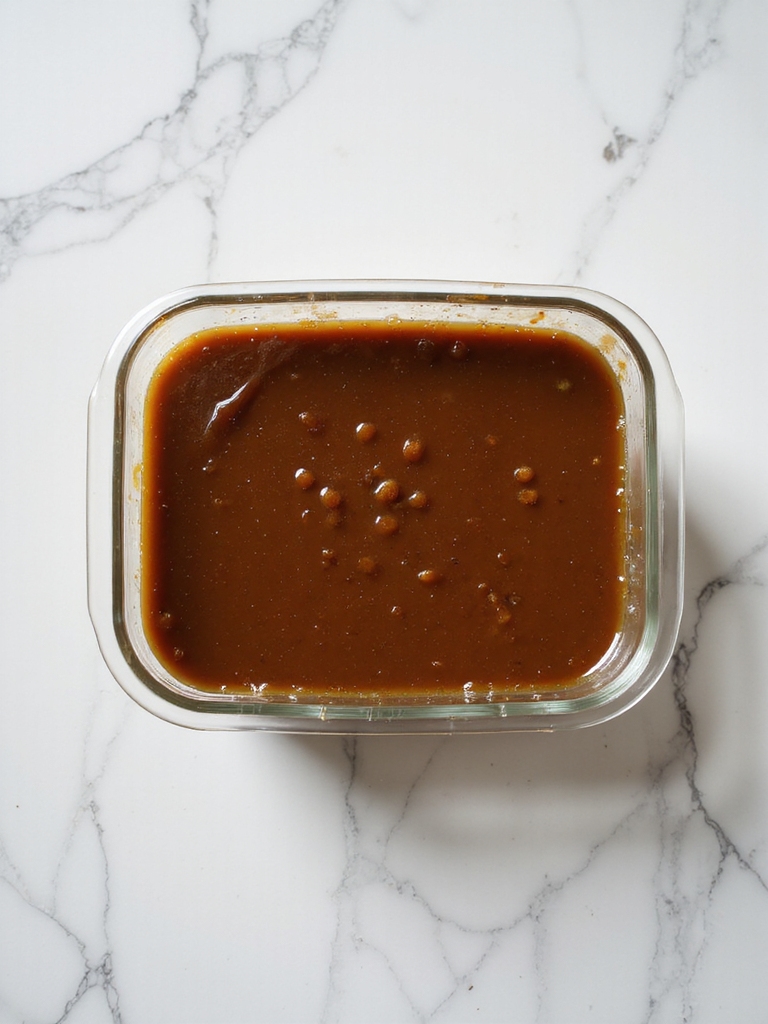
Leftover turkey gravy can be stored and reheated, guaranteeing none of that delicious sauce goes to waste. Start by transferring any leftover gravy into an airtight container, leaving some space for expansion if freezing. Proper storage will keep your gravy fresh and ready for future meals, while reheating it correctly guarantees it retains its original flavor and texture.
- Leftover turkey gravy
- Airtight container
Refrigerate the leftover gravy for up to three days or freeze it for longer storage. When ready to use, thaw frozen gravy in the refrigerator overnight if needed. Reheat it in a saucepan over low heat, stirring to maintain a smooth consistency, and add a bit of broth if it thickens too much.
To prevent your gravy from splitting, make certain to reheat it slowly over low heat. Furthermore, always taste it before serving, as the flavors can change during storage, and adjust seasonings as necessary to enhance its taste.
Troubleshooting Common Gravy Problems
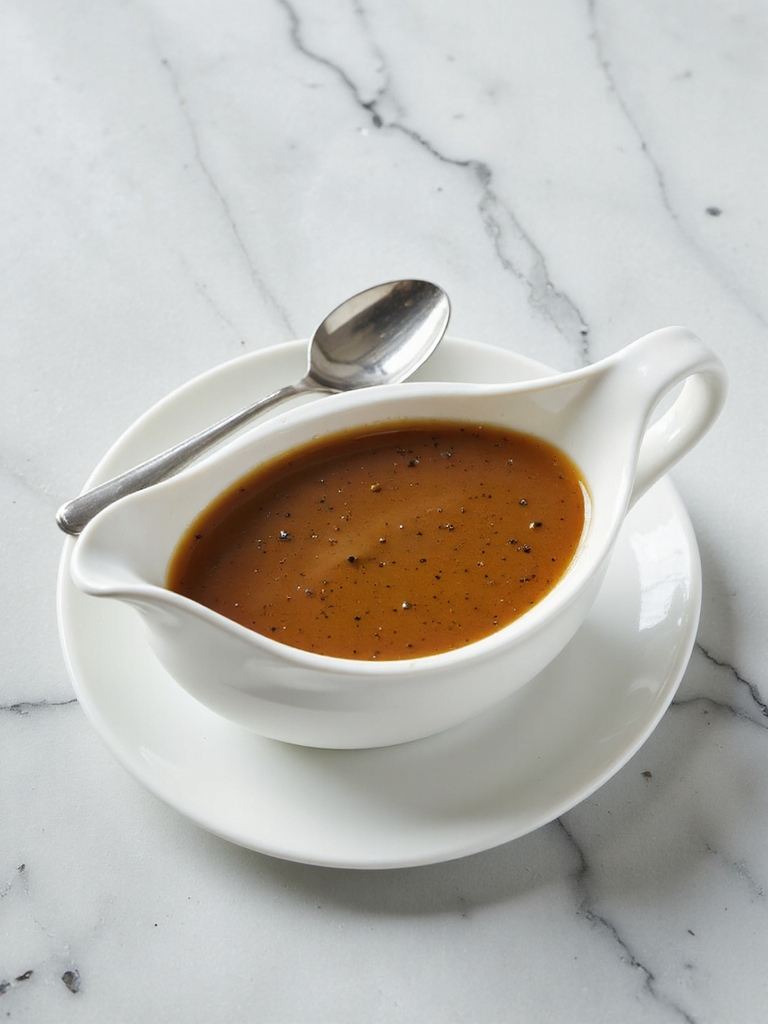
Gravy can often be a source of stress for home cooks, as several issues can arise during preparation. Common problems include lumpy gravy, greasy texture, or thin consistency, but these can usually be corrected with a few simple tricks. To guarantee smooth and flavorful gravy, having the right ingredients and techniques on hand is essential.
- 2 cups turkey stock
- 4 tablespoons unsalted butter
- 4 tablespoons all-purpose flour
- Salt and pepper to taste
In a medium saucepan over medium heat, melt the butter and stir in the flour to form a roux. Gradually whisk in the turkey stock, making certain the mixture remains smooth and free of lumps. Simmer until the gravy thickens, seasoning with salt and pepper as needed for peak taste.
For best results, always whisk thoroughly to prevent lumps from forming, and adjust thickness with extra stock if necessary. Remember to taste during cooking to avoid over-seasoning, and feel free to add a dash of cream for a richer flavor.
Creative Twists on Classic Turkey Gravy
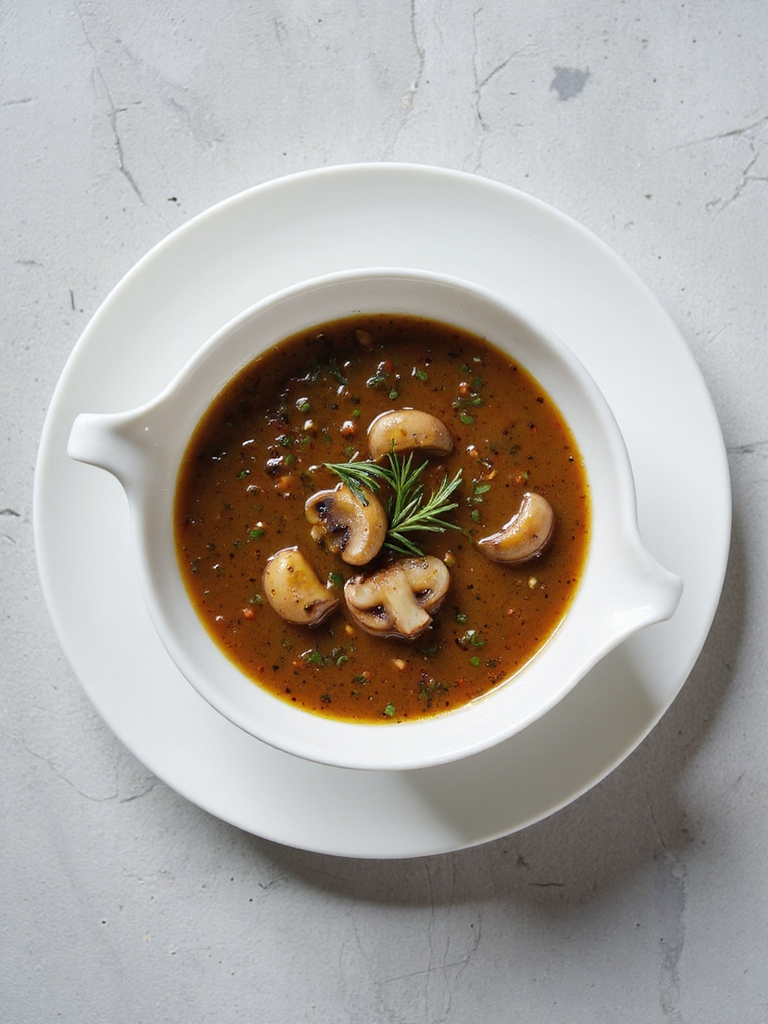
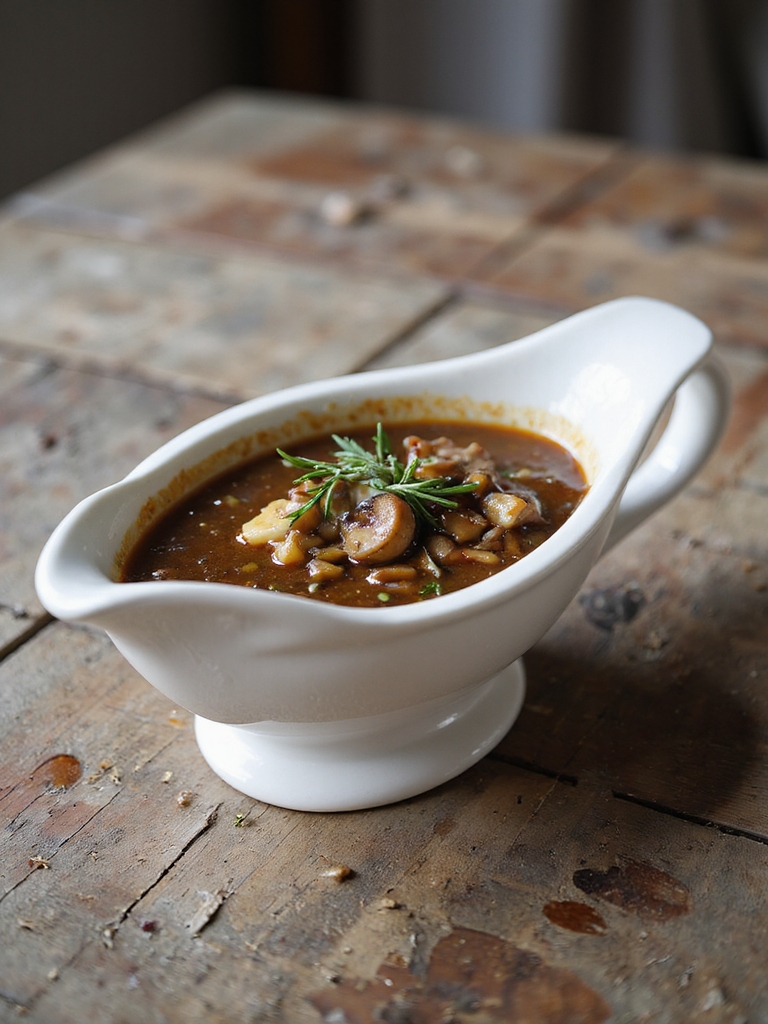
Putting a creative spin on classic turkey gravy can elevate your holiday meal into a culinary masterpiece. Start by adding unexpected ingredients like fresh herbs or spices to create a burst of flavor. Infuse the sauce with hints of rosemary and thyme, or a splash of bourbon for a smoky depth. Saute mushrooms for an earthy richness, or incorporate citrus zest for a revitalizing tang. These small yet impactful tweaks can transform a traditional turkey gravy into a delectable, gourmet delight that impresses guests with a unique, memorable taste.
- 2 cups turkey stock
- 4 tablespoons unsalted butter
- 4 tablespoons all-purpose flour
- 1/4 cup sliced mushrooms
- 1 tablespoon fresh thyme leaves
- 1 tablespoon fresh rosemary, chopped
- 1 tablespoon bourbon
- Salt and pepper to taste
Melt butter in a saucepan, add flour to create a roux, and sauté mushrooms until golden. Gradually whisk in turkey stock, bourbon, and herbs, ensuring no lumps. Cook until the gravy thickens, adding salt and pepper to taste.
When adding mushrooms and fresh herbs, finely chop them for even cooking and intensified flavor. A splash of bourbon should be used sparingly to prevent overpowering the other flavors.